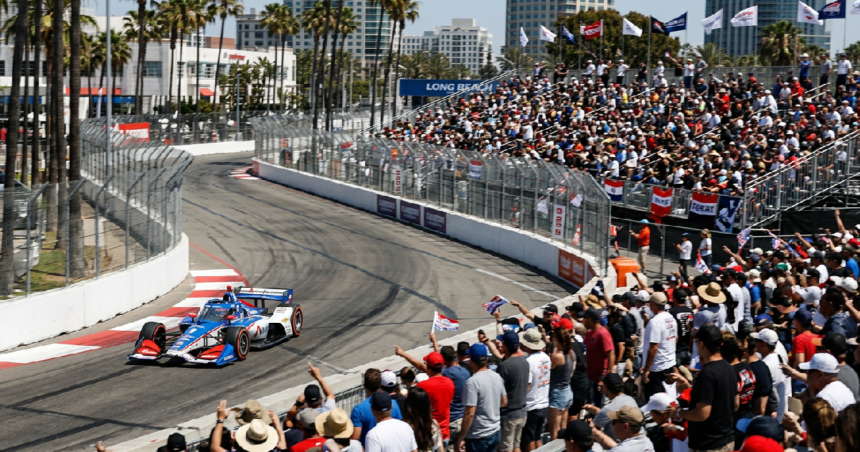
FOX Sports utilized a strategic broadcast window at Kansas Speedway to provide a substantial viewership lift for IndyCar’s Long Beach Grand Prix. By scheduling the open-wheel street race immediately following the NASCAR Cup Series event, the network reportedly achieved one of the largest audiences for the California-based race in recent years. This programming decision highlights the ongoing efforts of broadcasters to cross-promote premier racing tiers and maximize the reach of their motorsport properties.
The NASCAR lead-in appears to have served as a vital catalyst for the IndyCar event, which historically faces stiff competition for airtime during the busy spring sports window. Moving the Kansas Cup race to broadcast television from its previous cable home created a smoother transition for fans to remain engaged as the action shifted from the Midwest to the West Coast. This approach mirrors other high-stakes weekends where global schedules collide, much like when Piastri leads rain-hit second practice at Suzuka under challenging weather conditions.
Industry analysts suggest that the reach of terrestrial television remains the most effective tool for building momentum across different racing disciplines. While the habits of cord-cutters continue to reshape the media environment, the ability to tether a niche event to a established series like NASCAR often results in a significant retention of the “anchor” audience.
Programming Strategy Aids IndyCar Visibility
Reports indicate that the “power of the lead-in” remains a cornerstone of sports broadcasting, particularly for series looking to expand their footprint in a crowded domestic market. By eliminating the need for viewers to switch channels, the network maximized the value of its afternoon window. This logic is frequently applied across professional sports to capture broader regional interest, a trend seen when the NBA greenlights expansion to Seattle and Las Vegas to tap into new fan bases.
Network officials appear to be banking on the theory that racing fans will stay tuned if the content is high-quality and easily accessible. The Long Beach figures suggest that a sizeable portion of the NASCAR audience remained through the conclusion of the IndyCar race, proving the effectiveness of the doubleheader format. This strategy essentially turns a Sunday afternoon into a dedicated block of motorsport content rather than isolated events.
NASCAR Performance on Regional and National Platforms
The success of the weekend was not limited to the premier divisions, as secondary series also reported healthy engagement levels. The NASCAR developmental ranks, which recently moved to new broadcast partners, have reportedly maintained a consistent audience floor. This indicates a dedicated appetite for stock car racing throughout the weekend, regardless of which tier is on the track.
The consistency of these figures suggests that despite changes in venues or broadcast times, there is a reliable core of fans supporting the sport’s ladder system. While comparing different tracks across different years involves various external factors, the overall trend points toward a stable viewership base for these Saturday events.
Long-term Trends in Motorsport Media Consolidation
As media rights negotiations become increasingly complex, the ability to bundle audiences is expected to become a central negotiation point for racing leagues. If IndyCar can demonstrate that its viewership floor is bolstered significantly when paired with NASCAR, it provides the series with improved leverage for future renewals. For the broadcasters, this model reduces audience “churn,” keeping the advertising inventory valuable throughout the entire broadcast window.
However, the slight fluctuations in peak NASCAR numbers compared to historical benchmarks remains a topic of analysis within the industry. While the lift for secondary series is evident, the primary objective for any major network is maintaining the strength of the anchor program. The focus remains on capturing the largest possible share of a fragmented audience, much like how Arthur Fils and World Cup 2026 preparations must compete for visibility in a busy global sports cycle.
The success of this recent scheduling pipeline is likely to influence how broadcasters approach future seasons. If networks can replicate these results consistently, it could lead to the formalization of “Motorsports Sunday” blocks. Such a development would offer IndyCar a level of stability and exposure it has rarely enjoyed, even if it remains the secondary partner in the scheduling arrangement.