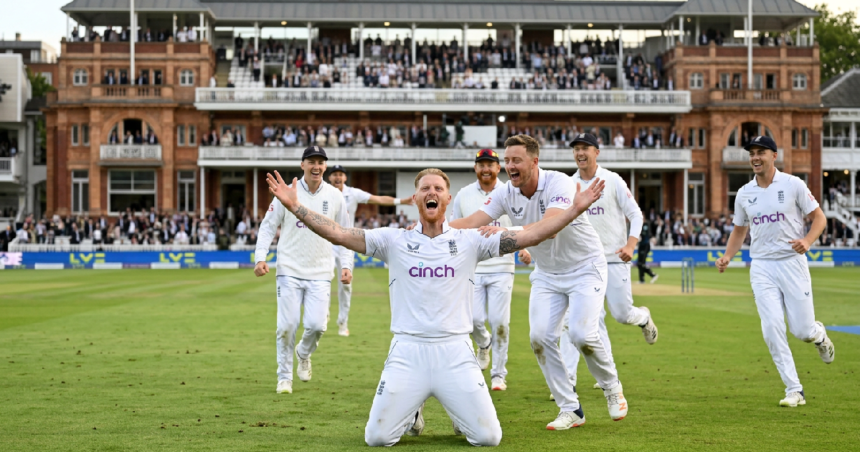
England secured a comprehensive 115-run victory over New Zealand in the first Test at Lord’s Cricket Ground on June 7, 2026, marking a triumphant start to the home summer.
Captain Ben Stokes led his side to a 1-0 lead in the three-match series, dismissing the visitors for 138 in their second innings before lunch on the fourth day. This result provides immediate redemption for the Three Lions following their difficult 4-1 Ashes series defeat in Australia.
The match concluded in just 166 overs, making it the second shortest Test match in the history of Lord’s to produce a positive result. England set New Zealand a target of 254 after scoring 140 and 226 in their two innings, while the Black Caps struggled to find rhythm on a challenging surface.
Ben Stokes admitted he felt the weight of the fixture, stating he knew how the result would be perceived externally if it had not gone well.
Individual performances anchored the win, with Ollie Robinson earning Man of the Match honors for his seven-wicket match haul. Robinson dismantled the New Zealand top order with three wickets in the opening over of the first innings. While latest sport news updates often focus on rapid results, this victory was a calculated execution of the “Bazball” philosophy under Stokes and coach Brendon McCullum.
Ben Stokes prioritizes consistency over early summer celebrations
Despite the emphatic win, Ben Stokes is already looking toward the remaining five Tests of the home season. England face two more matches against New Zealand before a three-game series against Pakistan in August. “We’ve won the first game of the summer – it’s great that we’ve managed to do it, but we’ve got five more to go,” the 35-year-old captain told Sky Sports.
Ben Stokes was candid about the personal pressure of the captaincy following the Ashes. He remarked that he wouldn’t truly be happy until he could “share a beer with the boys” and celebrate the collective effort. The win earned England 12 World Test Championship points, a vital boost as they attempt to climb the standings after a difficult winter abroad.
The captain’s own form was a rare low point in the match; he managed only 12 runs across two innings, including a three-ball duck in the second. However, his leadership of the bowling unit remained sharp. Josh Tongue provided the initial breakthrough on Day 4 by trapping Tom Blundell lbw for 4, while Gus Atkinson also proved instrumental in the final charge.
Lord’s pitch concerns trigger rare MCC public apology
The nature of the surface at Lord’s became a focal point for debate as wickets fell at a rate of one every 25 balls—the lowest average seen in England since 1907.
Variable bounce dominated the contest, with 24 of the 40 dismissed batters out either bowled or leg-before-wicket (LBW), a record for a Test match in England. The conditions were so erratic that the Marylebone Cricket Club (MCC) issued a formal apology.
The MCC blamed “unusually hot and dry weather” followed by wetter conditions for the surface falling short of expectations. Ben Stokes echoed these concerns, questioning if such conditions benefit the long-term health of Test cricket. He noted that while the carnage was entertaining for Day 1 spectators, the game’s premature end was “somewhere in the middle” of what players and fans want.
New Zealand’s resistance was spearheaded by Glenn Phillips, who finished as his team’s top scorer with a combined 78 runs in the match. Phillips remained 44 not out in the second innings as his teammates fell around him. Devon Conway also showed grit with 41 runs from 91 balls, but the clinical England attack proved too difficult to navigate on the volatile surface.
Fast-bowling depth defines England’s successful series opener
The victory was largely a product of England’s superior adaptation to the pitch. Gus Atkinson claimed 5/30 in 11.3 overs during the second innings, achieving his fourth five-wicket innings haul in just three Tests played at Lord’s. His ability to find consistency where others struggled reinforced England’s current depth in the pace department.
Ollie Robinson’s return was equally significant, as he finished with match figures of 7/77. Just as Price overcomes Littler in high-stakes showdowns through composure, Robinson’s disciplined lines forced errors from the New Zealand batters throughout the four days of play. His Man of the Match performance justifies his place as the spearhead of this revitalized red-ball unit.
Looking ahead, the teams move to the second Test at the Oval where atmospheric conditions are expected to differ. England must now manage the workload of their fast bowlers during a congested schedule.
The victory at Lord’s has silenced many critics for now, but as Ben Stokes emphasized, the “Bazball” era will be judged on its ability to sustain this aggression across the full summer of cricket.