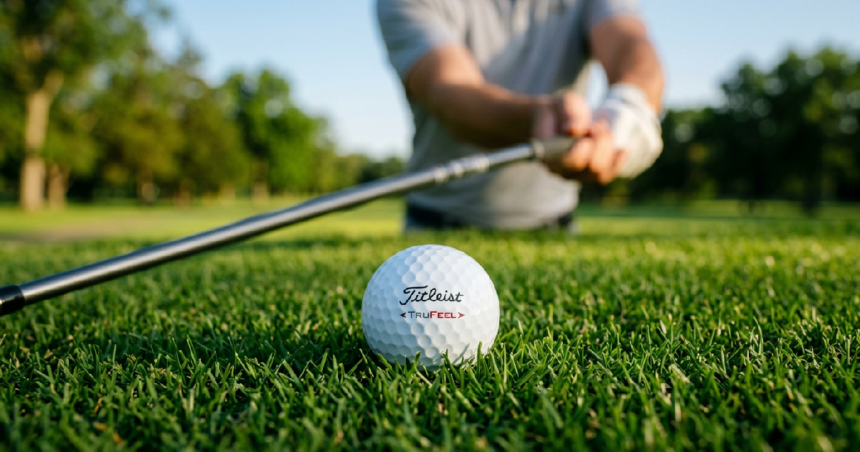
Identifying the best golf ball for high handicappers depends heavily on matching equipment to slower swing speeds and a need for greater forgiveness. As of June 11, 2026, the Titleist TruFeel remains frequently cited by industry experts as the overall top pick for players with a handicap of 15 or higher.
Expert reviews throughout the first half of the year emphasize that choosing a ball with a low-compression core and durable ionomer cover can yield straighter drives by reducing excessive side spin.
The technical requirements for this demographic are specific. High handicappers, typically defined as those scoring 90 or above, often possess driver swing speeds under 95 mph. For these players, 2-piece golf balls are generally better as they are engineered for maximum distance and durability.
Unlike the high-spin multi-layer balls used on tour, these 2-piece models prioritize energy transfer and stable flight. This focus on fundamentals is similar to how technical drills can stabilize performance in other high-precision sports where consistency is the primary challenge.
Titleist TruFeel and Callaway Supersoft lead 2026 recommendations
The Titleist TruFeel has solidified its reputation as a leading all-rounder for high-handicap players. Retailing at approximately $28 per dozen, it is Titleist’s softest offering and features a large, fast core designed to increase distance. The 2-piece construction includes a soft 3.0 TruFlex cover, which is specifically engineered to enhance greenside spin and control.
It provides the brand-name performance many golfers seek while remaining budget-friendly compared to premium lineups.
For players who prioritize an ultra-soft feel, the Callaway Supersoft is another top-tier choice. With a measured compression of approximately 38, it is designed for swing speeds under 85 mph. This ultra-low compression allows the ball to compress easily, helping golfers achieve a higher launch with a forgiving, straight flight. Much like
com/manchester-united-100m-transfer-agreement-analysis-2026/\”>securing a major transfer agreement
Performance benchmarks for the Wilson Triad and Kirkland Signature
The Wilson Triad has emerged as a standout “hidden gem” for players looking for more of a specialized performance profile. Unlike most balls in the high-handicap category, the Triad features a urethane cover for enhanced feel around the greens.
Wilson designed this ball to shift weight toward the outer layers to increase the Moment of Inertia (MOI), which helps maintain a more stable flight and improves accuracy off the tee for those struggling with inconsistent contact.
Budget-conscious golfers continue to look toward the Kirkland Signature as a primary value option. Retailing at roughly £39.99 for two dozen, it is a rare low-cost ball that utilizes a urethane cover. During testing, it produced surprising spin rates that are often the “achilles heel” of cheaper golf balls.
While it may see slightly lower driver speeds than its competitors, its ability to reach a peak height of approximately 100 feet makes it a reliable choice for holding greens on approach shots.
Advanced flight technology for correcting hooks and slices
If curvature is the primary obstacle to lower scores, the Bridgestone e6 and the Bridgestone E12 Straight offer technological solutions. The e6 is specifically engineered with an anti-side-spin core design to reduce the off-axis spin that causes hooks and slices.
Meanwhile, the E12 Straight has shown a high-launch profile that maintains a straight trajectory with minimal curvature, providing a significant advantage for players who find themselves in the rough more often than the fairway.
The Srixon Soft Feel also remains a staple for club golfers. It sits slightly firmer than the Callaway Supersoft, providing a bit more feedback at impact. It features a 338-speed dimple pattern designed for consistent flight in windy conditions.
Srixon’s FastLayer Core—which is soft in the center and firm at the edges—mimics the performance of multi-layer balls while retaining the durability and distance benefits of a 2-piece design. Diversifying your gear to match specific course conditions is as vital as following the latest sport news updates to stay ahead of the competition.
Understanding the benefits of ionomer covers and compression
Most experts recommend ionomer (Surlyn) covers for high-handicap players. These covers are more durable and produce less spin off the driver than urethane, which helps keep the ball in play. Low compression cores, ranging from 30 to 65, are essential for slower swingers to maximize energy transfer.
A ball that is too firm will not compress enough at impact, leading to a loss of carry distance and a harsher feel on mishits.
Ultimately, the choice of a golf ball should be a pragmatic decision based on a golfer’s current swing speed and most common “miss.” While the Titleist TruFeel and Callaway Supersoft are reliable investments for most, specialized options like the Bridgestone e6 cater to specific technical flaws.
Aligning equipment with current skill levels remains the most effective way to lower handicaps and improve consistency across the 2026 season.