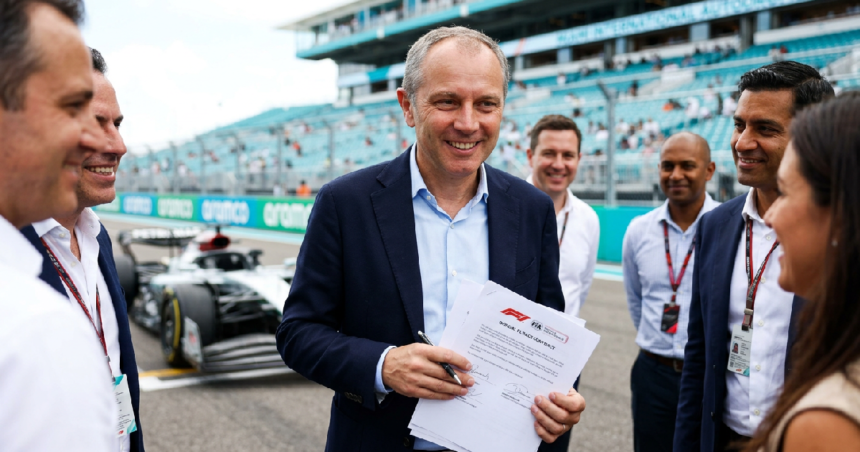
Formula 1 has established an era of unprecedented long-term stability today, June 5, 2026, as the sport secures its global footprint through a series of record-breaking extensions. Stefano Domenicali, President and CEO of Formula 1, has overseen a strategy that locks several premier venues into the next decade and beyond.
The Austrian Grand Prix at the Red Bull Ring and the Miami Grand Prix currently hold the most secure positions on the calendar, with both venues contracted to host races until 2041.
The Miami International Autodrome’s future was cemented in May 2025 when a 10-year extension was added to its original agreement. While Miami has become a commercial powerhouse, the scale of F1’s regional impact is even broader; the sport has generated over $3.
2 billion in cumulative economic impact for Southern Nevada since the Las Vegas Grand Prix debuted in 2023. This financial momentum is mirrored in Austria, where a decade-long extension announced in 2025 pushed the Red Bull Ring’s existing 2030 deal out to 2041.
The Las Vegas Grand Prix itself is now a permanent fixture on the Strip until at least 2037. After joining the calendar in 2023 with a three-year deal, a 10-year extension was confirmed to ensure many years of high-speed racing through the city.
The event’s fiscal health is evident, as it generated $43 million in state and local tax revenue during 2025. Stefano Domenicali stated that the organization is thrilled to continue the partnership in a city that has quickly become a flagship for the North American market.
Global contract extensions and heritage venue security
Across the globe, other cornerstone events have followed the trend of lengthy renewals. The Australian Grand Prix at Albert Park secured its place until 2037 following a series of negotiations.
An initial agreement in June 2022 extended the contract to 2035, before a further extension was finalized in December 2022 to reach the current 2037 expiration. This long-term certainty allows organizers to justify significant local investments.
The Bahrain Grand Prix remains one of the most stable dates on the schedule, with a contract running until 2036. Since 2021, the Sakhir circuit has served as the season opener for every year except for the pandemic-disrupted 2020.
Similarly, the Monaco Grand Prix, a race deeply attached to sporting tradition, has secured its future until 2035. As part of this new arrangement, the race will move to the first full weekend in June starting in 2026.
Canada has also joined the league of long-term hosts. The Circuit Gilles Villeneuve in Montreal, which previously had a deal until 2029, signed a four-year extension in June 2025 that ensures F1’s presence in the country until 2035. Much like the com/piastri-leads-disrupted-suzuka-practice-f1-2026/”>Oscar Piastri leads rain-hit second practice at Suzuka report showed the resilience of classic tracks, Montreal remains a vital pillar of the championship’s North American expansion.
Rotational strategies and emerging market growth
To manage a crowded calendar, Formula 1 is increasingly looking at rotational models for European venues. The Belgian Grand Prix at Spa-Francorchamps is contracted until 2031, but the arrangement includes a rotational status after 2027.
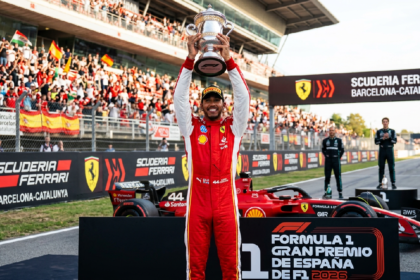
This approach is also seen with the Barcelona-Catalunya circuit, which remains on the books until 2032 with confirmed races in 2026, 2028, 2030, and 2032. This allows space for new entries like the Madrid street circuit, which joins the grid in 2026 with a deal lasting until 2035.
The Middle East remains a central hub for the sport’s commercial future. Saudi Arabia and Abu Dhabi both hold contracts through 2030, with Yas Marina famously serving as the season finale venue since 2021. Meanwhile, the Qatar Grand Prix is locked in until 2032 at the Lusail International Circuit.
These deals provide the financial backbone that allows F1 to explore returns to other markets, such as the Turkish Grand Prix at Istanbul Park and the Portuguese Grand Prix at Portimao, both slated for 2027.
However, not all historic venues have opted for long-term security. The Dutch Grand Prix at Zandvoort will host its final race in 2026. After agreeing to a one-year extension, the promoter decided to bow out after the 2026 event, which will notably be the first Zandvoort weekend to include a sprint race.
As seen in the latest sport news updates, the competition for slots on the 24-race calendar is higher than ever.
Current F1 circuit contract expiration dates
- 2041: Austria (Red Bull Ring), Miami
- 2037: Australia (Albert Park), Las Vegas
- 2036: Bahrain
- 2035: Monaco, Canada, Spain (Madrid)
- 2034: Great Britain (Silverstone)
- 2032: Qatar, Hungary, Barcelona (Rotational)
- 2031: Italy (Monza), Belgium (Spa – Rotational), Miami (Initial deal)
- 2030: China, Azerbaijan, Brazil, Abu Dhabi, Saudi Arabia
As the sport prepares for the 2026 technical regulation changes, these contracts provide the commercial foundation for teams and partners. With many venues now safe for the next decade, Formula 1 has transitioned from a year-to-year scheduling model to a permanent global circuit. This allows for long-term infrastructure improvements at traditional tracks and the integration of high-impact new venues without sacrificing the sport’s historical identity.