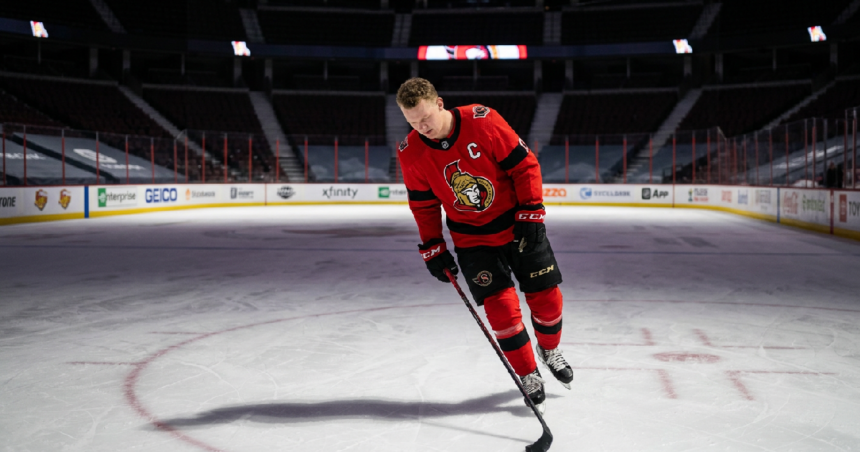
The Ottawa Senators continue to face intense scrutiny as internal and external critics question the consistency of the roster, specifically regarding the output of captain Brady Tkachuk and the core leadership group. Following a recent stretch of difficult results against high-caliber opponents, hockey analyst Frank Seravalli joined Sportsnet’s Tim Micallef and Faizal Khamisa to dissect the underlying issues and whether the team’s highest-paid stars are meeting the necessary standards of accountability. The discussion centered on whether the franchise can bridge the gap between individual talent and the collective discipline required for a postseason push.
Ottawa entered the current campaign with high expectations, yet the inability to consistently secure points against elite competition has reportedly heightened concerns within the front office. The debate remains focused on the distinction between statistical production and the visceral leadership required to steady a young team during turbulent periods. Just as Manchester United recently looked to reshape their defense with significant investment to solve structural issues, the Senators are grappling with whether their current roster construction can withstand the rigors of an eighty-two game schedule.
The situation highlights a growing frustration with a team that possesses undeniable skill but often lacks the tactical cohesion to see out tight games. Analysts suggest that the program is at a crossroads, needing to transition from a group of talented individuals into a unit that can execute a structured system under pressure. Without this evolution, the gap between the Senators and the league’s perennial contenders is expected to remain wide.
Accountability and the Role of Brady Tkachuk
As the face of the franchise, Brady Tkachuk finds himself at the center of the debate regarding the organization’s identity. The captain is often lauded for his physical style of play and emotional engagement, but questions are being raised about whether that energy is being channeled effectively during losing streaks. Seravalli noted that while Tkachuk remains the heartbeat of the locker room, the burden of elevating the team’s performance must fall on those wearing the letters on their jerseys.
Recent struggles against disciplined, system-oriented teams have served as a microcosm of the season’s frustrations. Opponents have frequently been able to stifle Ottawa’s creative players by exploiting a perceived lack of tactical flexibility. For the Senators to move forward, their star players must not only provide scoring but also lead in areas such as defensive transitions and discipline—aspects where the team is reported to have faltered throughout the current year.
Leadership in professional sports often requires a level of consistency that transcends the stat sheet. This is a common theme in high-pressure environments, such as when top competitors face off in high-stakes showdowns where mental fortitude often outweighs raw technique. For Tkachuk and his fellow leaders, the focus is shifting toward the gritty work required to maintain structure when momentum swings against them.
Structural Deficiencies and Bench Management
Beyond the individual performances, there is a growing sentiment that the Senators lack the foundational structure to compete with the league’s top-tier programs. The disparity in execution during crucial stretches has highlighted a team that reportedly relies heavily on individual brilliance rather than a cohesive, predictable system. This lack of “winning habits” is frequently cited by analysts as the primary reason why Ottawa remains in a difficult position in the standings.
Management and the coaching staff are also under the microscope as the season progresses. Decisions regarding line pairings and power-play units have come under fire as the team struggles to find offensive consistency during five-on-five play. Similar to how international sporting schedules and sudden shifts in strategy can alter the trajectory of a season, Ottawa’s perceived inability to adapt their game plan mid-match has been a recurring theme for critics.
The Comparison to Elite Program Standards
When measuring the Senators against the standard set by the league’s most successful organizations, the deficiencies become more apparent. Top teams often operate with a relentless work rate and a commitment to a specific style of play that rarely deviates, regardless of the score. Ottawa, by contrast, has shown a reported tendency to drift away from their structure when falling behind, leading to the erratic results that have defined their campaign.
This challenge is not unique to the NHL. High-level athletes across all disciplines understand that technical skill is often secondary to tactical discipline. For Ottawa’s core group, the next phase of their development will likely require a shift in focus from personal accolades to the unglamorous work of winning low-scoring, defensive battles. The ability to embrace a more rigid defensive shell may be the only way to compete with teams that prioritize system over individual flair.
Outlook for the Sens Roster Construction
With the season moving toward a definitive conclusion, the organization must decide if this core is capable of taking the next step or if more drastic changes are required in the offseason. The front office has invested heavily in the current group, but the reported lack of progress on the ice may force a re-evaluation of the long-term strategy. The coming weeks will serve as a final audition for several key players to prove they can be part of a winning culture.
The focus now rests squarely on whether the players can meet the high expectations placed upon them at the start of the year. If the stars cannot find a way to provide the leadership necessary to compete with the elite, the narrative around this team will shift from a promising young squad to an underachieving roster. For a fan base seeking a return to the playoffs, the time for moral victories is ending, replaced by a demand for tangible results and accountability.