Defining the greatest cricket players of all time requires balancing statistical dominance with the cultural impact these athletes had on the global game. From the early legends who established the foundations of Test cricket to the modern masters who transitioned into the era of the Indian Premier League, these individuals represent the pinnacle of sporting achievement. Any assessment of the game’s elite must acknowledge how these players fundamentally altered the way cricket is played across different generations and formats.
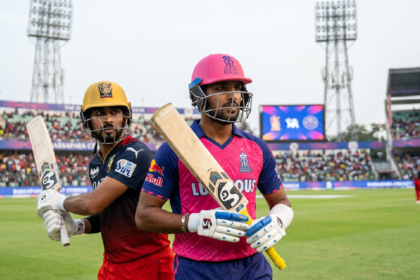
The global reach of the sport continues to expand, evidenced by the rising popularity of various domestic leagues and high-intensity international fixtures. As new stars emerge, such as those seen in the high-stakes Guwahati encounter between Rajasthan and Bengaluru, the historical context provided by the legends of the past remains vital. This ranking focuses on longevity, the ability to perform under extreme pressure, and the technical innovations brought to the crease or the bowling crease by the game’s most iconic figures.
The Foundations of Batting Excellence
Sir Donald Bradman is widely regarded as the benchmark for batting greatness in the history of the sport. His career averages are frequently cited by historians as a statistical anomaly, representing a level of consistency that many experts believe may never be replicated. Reports of his dominance suggest he provided a psychological edge for the Australian side that defined several decades of international competition. His ability to maintain focus over long periods remains a trait that modern players still strive to emulate today.
Following in those footsteps is Sachin Tendulkar, the “Little Master” from India. Tendulkar carried the expectations of a massive fan base for a significant portion of his life, transitioning from a teenage prodigy to a senior statesman of the game. He is credited with holding numerous scoring records in both the long and short formats of the sport. His technical proficiency against various bowling styles made him a complete batsman, deeply influencing the trajectory of cricket in South Asia.
West Indian Flair and All-Round Versatility
During a period of significant Caribbean dominance, Sir Vivian Richards brought a level of aggression to the crease that redefined the role of a top-order batsman. Eschewing protective headgear even against the fastest bowlers, Richards dismantled attacks with a physical presence that reportedly changed the tempo of modern matches. He was a central figure in a West Indian side that was considered the premier force in world cricket for an extended era.
The West Indies also produced Sir Garfield Sobers, who is often described by veteran analysts as the most versatile all-rounder to take the field. Sobers possessed the rare ability to impact a match as a specialist batsman, a fast-medium bowler, or a spinner. While modern players like Ben Stokes have detailed the physical toll of such a demanding role, Sobers maintained his status as a world-class performer across multiple disciplines for many years.
Revolutionaries of Spin and Swing
Shane Warne occupies a unique position in this history as the player credited with reviving the art of leg-spin at a time when fast bowling dominated the international circuit. With a theatrical approach and a deep understanding of tactical psychology, Warne brought a level of craft that frequently troubled the world’s best batsmen. One of his early deliveries in England is often cited by commentators as a defining moment that changed the perception of spin bowling for a new generation.
Complementing the spin of Warne was the high-speed skill of Wasim Akram. The Pakistani left-armer is considered by many to be among the greatest exponents of swing bowling the game has seen. His ability to move the ball in both directions at high pace, particularly as the ball aged, made him a formidable opponent for any top-order lineup. Akram’s technical variations paved the way for modern pacemen who now utilize similar skills in the shorter formats of the game.
Consistency and Statistical Giants
Jacques Kallis of South Africa is frequently mentioned as one of the most consistent giants of the game. Statistically, Kallis is often compared to the greatest specialist batsmen and bowlers due to his heavy scoring and his ability to take crucial wickets in pressure situations. His presence was considered the backbone of the South African team for a long period, and more recent reports show South Africa taking control of different international series as they look to build on that legacy of excellence.
Rounding out the elite are Brian Lara and Muttiah Muralitharan. Lara was perhaps the most gifted stroke-maker of his time, known for his ability to record massive individual scores that could shift the momentum of a match within a single session. Muralitharan, the Sri Lankan off-spin specialist, finished his career with a high number of international wickets, utilizing a unique bowling action and significant stamina to challenge batsmen on various surfaces worldwide.
The Shifting Definition of Greatness
As the sport continues to move toward shorter, more explosive formats, the criteria for being labeled a “great” player are gradually shifting. Contemporary stars must now master the traditional technicalities of the long-form game while adapting to the creative and physical demands of T20 cricket. While the legends of the past set the foundation, the current generation is testing the strategic boundaries of what is possible on the field.
Future discussions regarding the best players to ever play the game may eventually include the names of those currently dominating the scene. For now, the ten icons mentioned here remain the standard by which all others are measured, representing the peak of cricketing achievement across more than a century of international competition. Their contributions have ensured that both batting and bowling remain arts that require constant evolution.