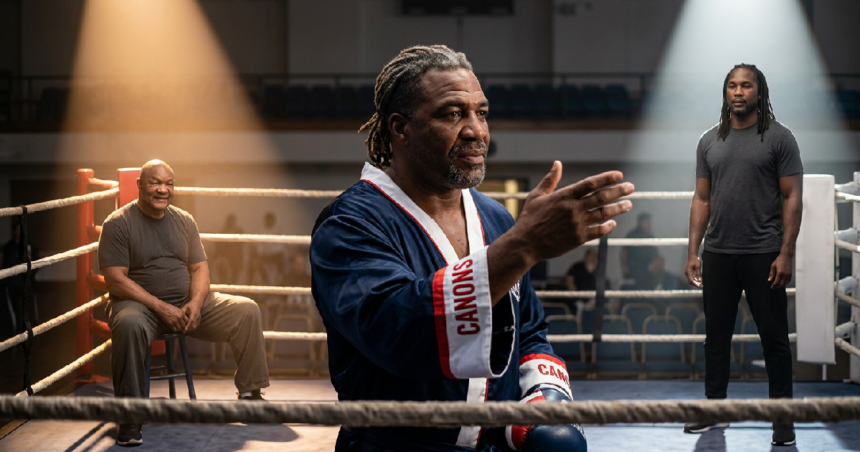
Former heavyweight champion Shannon Briggs has shared a compelling comparison between the punching power of Lennox Lewis and George Foreman, two of the most formidable forces to ever grace the boxing ring. In recent reflections, the Brooklyn native detailed the physical toll of facing both legends, suggesting that Foreman possessed a level of physical strength that surpassed even the elite capabilities of Lewis. Briggs, who held world honors during his career, remains one of the few fighters to have shared the ring with both icons during a golden era for the division.
Briggs encountered the two heavyweights at very different stages of their respective professional journeys. He famously went the distance with a veteran Foreman in a high-stakes heavyweight encounter that many remember as the final professional appearance for the man known as ‘Big George.’ Shortly thereafter, Briggs was matched against a prime Lennox Lewis in a major title clash. While Briggs reportedly managed to trouble the Briton in the opening exchanges, Lewis eventually asserted his dominance to secure a stoppage victory.
The contrast between the two experiences remains sharp in the mind of the American puncher. Despite the technical brilliance and destructive finishing ability of Lewis, who is widely regarded as one of the greatest heavyweights in history, Briggs maintains that the physical impact of Foreman’s punches was in a category of its own. He described the sensation of being hit by Foreman as akin to a vehicular collision, a testament to the raw, heavy-handed power that the Texas native retained even into his later years in the sport.
Heavyweight Power Dynamics and the Foreman Factor
To understand the weight of Briggs’ assessment, one must look at the reputations of the men involved. George Foreman is frequently cited by boxing historians as perhaps the hardest single-shot puncher in the history of the sport. His knockout reputation was fueled by a come-forward style that relied on thudding, heavy blows rather than blistering speed. This physical presence made him a terrifying prospect for modern heavyweights like fighters who shaped the combat sports era through sheer force of will.
Briggs noted that while many fighters hit hard, nobody he faced matched the specific type of power Foreman generated. The impact was not a sharp or “stinging” sensation but rather a systemic shock. This endorsement carries weight given that Briggs himself was known for his explosive power and secured several notable victories in the heavyweight division via late-round stoppages. He suggests that Foreman’s heavy hands were a natural gift that did not diminish with age.
The Technical Force of Lennox Lewis
While Foreman relied on “heavy” hands, Lennox Lewis brought a more refined, clinical brand of destruction to the ring. Lewis used his height and reach to set up a straight right hand that accounted for many of the division’s top names during the 1990s. His win over Briggs is often cited as a masterclass in weathering an early storm before systematically breaking down an opponent. Lewis remains the standard-bearer for technical heavyweights, much like athletes pursuing multi-division glory in other disciplines who rely on a combination of size and strategy.
However, in terms of the sheer physical sensation of the punch, Briggs separates the two. He suggests that while Lewis was capable of find the chin and ending a fight with precision, Foreman’s power was omnipresent, making even blocked shots feel like major trauma. This distinction highlights why Foreman was able to reclaim world title status in his mid-forties, long after his peak athletic years had supposedly passed. It was a brand of power that did not require the setup or speed that younger champions relied upon.
Legacy and the Evolution of the Heavyweight Puncher
Comparing eras is a favorite pastime for boxing enthusiasts, and first-hand accounts like those from Briggs provide rare insight into these debates. The heavyweight landscape has seen various “knockout kings,” but the consensus often returns to the names Briggs faced. The sheer durability required to stand in front of Foreman for the full duration of a fight is often overlooked in contemporary discussions of the 1990s heavyweight scene. Just as recent sporting updates from around the globe focus on the technical evolution of athletes, the heavyweight division remains an outlier where raw power can still negate the most sophisticated game plans.
Briggs’ reflections serve as a reminder of the unique danger George Foreman posed even in the twilight of his career. According to reports from the time, Foreman was still delivering a level of physical punishment that future champions would be talking about decades later. While Lewis won more high-profile bouts and retired with a more robust collection of titles, it is the memory of the “car-crash” power from Foreman that appears to have left the most lasting impression on one of his final opponents.