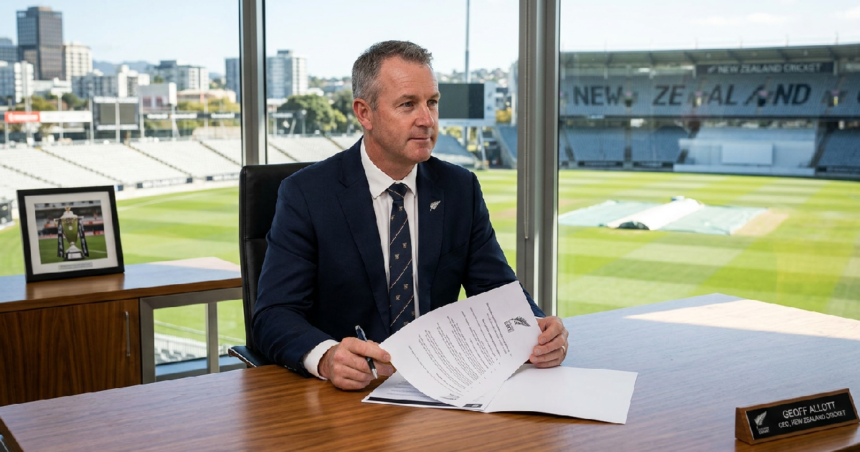
Geoff Allott Returns to New Zealand Cricket in Leadership Capacity
New Zealand Cricket (NZC) has named former international fast bowler Geoff Allott as its new Chief Executive Officer, ending a search for a leader to steer the organization through a period of domestic restructuring. Allott, a respected figure in the nation’s sporting landscape, takes over the role following the departure of Scott Weenink, who reportedly left the post earlier this month. The appointment signals a return to familiar territory for Allott, who has spent years in various governance and administrative roles within the New Zealand cricket system.
The transition comes at a delicate time for the sport in New Zealand. Reports suggest the vacancy arose after a period of friction involving provincial associations and the New Zealand Cricket Players Association over the future direction of the domestic game. Central to these discussions is a proposed franchise tournament intended to update the domestic T20 structure. Allott’s primary challenge will be to bridge the gap between various stakeholders while ensuring new commercial formats find their footing without alienating the grassroots and provincial bases that have traditionally defined New Zealand’s talent pipeline.
Allott is no stranger to these boardrooms. He previously served as a director on the NZC board for an extensive term and was involved in the early stages of the players’ union. His background also includes high-level management roles within the sport’s governing structure. By tapping a former player with significant administrative experience, the NZC board appears to be prioritizing stability and institutional knowledge. It is a strategy seen in other sports, such as when Luke Littler led technical drills to help younger teammates find their rhythm through shared experience and veteran insight.
Building Bridges Across the Domestic Cricket Landscape
Following the announcement, Allott is expected to emphasize the need for collaboration. His connection to the national team from his playing days, combined with his time as a director and manager, provides a perspective on the needs of both the athletes and the administrators. His immediate priority reportedly involves fostering a positive culture that includes the member associations and commercial partners, many of whom have expressed concerns about the sustainability of the domestic game in an increasingly crowded global schedule.
The former left-arm seamer, who earned significant acclaim during his international playing career, is believed to view strengthening relationships at every level as a key way to remain competitive. Just as Manchester United sought defensive stability through high-value leadership and restructuring, NZC is looking for Allott to provide a secure foundation for the next chapter of New Zealand cricket.
Navigating the Franchise Transition
The most pressing item on Allott’s desk is the future roadmap for New Zealand’s T20 evolution. Global trends in cricket are moving toward private ownership and franchise leagues, a model NZC is currently evaluating. The tension that reportedly contributed to the previous leadership change remains relevant, as provincial boards have expressed concerns regarding their role and funding if the traditional domestic structure is updated in favor of a more commercialized product.
Allott’s history with regional cricket boardrooms and his status as a life member within the organization may provide the social capital needed to negotiate these changes. He must convince provincial leaders that a more robust domestic league will ultimately benefit their local setups by bringing more revenue and international attention to the New Zealand summer. This pivot follows a trend of regional sports teams searching for new identities, much like the ongoing debate around Seattle sports franchises as they attempt to balance tradition with modern commercial demands.
A Playing Career Defined by Grit
While his administrative skills are the focus today, Allott’s appointment carries the weight of his legacy on the field. He was a mainstay of the national bowling attack for several years, particularly during successful World Cup campaigns in the late nineties. His ability to move the ball and his effectiveness in high-stakes tournament play established him as a premier talent in New Zealand’s history.
That playing experience is expected to help him in negotiations with the current crop of players. As more New Zealanders opt for freelance T20 contracts over national central contracts, Allott will likely lead the charge in creating a system that keeps the country’s best talent available for international duty while respecting their earning potential in foreign leagues. The NZC board believes that a leader who was involved in the inception of player advocacy groups is uniquely qualified to navigate this complex middle ground. Allott’s deep knowledge of both the locker room and the boardroom arrives at a time when the governing body needs clear, decisive leadership to maintain New Zealand’s standing on the world stage.