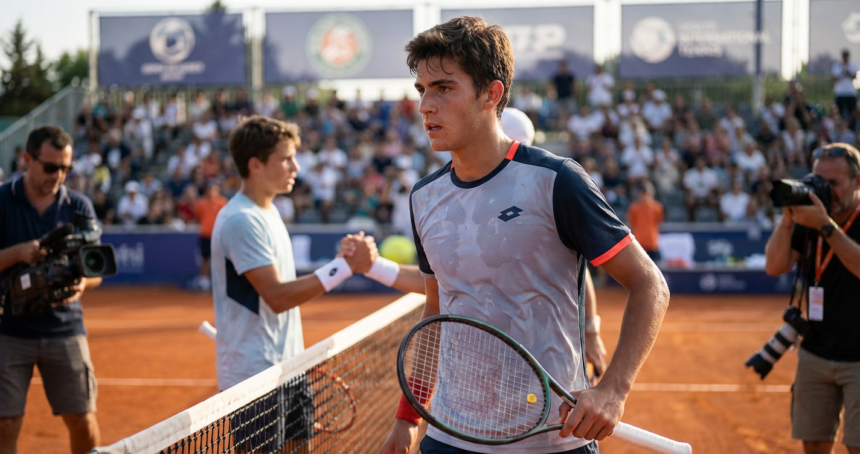
Rafael Jodar is quickly becoming one of the most discussed names in professional tennis after a robust start to his career that has drawn inevitable comparisons to Spanish legends like Rafael Nadal and Carlos Alcaraz. The teenage prospect has reportedly put together a string of victories in his opening months on the ATP Tour that suggests his transition from the junior ranks is progressing faster than many of his peers.
Industry analysts have pointed toward his win-loss record in his first few dozen professional appearances as evidence of his potential. Reports suggest that Jodar has secured a higher number of wins in his initial stretch of professional matches than several current and former world number ones achieved at a similar age. This early efficiency has moved Jodar from being a promising talent to a focal point of discussions regarding the future of Spanish tennis.
Evaluating Performance Beyond Statistical Milestones
While the numerical comparisons to all-time greats provide a compelling narrative, Jodar’s recent form is built on more than just general win totals. His appearances in various clay-court tournaments have demonstrated a tactical maturity that is often uncommon for players before they reach their twenties. He has shown an ability to compete against veteran campaigners and maintain his composure during tight moments in high-pressure matches.
The broader context of his achievement is notable when looking at the wider tennis elite. Several legendary figures in the sport famously took time to find their footing on the professional circuit during their first year. Jodar’s ability to find immediate success on the main tour underscores the rare speed of his development. This trajectory is similar to how Arthur Fils has recently signaled a shift in the youth hierarchy by competing for deep runs in top-tier events.
The young Spaniard relies on a physical style and relentless baseline coverage that many observers have likened to the traditional Spanish school of tennis. However, he also brings a modern aggression to his game, often looking to dictate points early rather than simply outlasting his opponents. This versatility makes him a threat across different tournament conditions, though clay remains his most comfortable surface for now.
Rising Competition Among the Next Generation
Despite his impressive start, Jodar is not the only teenager making waves on the international circuit. He faces competition for the spotlight from other emerging talents, including Brazilian prospect Joao Fonseca. The two are expected to face each other in upcoming tournaments, a prospect that fans are already viewing as a potential long-term rivalry between two of the game’s brightest young stars.
Fonseca has also established himself as a regular presence on the tour, reportedly having secured significant results and titles in recent months. While both players are at different stages of their development, their concurrent rise has injected fresh energy into the sport. Much like how Carlos Alcaraz manages his own fitness concerns, the emergence of Jodar provides Spain with another high-level option at the top of the rankings.
The pressure of following in the footsteps of a multiple Grand Slam champion like Nadal is a burden few can carry effectively. However, Jodar appears to be handling the increased media scrutiny with poise. His team is reportedly focused on long-term growth rather than short-term statistics, ensuring that the young player does not burn out during the grueling travel schedule required of modern professionals.
Growth Potential and Future Trajectory
The coming months will serve as a significant proving ground for Jodar as he transitions through different court surfaces and bigger tournament draws. Opponents will likely have more video and data on his playing style, meaning the element of surprise that aided his early victories will begin to diminish. The true test will be his ability to adapt his game as he becomes a marked man on the circuit.
Coaching experts suggest that Jodar’s serve and net game remain the areas with the most significant room for improvement. Increasing the power of his delivery could make him a more formidable threat on hard courts and grass, moving him beyond the “clay specialist” label. Just as major sporting organizations look to reshape their future through scouting and strategic development, the tennis world is currently witnessing a natural reshaping of its hierarchy through this new wave of talent.
Whether Jodar can translate this exceptional start into a career defined by major trophies remains an open question. For now, the focus remains on his consistent development and his ability to hold his own against the best in the world. If he maintains his current trajectory, the early comparisons to Nadal and Alcaraz may prove to be more than just optimistic speculation.