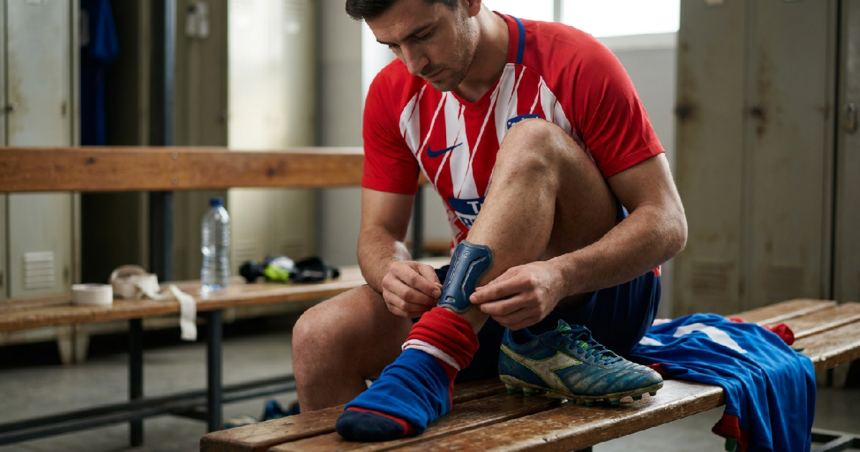
Walk into any elite European dressing room today and you might mistake a professional footballer’s protective gear for a pack of sticky notes. The traditional, robust plastic shields that once ran from the ankle to the patella are vanishing, replaced by miniature guards that barely cover the center of the shin. While players claim these “micro-guards” offer a competitive edge in mobility and comfort, medical professionals and veteran coaches are sounding the alarm over a growing safety crisis on the pitch.
The trend has permeated every level of the game, from the Champions League down to Sunday leagues. Young players, eager to emulate the look of their idols, are reportedly opting for guards that are significantly smaller than the equipment used by previous generations. These slivers of carbon fiber or plastic are often held in place by grip socks or medical tape, providing a sleek silhouette but leaving the vulnerable tibia exposed to the full force of a mistimed sliding tackle.
The obsession with weight and freedom of movement
The primary driver behind this shift is the relentless pursuit of marginal gains. Modern elite football is faster than ever, and players are increasingly sensitive to anything that might feel cumbersome. Many wingers and creative midfielders argue that traditional guards restrict their range of motion, particularly when changing direction at high speeds or executing intricate footwork. By minimizing the weight on their lower legs, they feel lighter and more connected to the ball.
There is also an element of fashion involved. The “low-sock” look, popularized by several high-profile English and Spanish internationals, requires a smaller guard to avoid unsightly bulges or the sock slipping down. It has become a hallmark of a certain type of confident, technical player. However, this aesthetic preference is clashing with the foundational principles of player safety. As Manchester United secure defensive reinforcements for the coming seasons, the physical toll on those defenders remains a point of contention for medical staffs trying to keep their stars on the pitch.
The medical reality of lower leg impacts
Physiotherapists warn that the tibia is one of the most exposed bones in the body with very little soft tissue to cushion a blow. When a player wears a guard with a surface area comparable to a credit card, they are effectively gambling that a teammate or opponent won’t catch them with a stray stud in the numerous unprotected zones of the leg. A standard tackle carries enough force to cause significant bruising, lacerations, or in extreme cases, fractures that can sideline a player for an entire campaign.
The protective value of a shin guard isn’t just about preventing breaks; it’s about dispersing energy. A larger surface area allows the impact of a boot to be spread across a wider section of the limb. When that surface area is drastically reduced, the force of a collision is much more concentrated. This has led to an increase in reports of “stinger” injuries—nerve impacts that can cause temporary numbness or sharp pain, forcing players off the field even if no bone is broken.
Regulatory loopholes and officiating challenges
The irony of the situation is that the Laws of the Game, maintained by IFAB, technically require players to wear shin guards that provide a “reasonable degree of protection.” However, the definition of “reasonable” is notoriously vague. Referees are tasked with checking equipment before kick-off, but they rarely have the tools or the mandate to enforce specific size requirements. If a player is wearing anything that vaguely resembles a guard under their sock, it is usually waved through.
This lack of a standardized minimum size has allowed manufacturers to market “pro” versions of guards that prioritize weightlessness over comprehensive safety. While latest sport news updates often focus on high-profile transfers and tournament draws, the quiet evolution of player equipment is arguably having a more direct impact on the day-to-day health of the workforce. Some leagues have considered mandating minimum dimensions, but enforcement remains a logistical nightmare for officiating crews who already have their hands full with VAR and player discipline.
Balancing performance with career longevity
The debate often centers on a player’s right to choose their own risk level. A veteran striker might argue that they have played hundreds of matches with tiny guards without a major incident. But for the clubs who pay millions in wages, the risk feels lopsided. A single reckless challenge could turn a minor knock into a multi-month recovery because a player preferred a lighter feel in their socks. Similar career-defining risks occur in different contexts, such as when Salah faces a career defining choice regarding his future; the decisions made off the ball are often as critical as those made on it.
As the game continues to evolve toward higher physical intensities, the pressure on governing bodies to act will likely increase. Whether through stricter equipment checks or new manufacturing standards that require a minimum coverage area based on a player’s height, the era of the “vanishing shin guard” may eventually be forced into a retreat for the sake of the players’ own career longevity.