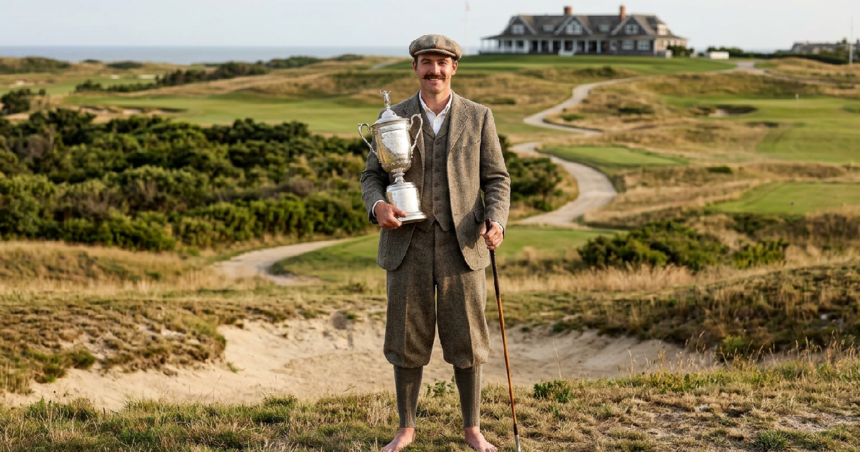
James Foulis, Raymond Floyd, Corey Pavin, Retief Goosen, and Brooks Koepka are the only five golfers to have secured U.S. Open victories at the historic Shinnecock Hills Golf Club.
This group of champions reflects the evolution of the United States Golf Association (USGA) and its premier championship, starting from the second-ever edition held at the Southampton venue in 1896. As one of the five charter clubs that formed the USGA in 1894, Shinnecock Hills remains a cornerstone of American golf history.
The course has provided a stern test across three centuries, with each winner navigating unique challenges. From James Foulis winning on the shortest course in tournament history to Raymond Floyd setting age records in the mid-1980s, the venue consistently identifies resilient champions.
While the layout has grown from a 4,423-yard track in the 19th century to a modern championship behemoth, the fundamental requirement for victory remains an ability to handle intense final-round pressure.
The history of these championships often mirrors broader shifts in the sports world. Much like how latest sport news updates track modern tournament structures and athlete preparation, the U.S. Open at Shinnecock has evolved from a 36-hole format into the 72-hole marathon recognized today. Each of the five champions provides a distinct chapter in the story of this Southampton landmark.
Establishing a legacy in the 19th century
James Foulis of Scotland became the first champion at Shinnecock Hills in July 1896, winning the 2nd U.S. Open Championship. He posted a 36-hole score of 152, including a final-round 74 that stood as the tournament’s 18-hole record until 1903. Foulis finished three strokes ahead of runner-up Horace Rawlins to claim the $150 top prize on a 4,423-yard course.
The 1896 tournament was also a landmark for inclusion in American sports. Despite a petition from some professionals to boycott the event over the participation of John Shippen and Oscar Bunn, USGA President Theodore Havemeyer insisted the championship proceed as planned. Shippen, an African-American caddie, was a co-leader after the first round and eventually finished in a tie for sixth place.
Raymond Floyd and the 1986 veteran triumph
When the U.S. Open returned to Shinnecock Hills in June 1986, Raymond Floyd produced a final-round 66 to finish at 1-under par. At 43 years, 9 months, and 11 days old, Floyd became the oldest champion in U.S. Open history at the time, a record he would hold for the following four years. He finished two strokes ahead of Chip Beck and Lanny Wadkins.
Floyd’s victory was a feat of endurance on a par-70 layout that measured 6,912 yards. He entered the final day trailing Greg Norman by three shots but moved ahead as Norman struggled to a closing 75. Ten different players held at least a share of the lead during the final round, emphasizing the tight competition before Floyd secured the $115,000 prize.
His performance relied on mental fortitude and experience, qualities often seen in other high-level competitions. For instance, when Israel Adesanya faces Joe Pyfer, the narrative often centers on how veteran savvy can neutralize younger, aggressive opponents. Floyd echoed this sentiment after his win, famously asking, “Who needs the Senior Tour?”
Masters of the modern Southampton era
The three most recent winners at Shinnecock Hills represent the transition into the contemporary game. Corey Pavin secured his title in 1995, famously hitting a 4-wood on the 72nd hole to help secure the championship. Pavin’s victory was followed nearly a decade later by Retief Goosen, who claimed his second U.S.
Open title at the venue in 2004 during a week defined by extremely difficult playing conditions.
In 2018, Brooks Koepka joined this elite group by becoming the first player in 29 years to successfully defend a U.S. Open title, having won the previous year at Erin Hills. This achievement highlighted the consistency required to win on a course that has physically expanded to meet modern distance demands while retaining its difficult links-style characteristics.
Fans of various sports often look for these types of historic back-to-back performances, similar to the intensity found in high-stakes showdowns in darts or other individual disciplines. At Shinnecock Hills, such dominance is rare, as only five men have ever climbed the mountain at this specific New York venue.
The five U.S. Open winners at Shinnecock Hills
- James Foulis (1896): Won with a score of 152 over 36 holes, setting an 18-hole record of 74 that lasted seven years until 1903.
- Raymond Floyd (1986): Shot a final-round 66 to finish at 279 (-1), becoming the oldest champion in tournament history at the time.
- Corey Pavin (1995): Secured the 95th U.S. Open Championship, remembered for his iconic long-iron approach on the final hole.
- Retief Goosen (2004): Navigated a famously difficult setup to win his second career U.S. Open at the Southampton course.
- Brooks Koepka (2018): Became the first golfer since 1989 to win consecutive U.S. Opens, securing the fifth championship held at this venue.