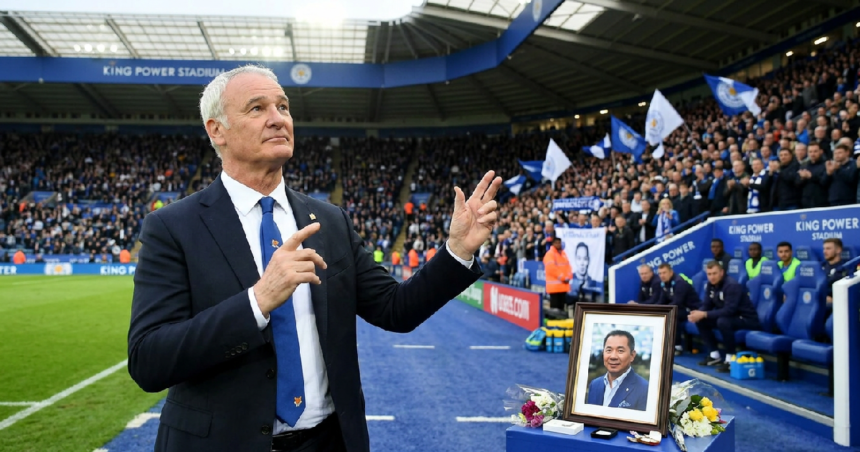
Claudio Ranieri has offered a poignant reflection on the legacy of former Leicester City owner Vichai Srivaddhanaprabha, describing the late businessman’s passing as a catastrophic loss for the club and the wider community. The Italian manager, who led the team during their historic ascent to the top of English football, spoke about the profound impact of the aviation tragedy that claimed the chairman’s life and fundamentally altered the trajectory of the organization.
The veteran coach suggested that the late chairman’s influence was the primary driver behind the club’s ability to compete with the wealthiest teams in the world. Ranieri recalled a unique bond defined by kindness and a constant, supportive presence, noting that the owner had a rare gift for fostering a family atmosphere. Similar to how Mohamed Salah face career-defining choices during periods of transition at major clubs, Leicester has found itself grappling with a shifting identity in the years following the loss of its central visionary.
While the club once enjoyed a period of unprecedented success that captivated global audiences, their fortunes have reportedly turned in recent seasons. Ranieri emphasized that the loss was felt by every staff member and player, creating a vacuum in leadership that proved exceptionally difficult to navigate. The stability provided during that era allowed a group of undervalued players to achieve what many considered impossible, a feat that remains a definitive benchmark in the sport.
The lasting influence of a benevolent leadership style
Ranieri’s recent comments highlight the deep personal connection between the squad and the ownership during their most famous campaign. He noted that Srivaddhanaprabha managed to make his presence felt throughout the training ground without being overbearing, a style that prioritized the human element of the game. This approach reportedly allowed the team to thrive under pressure and maintain a level of cohesion that is increasingly rare in the modern era.
The Italian manager characterized the late chairman as an extraordinarily generous man whose vision served as the glue for the club’s ambitious projects. Without that specific leadership, the club has faced significant challenges in maintaining its competitive edge. This shift in fortunes serves as a reminder of how integral a single leader can be to a team’s survival and growth, especially as other major clubs like Manchester United spend heavily to find their own defensive stability and reclaim past glories.
Navigating a period of significant domestic decline
The contrast between the heights of the club’s past achievements and its current situation has become a point of intense discussion among supporters. Following a series of difficult seasons and reported relegations, the team finds itself in a much lower tier of the English football pyramid than it occupied during its peak. This downward trajectory has sparked debate regarding the long-term management of the club and how quickly fortunes can shift in professional sports.
Ranieri indicated that the loss of the owner was a disaster precisely because his specific vision was what held the project together. In an increasingly volatile environment, the club has struggled to replicate the spirit of its title-winning years. While some modern organizations prioritize expensive midfield signings to address systemic issues on the pitch, Ranieri maintains that the culture established by Srivaddhanaprabha was the primary reason for their success.
Reflecting on the human spirit behind the title
Beyond the tactical innovations and the famous phrases that defined his tenure, Ranieri insists that the human element made their success possible. He frequently points to the late owner’s habit of flying in to support the team personally, ensuring that every individual felt valued regardless of the results on the pitch. This environment reportedly allowed players to reach heights that few experts had predicted for them.
The manager expressed hope that the late chairman would be proud of the way the footballing world continues to remember their shared history. As the club looks toward an uncertain future in the lower divisions, those memories serve as both a comfort and a reminder of a unique era. Ranieri’s tribute marks a somber reflection on a period of benevolent leadership that remains a point of reference for what can be achieved through collective belief and a strong organizational culture.