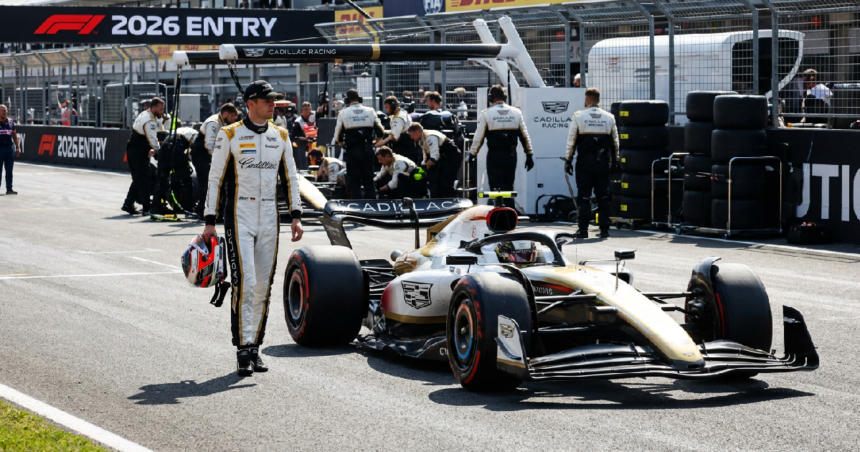
The arrival of Cadillac on the Formula 1 grid was met with a mixture of curiosity and skepticism from fans and paddock insiders alike. Many expected the American entry to struggle significantly during its debut campaign, with some critics suggesting the team might trail the established pack by a considerable margin. However, as the championship battle intensifies, those concerns have been largely dispelled. F1 commentator Alex Jacques has noted that the outfit is already performing at a level that exceeds the basement-level expectations held by many before the season began.
Led by team principal Graeme Lowdon, Cadillac Racing has managed to integrate itself into the competitive fabric of the sport far quicker than many traditional expansion teams of the past. While the team faces the uphill battle common to all newcomers, the raw data from early sessions suggests a project that is fundamentally capable of competing at the highest level. Jacques pointed to recent qualifying performances as a litmus test, where the car showed it was far from the struggling backmarker some had feared it would be.
Defying the skeptics during the debut campaign
Reports leading up to the team’s first race suggested that a new entry might find itself several seconds off the pace of the leaders. Critics argued that adding an 11th team could dilute the quality of the field without adding meaningful competition to the front of the grid. Jacques argues that this assessment has proven inaccurate in the early stages of the season. The team’s performance has reportedly placed them within a bracket that allows them to challenge established names, a feat that seemed improbable during the winter development phase.
Much of this early stability can be attributed to the team’s decision to prioritize experience over an experimental driver lineup. By securing a pair of veteran racers with multiple Grand Prix victories to their names, Cadillac ensured they had proven winners behind the wheel. This veteran presence allows the technical team to receive precise feedback, helping to accelerate the car’s development curve. It is a strategy that mirrors the successful approaches seen in other competitive sporting environments, much like how Manchester United sought to reshape its defense with high-value veteran experience to stabilize a transitioning squad.
Technical leadership driving Cadillac’s progress
The car’s respectability isn’t just down to the drivers. Former F1 racer Jolyon Palmer has highlighted the technical “heavy hitters” working behind the scenes. With individuals who have decades of institutional knowledge involved in the project, the team possesses a wealth of experience regarding the sport’s regulations. These are professionals who understand the nuances of chassis design and how to maximize performance under a new technical framework.
While the team is currently battling for position in the lower half of the standings, the atmosphere around the Cadillac garage appears to be one of optimism. Unlike some established teams that are facing scrutiny for failing to meet their historical standards, Cadillac is being praised for its ability to engage in wheel-to-wheel battles. They aren’t just making up the numbers; they are reportedly participating in the heat of the race, which justifies their presence on the grid alongside the sport’s icons.
The challenge of bridging the gap to the midfield
Despite the encouraging start, the road ahead remains steep. Establishing a baseline of competence is a successful first step, but Formula 1 is a game of marginal gains. Palmer suggests that while the team can compete in certain sectors, they may still face challenges in maintaining that level of performance over full race distances compared to the frontrunners. The focus is expected to shift from basic reliability to finding the aerodynamic efficiency required to break into the points on a consistent basis.
The mid-season development race will be the true test for Lowdon’s squad. In many ways, they are navigating a learning curve similar to other sports entities trying to find their footing in a crowded market, such as the NBA’s recent moves toward expansion in major US cities. Just as those new franchises will need to prove they can compete with the league’s elite, Cadillac must prove they can out-develop rivals as the championship moves into its busier segments.
Looking ahead to the summer development window
If Cadillac cannot bridge the gap to the midfield fight by the mid-year break, the initial praise may give way to tougher questions from the media. The pressure is on the technical department to capitalize on driver feedback to find the “active performance” that can often be elusive for new projects. In a season defined by tight margins, even a small gain in development could be the difference between a successful debut and a slide down the order.
However, the consensus among experts like Jacques and Palmer remains positive. For a brand-new team to arrive and immediately be within striking distance of established outfits is seen as a victory in its own right. As the sport continues to evolve, much like how weather-disrupted sessions can level the playing field, Cadillac appears positioned to take advantage of any chaotic scenarios that the current season might throw their way.
For now, Cadillac has silenced many of the doubters who believed an American entry wouldn’t add value to the grid. They have built a solid foundation, proved their logistical capability, and shown that they belong in the paddock. The next few months will determine if they can transform from a promising newcomer into a genuine threat to the established midfield order.