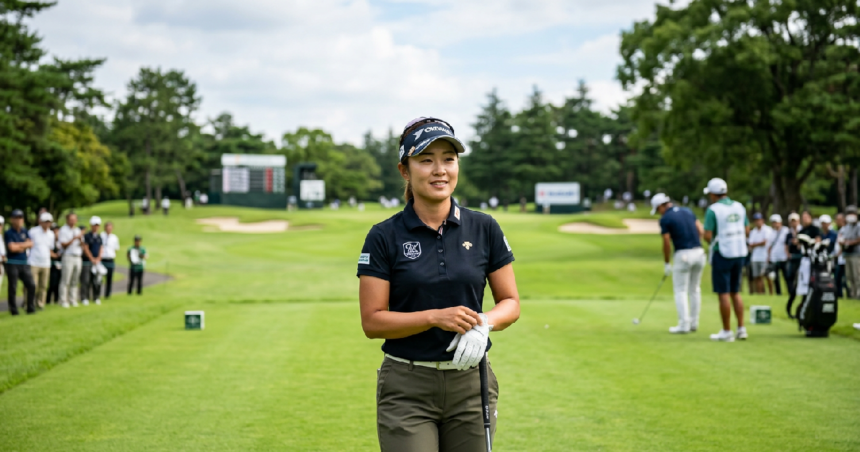
Akira Yamaji has signaled a development in her professional approach following a strong start to her most recent tournament appearance. The Japanese golfer, traditionally known for an aggressive style of play, appears to be finding a more consistent rhythm by balancing her natural shot-making instincts with a more measured strategy on the course.
According to reports from the event, Yamaji showed a capacity to capitalize on scoring chances without falling into the tactical traps that often hinder aggressive players. While her career has previously featured bursts of high-level play, her most recent performance suggests a maturing athlete who is learning to better manage the risks associated with tour-level competition.
Strategic Evolution in Course Management
The foundation of Yamaji’s recent form is believed to be an evolving philosophy regarding course management. In past seasons, she was often linked with a high-stakes style that could lead to low scores but also significant errors. News outlets covering the event suggest she has consciously moved away from what she previously described as a more reckless mentality, opting for a balanced approach that accounts for the specific challenges of the layout.
This shift is a common transition for professionals in their mid-twenties, as the raw power of their early career begins to incorporate the tactical lessons learned from several years on the circuit. By reportedly focusing on hitting more greens in regulation and avoiding low-percentage attempts, Yamaji has provided herself with a more reliable statistical baseline. Just as technical adjustments can define an athlete’s trajectory across various disciplines, Yamaji’s emphasis on mental discipline is becoming a primary factor in her results.
Observers have noted her increased patience during difficult stretches of play. This composure has allowed her to stay in contention during the early stages of the tournament, a task that has sometimes proved difficult for her during more volatile opening rounds in the past.
The Value of Competitive Experience
Yamaji’s current form is being viewed by many as a potential breakthrough moment. By moving away from shots that carried unnecessary risk, she has seemingly unlocked a more sustainable version of her game. The experience she has gained on tour is often the most difficult asset for a golfer to acquire, requiring the discipline to accept a par when the conditions do not favor an aggressive birdie attempt.
Reports indicate that her iron play has remained a strength, but her decision-making on the more complex holes has seen the most improvement. Rather than attacking every pin, sources suggest she has been more willing to target the center of the green, trusting her putting to maintain her momentum. This discipline helps prevent the bogeys that can stall a player’s progress over the course of a four-day event.
The sports world frequently witnesses this transition where talent is bolstered by improved preparation. Whether it involves a golfer refining their strategy or athletes taking on leadership roles through more focused training habits, the outcome is typically a more resilient performance under the pressure of competition.
Looking Toward the Final Rounds
While a strong start provides a morale boost, Yamaji and her team are likely aware that success in professional golf is determined by consistency over the full duration of an event. The leaderboard typically remains crowded with experienced winners and emerging talents capable of putting together low scores. However, the confidence gained from a successful opening day provides a foundation for the remainder of the week.
Her competitors will likely take note of her more composed demeanor. If she can successfully maintain her disciplined policy through the later rounds, she is expected to remain a significant factor in the chase for the title. The primary challenge remains the mental fatigue that often sets in during the closing stages, where the temptation to return to older, more aggressive habits can be at its peak.
Yamaji’s progress mirrors the long-term planning seen in other high-stakes environments, such as how organizations reshape their defensive structures to ensure stability and long-term results. For Yamaji, her “defense” is her improved course management, which provides the platform for her natural scoring ability to shine when the situation is right.
Maintaining Consistency and Focus
As the tournament progresses, Yamaji’s ability to maintain her efficiency around the greens will be a key factor. Weather and course conditions are expected to play a role in how the field approaches the following rounds, and Yamaji will need her approach shots to remain precise to keep pace with other contenders.
If she continues to prioritize high-percentage targets, the scoring opportunities that arise from a steady rhythm are likely to keep her in the hunt. Local interest in her progress continues to rise as she pursues what would be a significant milestone in her professional career. Her transition from an aggressive young pro to a more calculated competitor is currently one of the more interesting developments on the circuit.