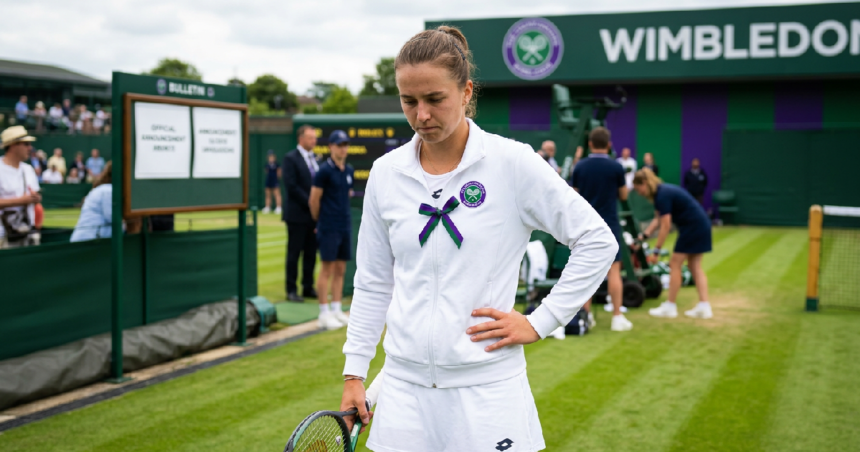
The All England Lawn Tennis and Croquet Club (AELTC) Wild Card Committee faces a complex dilemma as Polish player Maja Chwalinska, the 2026 French Open runner-up, risks missing direct entry into Wimbledon 2026. Despite her current live ranking of World No.
21 as of June 8, 2026, Chwalinska remains 14th on the alternate list because the tournament uses rankings from six weeks prior to the start date. During that period in May, the 24-year-old was ranked at No. 114, outside the automatic qualifying threshold of No. 104.
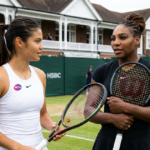
The situation is further complicated by the imminent return of Serena Williams and the continued activity of Venus Williams. Both sisters are reportedly near certain to receive invitations to the main draw, which would consume valuable spots from the eight total wildcards available for the ladies’ singles competition.
Serena Williams reentered the International Tennis Integrity Agency (ITIA) testing pool in December 2025, signaling an intent to compete at the venue where she has claimed seven singles titles.
Wimbledon’s wildcard announcements are scheduled for the week commencing June 15, 2026. With the committee often prioritizing British players—having awarded seven of eight wildcards to domestic stars in 2025—Chwalinska may be forced to compete in the qualifying tournament.
This is the same path she navigated to reach the Roland Garros final, where she eventually lost to Mirra Andreeva 6-3, 6-2 on June 6, 2026, after a match lasting 82 minutes.
The ranking technicality affecting Maja Chwalinska
Chwalinska’s performance in Paris has been a standout story for the WTA, but the rigid entry deadlines for Grand Slams mean her rise to No. 21 comes too late for the London draw. Just weeks ago, on May 25, she was ranked No. 114, and earlier in the month, she sat at No. 113.
While her current standing is a career-high, she effectively needs 14 main-draw withdrawals to gain direct entry without a wildcard committee invitation.
The Polish player has a difficult history with the grass-court season, having reached the Wimbledon main draw only once in 2022. In 2021, 2023, and 2025, she suffered defeats in the first round of qualifying.
However, her 2026 season has been her most successful to date, boasting 27 wins and 9 losses for a 75% win rate. Her total career prize money now stands at $1,747,849 following her deep run in the French Open.
If the AELTC does not offer her a spot, it reinforces concerns about the latest sport news updates regarding how Grand Slams reward non-domestic players on merit. Chwalinska’s Polish nationality offers no reciprocal advantage like those shared between the four major host nations. Without a wildcard, the World No.
21 would be playing qualifying matches at Roehampton while lower-ranked players occupy the main draw seeds at SW19.
Williams sisters influence the wildcard landscape
The potential inclusion of the Williams sisters creates a unique bottleneck for the AELTC. Combined, Serena and Venus Williams have secured 12 Wimbledon singles titles. Their legendary status makes them high-priority candidates for the committee, even if their recent rankings do not warrant automatic entry.
Serena Williams, who holds 23 Grand Slam singles trophies, remains a massive draw for the tournament organizers and global broadcasting partners.
Venus Williams continues to be a regular presence on the WTA Tour, and her interest in the grass-court season is rarely in doubt. When two icons of the sport request entry, the committee rarely declines, even if it limits opportunities for emerging talent.
The impact of legendary figures on their sports often mirrors the Rousey vs Carano impact, where legacy and commercial value are weighed heavily against current form.
Should the committee decide to honor both sisters, the competition for the remaining six wildcards will be fierce. Historically, the Lawn Tennis Association (LTA) uses these spots to bolster British interest. With only eight spots available in total, rewarding the runner-up of the previous Grand Slam may require the organizers to deny an invitation to one of their own domestic players or a returning legend.
Chwalinska remains in qualifying limbo
For Chwalinska, the next week will be one of uncertainty. If no wildcard is forthcoming, she will have to prepare for the grueling three-round qualifying process. It is a familiar position for her, but one that feels out of place for a player who just competed for a major title.
The focus remains on whether the committee will use its “other circumstances” clause to acknowledge her recent surge in form.
The debate highlights a recurring tension in professional tennis between traditional ranking systems and the need for flexible merit-based entry. Much like how Gerwyn Price beats Luke Littler in high-pressure darting showdowns, the results on the court are often undeniable, yet the structures of the game can be slow to adapt. For now, Chwalinska is 14 spots away from the security of the main draw.
Main-draw play at Wimbledon is set to begin in late June. Until the committee makes its final announcement, the Polish star remains the most prominent name on the alternate list. Her rise from No. 114 to No.
21 in less than a month has made her the talk of the tour, but whether that translates into a spot on Centre Court depends entirely on a committee room in London.