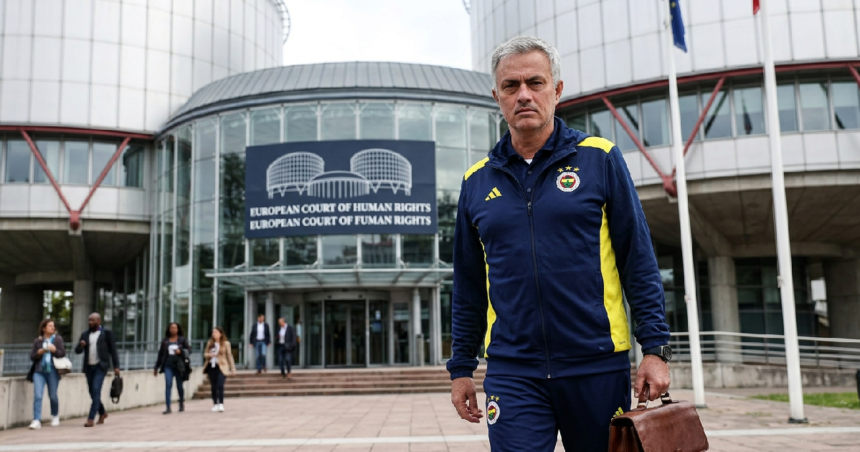
José Mourinho is reportedly escalating his dispute with Turkish football authorities by seeking a legal review from the European Court of Human Rights (ECHR) over disciplinary sanctions.
The veteran Portuguese coach, who has recently managed in the Süper Lig with Fenerbahçe SK, is through his legal team allegedly contesting the procedural fairness of fines and suspensions. This potential move against the Republic of Türkiye marks a significant confrontation between a high-profile manager and the national legal structures governing sports discipline.
The tension follows a period where the former Chelsea and Real Madrid manager faced repeated disciplinary action from the Turkish Football Federation (TFF). During his tenure in Istanbul, he was a frequent critic of officiating standards and administrative decisions, leading to numerous sanctions.
Reports suggest the core of the legal challenge rests on the right to a fair trial, with claims that the TFF’s internal judicial bodies may lack the independence required under international human rights standards.
The Turkish football landscape has often faced scrutiny regarding the autonomy of its sporting tribunals and their relationship with the national federation. Unlike leagues that rely on independent arbitration, the Turkish system is sometimes perceived as being closely linked to the governing body’s executive board.
By involving the ECHR, José Mourinho appears to be testing whether these domestic sporting regulations comply with the European Convention on Human Rights, a move that could have broad implications for the region.
Mourinho seeks to challenge Turkish Football Federation judicial processes
The dispute centers on how the TFF ratifies and enforces sanctions against club personnel without what some describe as a neutral avenue for appeal. Legal observers indicate that the manager’s representatives likely believe the current framework does not satisfy the requirements for an impartial hearing.
This perceived lack of “neutral ground” is expected to be a primary focus of any filing in Strasbourg, potentially forcing a restructure of Turkish football justice.
This development comes as many figures in the sport reach critical junctions in their professional lives. Much like how Mohamed Salah faces career defining choice as his current tenure draws toward a close, the Portuguese tactician is opting for a path that could redefine his legacy.
His reputation for challenging authority on the pitch is now moving into the complex sphere of international human rights law.
Turkish authorities have not yet issued a formal statement regarding the reported ECHR involvement. Historically, the TFF has defended its right to manage domestic football through its own established statutes and disciplinary committees. The federation frequently utilizes financial penalties to maintain order and curb public criticism from coaching staff, a practice the Portuguese manager was reportedly subjected to on several occasions during his recent campaigns.
Broader implications for European sporting law and precedents
Any eventual ruling from the ECHR concerning this matter could create a ripple effect across other European football associations. Many smaller federations use similar disciplinary models, and a verdict in favor of the manager would likely leave these systems vulnerable to similar legal challenges.
Experts suggest the case will likely hinge on whether “sporting exceptionalism” allows domestic bodies to bypass standard requirements for public and independent hearings.
The timing of this reported legal action is notable as the manager continues to be a central figure in European football narratives. While certain clubs are active in the market, such as when Manchester United secure 100m deal to bolster their defensive options, the Portuguese coach is directing significant attention toward legal accountability.
He remains a figure who demands the spotlight, whether through tactical decisions or courtroom maneuvers.
But the process within the Strasbourg court is known for its lengthy duration and meticulous review of state actions. A final resolution in such cases often takes a considerable amount of time, meaning the immediate impact on the Turkish top flight may be limited.
In the meantime, the TFF is expected to maintain its current disciplinary protocols, which it views as essential for preserving integrity in a volatile environment.
Future of sporting autonomy and independent arbitration in Türkiye
The outcome of this reported legal battle could determine how much oversight international courts can exercise over domestic sporting disputes. If the court eventually finds the current system lacking, it may mandate that Türkiye establishes an entirely independent sports arbitration body.
Such a shift would significantly alter the TFF’s authority and could encourage other athletes and coaches to challenge sanctions they perceive as unfair or biased.
And yet, the TFF remains determined to protect its regulatory framework and domestic autonomy. We see similar efforts to uphold specific standards across various sports, such as when Olympic officials bar transgender athletes to maintain their defined competition criteria.
As sports governance becomes increasingly litigious, the Turkish federation will likely prepare a vigorous defense to ensure its internal rules remain the final word in domestic matters.
For now, the European football community is monitoring the situation to see if one of its most storied managers can successfully move the goalposts of sporting law. Whether this results in a landmark shift for coaches’ rights or a confirmation of the status quo remains to be seen.
What is clear is that the relationship between José Mourinho and the Turkish football establishment has reached a point of no return.