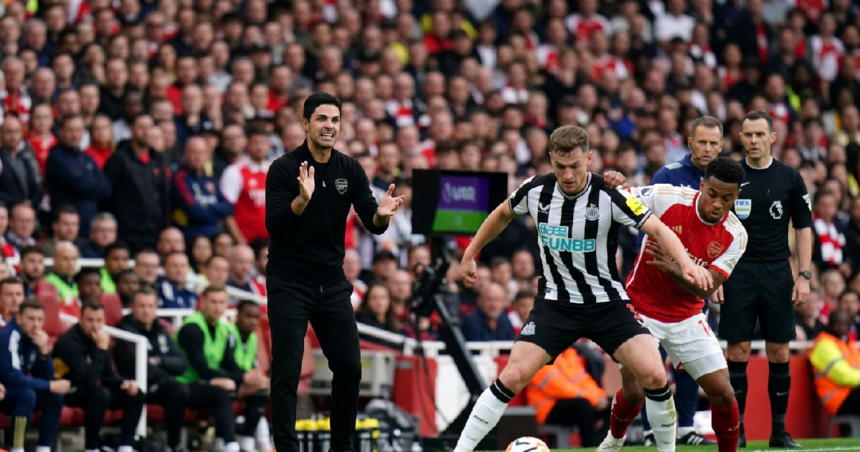
Arsenal manager Mikel Arteta has publicly criticized officiating standards following a controversial decision not to dismiss a Newcastle United player during their latest Premier League encounter. The Spaniard expressed deep frustration after a challenge he deemed a clear sending-off offense was only met with a yellow card, a decision that remained standing following a VAR review. This incident has once again placed the PGMOL under intense scrutiny as the debate over consistency in serious foul play continues to dominate the English top flight.
The flashpoint occurred during a high-stakes fixture where physicality often bordered on the extreme. Arteta’s grievance centers on a specific tackle that he believes endangered the safety of his player. Despite the presence of high-definition replays and the intervention of the VAR officials at Stockley Park, the on-field decision was not overturned. The Gunners boss appeared visibly incensed on the touchline and carried that energy into his post-match media obligations, suggesting that the integrity of the competition is being tested by such inconsistencies.
Supporters of the North London club have been quick to back their manager, pointing to previous incidents where similar challenges resulted in red cards for their own players. The feeling within the Arsenal camp is one of systemic disadvantage, particularly in away fixtures where the home crowd can influence the tempo and officiating. This latest outburst follows a pattern for the manager, who has previously faced disciplinary charges for his outspoken views on refereeing performance.
The Technical Debate Over Serious Foul Play
The controversy hinges on the interpretation of “excessive force” and “endangering the safety of an opponent.” In this instance, the challenge involved a high boot and significant contact, yet the VAR team determined there was no “clear and obvious error” to rectify. Critics of the current system argue that this high bar for intervention often protects poor officiating rather than ensuring the correct sporting outcome. Since Manchester United reportedly sought to reshape their defense with high-profile additions, the physical demands on Premier League backlines have remained intense, making these officiating calls even more pivotal.
Referees often cite the speed of the game as a mitigating factor for on-field errors, but the introduction of video technology was intended to reduce these objective oversights. In the case of the Newcastle incident, the lack of a red card changed the tactical landscape of the match, allowing the home side to maintain a full complement of players during a period of sustained pressure. For Arteta, the failure to act represents a recurring flaw in how the rules are applied against teams fighting at the top of the table.
Pressure Mounts on PGMOL After String of Errors
This is far from the first time this season that a manager has felt compelled to speak out. The PGMOL has already faced criticism for several high-profile errors in recent months, leading to calls for greater transparency in the review process. While some analysts believe Arteta’s reactions are becoming a distraction, others see it as a necessary defense of his squad. The intensity of the title race leaves almost no margin for error, and a single officiating mistake can have major implications for the final standings.
The scrutiny of Arsenal’s matches has intensified as they continue to challenge at the summit of the table. Much like how Mohamed Salah is expected to face career-defining choices regarding his playing future, Arteta is at a crossroads regarding his relationship with the league’s judicial bodies. He must decide whether to continue his aggressive public stance or adopt a more diplomatic approach behind closed doors during the run-in.
Newcastle’s Physical Approach and the Hostile Atmosphere
St James’ Park has long been one of the most difficult venues for visiting teams and officials alike. The physical intensity deployed by Newcastle is a hallmark of their tactical identity, designed to disrupt the rhythmic passing of teams like Arsenal. On this occasion, the strategy appeared effective, as the Gunners struggled to maintain their flow amidst a flurry of heavy challenges and frequent stoppages.
And while the focus remains on the non-red card, the broader question remains: how much physicality should the modern game tolerate? Some argue the Premier League is losing its “tough but fair” reputation to a restricted version of the sport. Conversely, player safety advocates suggest that failing to punish dangerous tackles only encourages more reckless behavior in future matches.
In the wider sporting context, including the developments surrounding the upcoming World Cup, the push for uniform officiating is a global priority. FIFA and continental bodies are reportedly watching the Premier League’s VAR implementation closely as a case study of how technology can sometimes complicate rather than simplify the decision-making process.
Future Implications for Arteta and Official Relations
The immediate fallout for Mikel Arteta could involve a fresh inquiry from the Football Association. His comments were not merely a critique of a single decision but an indictment of the standard of refereeing in the league. If the FA deems his language to have crossed the line into questioning the integrity of the officials, a touchline ban or a fine is expected to follow.
Arsenal now must refocus on their upcoming fixtures, hoping that their grievances do not create a narrative of frustration that might sap the team’s concentration. For the officials, the pressure is on to show greater consistency in the next round of matches. Whether the Gunners’ anger was justified or Arteta’s rant was a tactical attempt to deflect from a difficult result, the incident remains a significant talking point for the reputation of VAR.