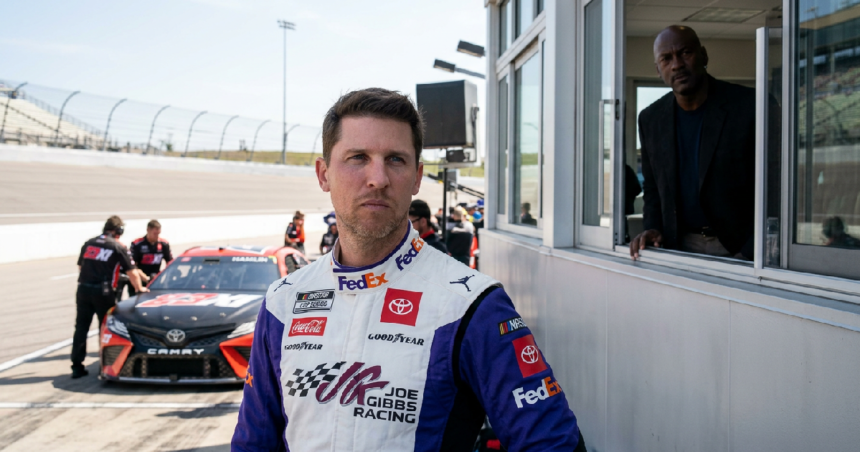
The shared business venture between Denny Hamlin and Michael Jordan has reportedly emerged as one of the more complex narratives within the NASCAR Cup Series. The partnership at 23XI Racing creates a unique dynamic where a driver competes on track against the very team he co-owns. This inherent friction appeared to manifest during recent competition at Kansas Speedway, where the division between ownership success and personal driver frustration was brought into sharp focus.
The situation is quite rare in the world of professional sports. Hamlin continues to compete for Joe Gibbs Racing (JGR), while simultaneously managing the growth of 23XI alongside the NBA icon. When a 23XI entry took the chequered flag at Kansas, it presented a multifaceted outcome for Hamlin. While the victory served as a win for his business interests, it reportedly came at the expense of his own performance on the track, leading to what many observers described as a visible display of competitive tension between the partners.
Competitive Friction and Ownership Dynamics
Heading into the event, reports suggested a high level of confidence within the Hamlin camp. There were indications of lighthearted yet pointed exchanges between the owners during the lead-up to the race. This type of psychological gamesmanship is not uncommon among elite competitors; it mirrors the tension seen in other arenas where top athletes target multi-division success or manage dual roles in their respective sports.
Historically, both men have been known for their intense desire to win, and Jordan is often noted for his competitive edge in any venture he pursues. There have been suggestions from those close to the team that the two frequently engage in “trash talk” regarding the performance of their respective cars. This internal rivalry reportedly adds a layer of pressure to the team’s operations, as the driver is essentially funding the very speed that might eventually keep him out of victory lane.
According to broadcast reports and paddock observers, the atmosphere following the race at Kansas highlighted this “frenemy” relationship. It is thought that seeing his own equipment outperform his JGR entry left Hamlin in a difficult position, balancing the professional satisfaction of a team owner with the personal disappointment of a driver who believes he had a winning car.
The Complexity of Racing Against Your Own Team
The race at Kansas appeared to follow a script that many in the garage had anticipated. Hamlin was a strong contender throughout the afternoon, yet strategy shifts and late-race developments favoured the 23XI garage. Similar to how elite competitors in and out of motorsport thrive on high-stakes pressure, the conclusion of the event forced a reckoning between business and personal ambition.
Observational reports from pit road indicated that the frustration was palpable for the No. 11 team. While traditional ownership involves rooting for your stable of cars to succeed, Hamlin’s active status as a rival driver complicates every lap. The presence of Jordan at the track, reportedly enjoying the success of the 23XI organization, served as a reminder of the shift in power within the garage. It is widely believed that the billionaire owner has fully embraced the competitive aspect of beating his business partner on the asphalt.
This dual identity poses a constant challenge. When the 23XI cars show significant speed, it validates Hamlin’s investment and management, but it also creates a faster hurdle for him to clear on Sunday afternoons. The psychological toll of being “beaten by your own money” is a subplot that continues to follow the team at every high-speed venue.
Future Implications for 23XI and Joe Gibbs Racing
The tension observed at Kansas is expected to be a recurring theme as the season progresses. With Hamlin expected to remain in the cockpit for the foreseeable future, the opportunities for conflict between his ownership duties and his driving career will only increase. This power struggle sits alongside other major shifts in the sporting world, such as the anticipated expansion of major leagues where ownership and market influence dictate the future of the game.
As 23XI Racing continues to improve its technical capabilities and consistency, the likelihood of Hamlin facing off against his own employees in the closing stages of a race remains high. The banter and competitive friction between Hamlin and Jordan are reportedly cornerstones of their relationship, but as the stakes rise, the line between friendly rivalry and genuine frustration may continue to blur.
The focus now shifts to how this relationship evolves in the coming weeks. Whether the driver can manage to stay ahead of the organization he helped build remains a primary storyline for fans and analysts alike. At Kansas, the owner had reason to celebrate, but the driver was left searching for answers, a dynamic that Michael Jordan likely won’t let his partner forget anytime soon.