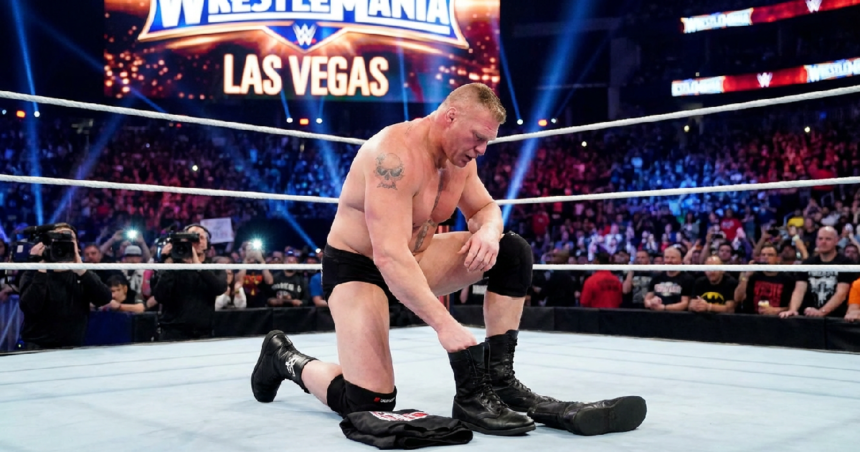
The combat sports world witnessed what appeared to be the end of an era this week during a major showcase in Las Vegas. Brock Lesnar, the former UFC heavyweight champion and one of the most physically imposing figures in sports history, signaled a potential conclusion to his long-standing career in professional wrestling. Following a high-profile appearance, the athlete performed a traditional ritual of retirement by leaving his gear in the center of the ring.
This gesture followed a centerpiece match at the industry’s premier annual event. After the final bell, Lesnar remained in the ring, visibly affected by the gravity of the moment. In a scene mirrored more often in amateur wrestling or the octagon than the squared circle, he removed his gloves and boots, placing them on the canvas. A long embrace with his long-time advisor and friend followed, while the crowd responded with a sustained ovation as he exited the arena for what is widely believed to be the final time.
Whether this marks a permanent exit remains to be seen, as retirement in this field is often fluid. However, the intentionality of the display suggests that one of the most dominant forces in modern heavyweights is ready to step away from the spotlight.
Bridging the Gap Between MMA and Sports Entertainment
Lesnar’s departure would mark the conclusion of a career that redefined the crossover potential between mixed martial arts and sports entertainment. While many athletes have attempted the transition, few matched his sheer cultural impact. His presence at the event was reportedly viewed as a final opportunity to pass the torch to a rising star. While Makhachev targets two-division glory in the modern UFC era, Lesnar remains the historical blueprint for the heavyweight “superfight” attraction.
The presence of other high-profile combat sports figures at the event added a layer of legitimacy to the proceedings. Observers noted that the atmosphere felt more like a competitive sporting farewell than a typical theatrical exit. It was a stark reminder of the crossover appeal Lesnar maintained throughout his tenure, bridging the gap between legitimate athletic competition and the world of high-stakes entertainment.
A Legacy of Heavyweight Dominance
Lesnar’s journey to this point was anything but conventional. After a standout collegiate career where he secured top-tier honors, he initially rose to fame before a period of burnout led to a temporary exit from the public eye. His subsequent pivot to professional football and eventually the UFC remains one of the more improbable success stories in sports. Despite entering the world of MMA with minimal experience, he famously worked his way into the promotion, eventually reaching the pinnacle of the heavyweight division.
In recent years, he transformed into a “special attraction” athlete, someone who competed sparingly but always on the largest stages. This approach mirrored the career trajectories of other major stars who have had to balance the demands of aging with high-stakes performance requirements. Much like how Israel Adesanya faces Joe Pyfer in a high-pressure environment to maintain his standing, Lesnar’s final years were defined by his ability to remain a massive commercial draw despite his veteran status.
Transitioning Away from the Limelight
The decision to walk away follows years of speculation regarding Lesnar’s physical health and his well-documented desire to return to his private life on his farm. Unlike many of his peers who struggle to leave the spotlight, Lesnar has often spoken about his preference for privacy. By leaving his boots in Las Vegas, he effectively closes a chapter that has seen him headline major arenas across the globe for over two decades.
This development also appears to finalize his status in the MMA world. While rumors of a return to the cage have occasionally persisted, Lesnar has spent the last several years emphasizing his commitment to staying retired from active fighting. His legacy in the UFC is cemented by his pay-per-view numbers and his role in bringing a new demographic of fans to the sport. As the industry looks toward the future, with younger stars leading latest news in their respective fields, the departure of a veteran like Lesnar signals a genuine changing of the guard.
The Impact on the Combat Sports Industry
The void left by such a figure will be difficult to fill. The rare combination of legitimate wrestling credentials, explosive athleticism, and mainstream recognition made him a unique asset for any promoter. His final performance served as an endorsement of the next generation, a gesture that is often valued in an industry where veteran stars are asked to mentor those following in their footsteps.
As he heads toward a potential retirement, the conversation will naturally turn to his eventual induction into various halls of fame across both the fighting and entertainment sectors. For now, the image of his equipment sitting alone in the center of the ring remains a powerful end to one of the most storied careers in the history of modern athletics.