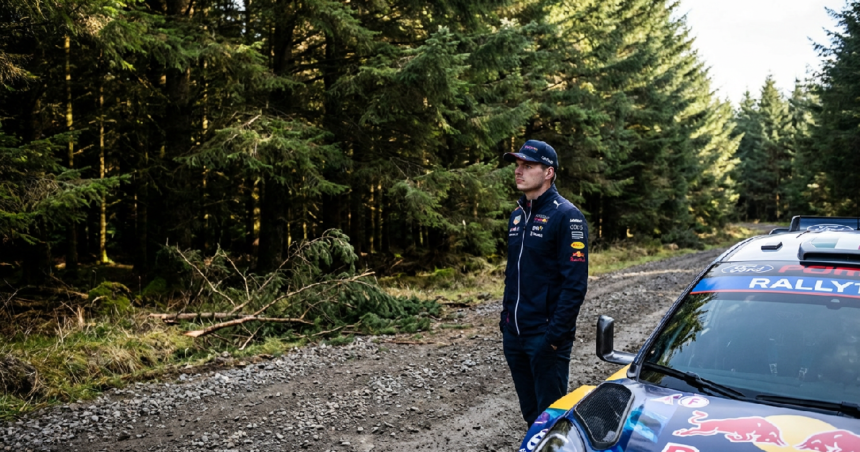
Max Verstappen has never been one to shy away from expressing his distaste for certain aspects of modern motorsport, but he has now drawn a firm line between his current career in Formula 1 and a potential future in rallying. While many of his predecessors have successfully transitioned to the world of gravel and ice, the three-time World Champion believes the risks associated with the World Rally Championship (WRC) are simply not for him.
The Dutchman, known for his clinical precision on the asphalt of the world’s premier racing circuits, has recently been questioned about his plans once his current Red Bull contract expires. While he remains open to endurance racing and events like the 24 Hours of Le Mans, the specific dangers of rallying—where margins for error are measured in inches against unforgiving natural obstacles—have prompted a blunt refusal.
Risk vs Reward on the Special Stages
For Verstappen, the logic behind avoiding rally cars is practical rather than a lack of interest in the machinery. He noted the fundamental difference between the controlled environments of a Grade 1 FIA circuit and the unpredictable nature of a rally stage. On a traditional race track, if a driver loses control, they typically encounter a tarmac runoff or a gravel trap designed to dissipate energy. In rallying, the “barriers” are often centuries-old oaks or sheer mountain drops.
The Red Bull driver famously remarked that “the tree is not moving,” a sharp reminder of the fatalistic nature of high-speed forest stages. Unlike wheel-to-wheel racing, where a driver can anticipate the movement of an opponent, a rally driver must contend with a static, hard landscape that offers no forgiveness for a mechanical failure or a slight miscalculation in pace notes.
This stance sets him apart from other F1 champions like Kimi Raikkonen, who took a two-year hiatus to compete in the WRC, and Robert Kubica, whose promising F1 career was tragically altered by a serious rally accident during an off-season event. Verstappen appears to have learned from these historical precedents, prioritizing his longevity and physical safety.
Focusing on the Triple Crown and Endurance
While rallying is off the table, the 26-year-old’s post-F1 horizon is far from empty. Verstappen has frequently voiced his appreciation for the GT3 category and his desire to set up his own racing team to help young talents bridge the gap from sim-racing to real-world competition. He remains a prolific sim-racer himself, often competing in virtual 24-hour events during his F1 downtime.
And then there is the lure of Le Mans. Verstappen has often spoken about the “Triple Crown” of motorsport—winning the Monaco Grand Prix, the Indianapolis 500, and the 24 Hours of Le Mans. While he has shown little interest in the high-speed ovals of IndyCar, a stint in a Hypercar at the Circuit de la Sarthe seems almost inevitable once he decides he has had enough of the 24-race F1 calendar.
The physical and mental toll of the current Formula 1 schedule is a recurring theme in Verstappen’s interviews. He has often hinted that he may not race in F1 well into his late 30s like Lewis Hamilton or Fernando Alonso. By ruling out rallying now, he is narrowing his focus to disciplines where his technical feedback and raw speed can be utilized without what he deems unnecessary levels of danger.
The Evolution of Verstappen’s Racing Philosophy
In his younger years, Verstappen was often viewed as a “pure” racer who would drive anything with four wheels. However, as he has matured into a dominant force within Red Bull Racing, his philosophy has shifted toward a more calculated approach to his career. He isn’t looking for adrenaline for the sake of it; he’s looking for competitive environments that make sense for his skillset.
His refusal to enter the rally “realm” also touches on the immense preparation required for the sport. Rallying isn’t just about driving fast; it’s about the relationship with the co-driver and the ability to visualize a road you cannot see. Verstappen’s excellence is built on repetition and perfecting a single line over 60 laps—a style that is antithetical to the “read and react” chaos of the WRC.
Frequently Asked Questions
Why does Max Verstappen won’t do rallying?
Verstappen believes the risks are too high compared to circuit racing. He points out that while race tracks have safety features and runoff areas, rally stages are lined with trees and obstacles that do not move, making any mistake potentially catastrophic.
Is Verstappen leaving Formula 1 soon?
His current contract with Red Bull runs until the end of 2028. While he has expressed frustration with the growing number of races and sprint formats, he has not confirmed any immediate plans to leave before his contract expires.
What other racing series is Max Verstappen interested in?
He has a strong interest in GT3 racing and endurance events. He has specifically mentioned the 24 Hours of Le Mans as a race he would like to win, potentially competing alongside his father, Jos Verstappen, or in his own team’s entry.