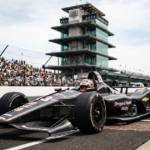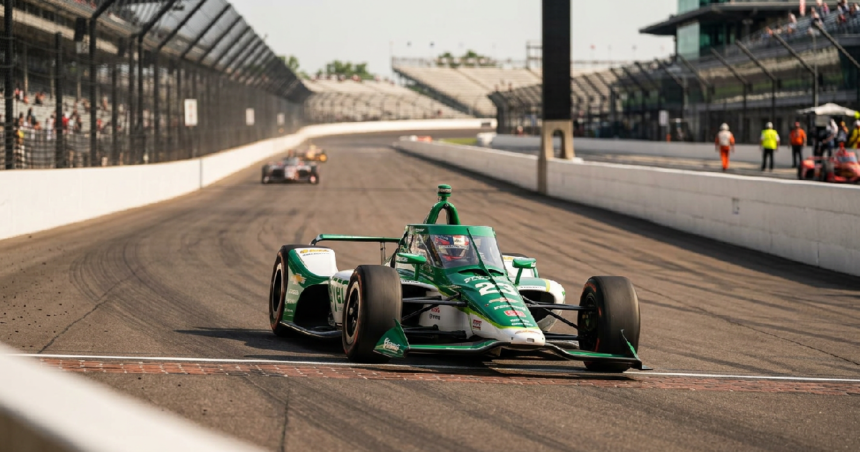
Conor Daly surged to the top of the leaderboard during the opening day of the Indianapolis 500 Open Test, reportedly setting the fastest pace of the session in his #23 Dreyer & Reinbold Racing Chevrolet. The Indiana native found significant late-session speed to displace veteran competitors, including multi-time winner Helio Castroneves. This collective track time at the 2.5-mile Indianapolis Motor Speedway serves as the primary preparation for the upcoming 110th running of the historic race.
Daly’s performance was particularly notable as it marked a strong return to competitive action. Working with Dreyer & Reinbold, a team often lauded for its specialized focus on the Indy 500, Daly reportedly utilized a late-afternoon tow to leapfrog the field. The result reflects a solid baseline for the Chevrolet-powered entry, which frequently challenges the series regulars as a part-time program dedicated specifically to this event.
The day’s running was split into distinct segments, beginning with a morning session for veterans before moving into rookie orientation and refresher programs. While the afternoon speeds were boosted by drafting, the data gathered remains vital for engineers as they begin to dial in the aerodynamic configurations. Similar to how Piastri leads rain-hit second practice at Suzuka through technical precision, IndyCar teams spent the day balancing raw velocity with long-run stability.
Veterans Show Expected Strength During Practice
Helio Castroneves, who continues his pursuit of a record-breaking fifth victory at the Brickyard, held a position near the front of the field for much of the afternoon. Driving for Meyer Shank Racing, the veteran showed that he remains a formidable force at the Speedway. He was closely followed by another former winner, Takuma Sato, whose Rahal Letterman Lanigan Racing Honda also featured prominently in the top three during the day’s events.
The leaderboard featured several of the most consistent names in the paddock. Chip Ganassi Racing’s Scott Dixon and Alexander Rossi, now with Ed Carpenter Racing, both secured positions within the top five. The narrow margins between the top speeds suggest that the engine parity between Chevrolet and Honda remains tightly contested as teams prepare for the intensive month of track activity ahead.
Beyond the headline drafting speeds, the “no-tow” rankings provided a clearer picture of individual car performance without the aid of a lead car’s slipstream. Reports indicate that Jack Harvey, Daly’s teammate, performed exceptionally well in this metric. This suggests that the team’s aero development has produced a car with strong independent pace, which is a critical factor for the four-lap qualifying runs that eventually determine the starting grid.
Technical Hurdles and Rookie Milestones
While Daly celebrated the top spot, other drivers faced a more frustrating day in the garage. Katherine Legge, whose entry is a joint effort between HMD Motorsports and AJ Foyt Racing, was reportedly unable to complete timed laps due to a combination of clutch and transponder issues. These technical setbacks are common in early testing but can leave a driver behind the curve when trying to get comfortable with the current aero package.
Sting Ray Robb also endured a difficult start with Juncos Hollinger Racing, limited by a mechanical problem for much of the morning. However, he managed to salvage several laps late in the day to provide baseline data for his crew. Just as Teenager Littler Leads Technical Drills to build consistency in his field, IndyCar rookies and sophomores must maximize every minute of track time to handle the unique physics of the Speedway.
In contrast, Dale Coyne Racing rookie Dennis Hauger enjoyed a productive debut. The former Formula 2 standout reportedly completed his rookie orientation, clearing the phases required by IndyCar officials to compete in the main event. His teammate Romain Grosjean also had a busy day, finishing high on the overall charts despite a reported incident involving a bird strike during the morning session.
Safety Triggers and Session Stops
The afternoon session was briefly interrupted when Christian Rasmussen came to a halt on the backstretch. Reports suggested a suspected mechanical issue on his ECR Chevrolet, leading to a cautionary period while the car was recovered. The incident served as a reminder of the precision required during these high-speed tests, where even minor oversights can lead to disruptions.
Outside of the motorsport community, sports fans are watching other major transitions, such as whether Salah faces career defining choice as his current contract nears its end. In Indianapolis, the choices are more immediate and technical, revolving around wing angles and dampener settings rather than transfer windows.
Preparation Shifts Toward Race Trim
The initial results provide a temporary hierarchy, but teams are expected to shift their focus toward qualifying simulations and heavy-fuel runs in the coming days. While leading the first day is a morale boost for Daly and his team, the real work regarding long-term reliability is just beginning. The consistency of the smaller teams will be tested as powerhouse organizations like Penske and Arrow McLaren begin to show their true hand.
Josef Newgarden, who led the early sessions, remains the benchmark for many in the paddock. Although he did not end the day at the very top of the combined charts, his early pace suggested that Team Penske remains a favorite for the internal competition. As the field continues its testing program, the focus will shift from chasing headline speeds to ensuring the cars can handle the turbulent air of the full 33-car pack.