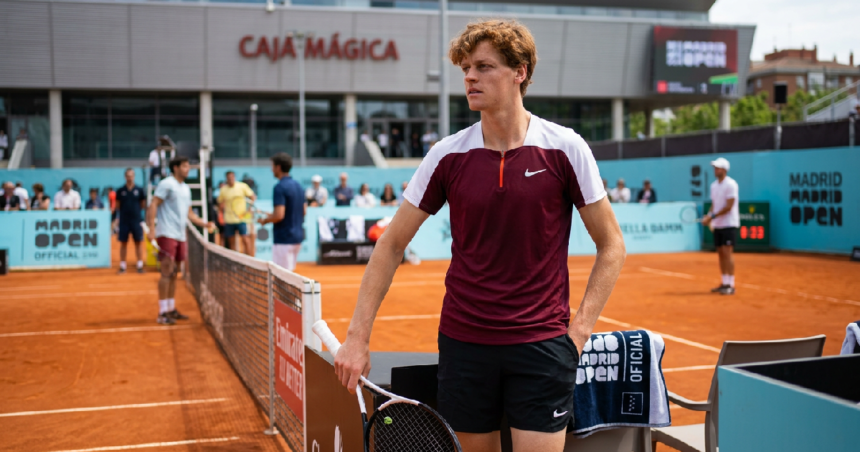
Jannik Sinner has addressed his decision to compete at the Madrid Open, revealing that he seriously considered following the lead of Novak Djokovic by bypassing the event. The world number two, who has been in exceptional form during the early months of the year, indicated that he took several days to assess his physical condition after his recent efforts on the European clay circuit. While Djokovic has opted to miss the tournament in the Spanish capital to focus on his preparation for the upcoming Grand Slam in Paris, Sinner felt his recovery was sufficient to justify a place in the draw.
The decision-making process for elite players has become increasingly scrutinized as the ATP tour moves through its most physically demanding stretch. Sinner reportedly waited until the final moments to commit to the trip to Madrid, allowing his body to rest after a deep run in his previous tournament. This cautious management of playing schedules is becoming a hallmark of the modern game, where the transition from hard courts to the sliding movements of clay often leads to significant injury risks for the top seeds.
Sinner’s pragmatic approach highlights a growing trend among the game’s younger stars to prioritize longevity over immediate ranking points. This shift mirrors developments in other areas of the sporting world where regulatory bodies are making firm decisions on participation. For instance, Olympic officials bar transgender athletes from certain women’s categories to preserve specific competition standards, much like how tennis players are now self-policing their schedules to maintain their own physical standards.
Managing the Transition to Madrid’s Conditions
Reflecting on the uncertainty of his participation, Sinner noted that his choice was balanced on a daily assessment of his fitness. He explained that there were moments when he felt uncertain about competing but eventually felt his energy levels had returned to a satisfactory level. The Italian has been careful to avoid the burnout that can occur when chasing consecutive titles across different altitudes and court speeds, a strategy he has employed previously in his career.
The physical demands placed on the current generation are immense, leading to frequent discussions about the length of the season. As athletes in various sports push for better welfare protections, the tennis calendar remains one of the most grueling in professional athletics. These debates regarding athlete health and scheduling are not unique to tennis; recent reports show that the NFL eyes Labor Day return as it considers expanding its own season, further complicating the balance between commercial interests and player safety.
Sinner’s ability to remain competitive while being selective with his entries has been a key factor in his rise to the top of the rankings. By choosing to play in Madrid, he is testing his adaptability in conditions that are notoriously different from the traditional clay found in Rome or Paris. The thinner air in the Spanish capital makes the ball fly faster, often favoring players with the kind of aggressive baseline game that Sinner has perfected over the last twelve months.
Tactical Schedule Changes Impact the Title Race
Novak Djokovic’s absence from the tour this month has altered the competitive landscape of the clay-court season. The veteran Serbian has reportedly focused on a specialized training block, eschewing the Masters 1000 events in favor of preserving his peak for the majors. This specialized training is seen by many as a way to maintain his record-breaking pace at the Grand Slams while his younger rivals continue to log heavy match hours on the circuit.
The draw in Madrid has also been impacted by fitness concerns surrounding Carlos Alcaraz. The Spanish star has faced ongoing challenges with his health during the European swing, a development that puts more pressure on Sinner to lead the charge for the younger generation. The management of these rising talents is a common theme in the sport right now, as seen in the latest sport news updates on Arthur Fils and other emerging prospects who are being carefully guided through their first full seasons at the elite level.
Looking ahead, Sinner has hinted that his presence in the later rounds of the tournament will depend entirely on how his body responds to the initial matches. He remains committed to being at his physical peak for his home tournament in Rome and the subsequent trip to Roland Garros. For now, the Italian is taking a “match-by-match” view, knowing that the strategic decisions made in April will ultimately dictate his success when the trophies are handed out in June.