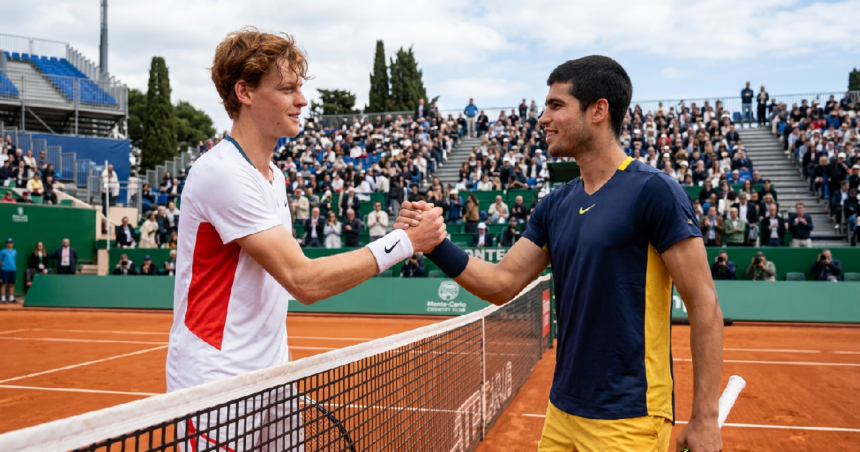
The burgeoning rivalry between Jannik Sinner and Carlos Alcaraz reaches a high-profile chapter on the clay courts of the Monte-Carlo Country Club. As two of the standout stars of their generation meet in the Monaco sunlight, the encounter carries weight not just for the immediate trophy, but for the trajectory of the ATP world rankings in the lead-up to the French Open.
The Battle for Ranking Superiority
While the Monte-Carlo Masters is recognized for its prestige and Mediterranean backdrop, the subplots of this latest meeting have elevated it to a high-stakes moment for the upper echelons of men’s tennis. Sinner has arguably been the tour’s most consistent performer in recent months, and his form coming into the latter stages of this tournament has placed him in a position to potentially challenge for the highest positions in the world rankings.
For Alcaraz, the match represents a chance to display his capabilities on a surface that traditionally suits his explosive movement and heavy topspin. The Spaniard has often been cited as a natural successor to the great clay-court specialists of the past, yet Sinner’s perceived improvements in defensive sliding and point construction have arguably narrowed the gap on the red dirt. Whether Sinner can translate his hard-court success to a consistent threat on clay remains a central narrative for analysts following the tour.
Sinner Developing a Clay Court Identity
Despite his recent form elsewhere, Jannik Sinner is still looking to solidify his resume with an ATP Masters 1000 title on clay. His progression through the draw in Monaco suggests a transition in his game, showing a willingness to engage in the longer, more taxing rallies that the surface demands before looking for an opening to strike with his flat groundstrokes.
Observations from the tournament grounds suggest that Sinner has been working on specific adjustments to his serve to better handle the slower conditions. Meanwhile, Alcaraz is expected to utilize his variety, including his signature drop shots and frequent forays to the net—tactics that have been known to test the movement and patience of taller opponents in the past.
Technical Matchup and Tactical Shifts
The contrasting styles of these two young champions provide a compelling dynamic. Alcaraz operates with a flair and variety that can make opponents feel hurried. His ability to change the pace of a rally with a slice or an unexpected lob makes him particularly dangerous in the outdoor conditions often found on the coast, where wind can play a factor in timing.
Sinner, by contrast, relies on a brand of relentless baseline pressure. His timing is widely considered among the best on the tour, hitting the ball early to rob opponents of recovery time. To succeed in Monte-Carlo, he must find a way to maintain this aggression without succumbing to the errors that clay can induce during extended exchanges. Many observers believe the winner of this match will hold a significant psychological advantage heading into the heart of the European clay-court swing.
Following the High-Stakes Encounter
Tennis fans across the globe are expected to focus heavily on this match, which is being framed as a potential indicator of who will lead the tour for the remainder of the season. Coverage is typically available through standard sports television networks and digital streaming platforms that hold ATP broadcasting rights in their respective regions. With ranking points and momentum on the line, the result will likely influence the seeding and narrative as the professional circuit moves closer to the year’s second Grand Slam at Roland Garros.
As the clay season intensifies, this matchup serves as a significant litmus test for both players. Whether Sinner can prove his game is now a multi-surface force or Alcaraz can reaffirm his status as the premier young talent on clay, the outcome is set to have a lasting impact on the ATP Tour landscape this spring.