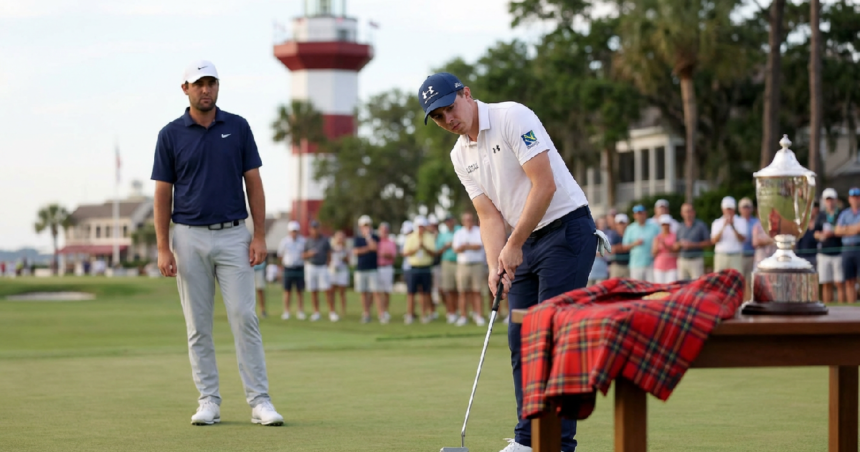
The quest for the signature red plaid jacket at Harbour Town Golf Links reportedly reached a dramatic conclusion as Matt Fitzpatrick and world number one Scottie Scheffler battled for supremacy. In a contest that highlighted the unique challenges of the RBC Heritage, the Englishman was forced to navigate the high-pressure environment of a sudden-death playoff to determine the winner of the prestigious event.
The performance reinforces Fitzpatrick’s reputation as a specialist on the tight, tree-lined corridors of Hilton Head. Facing Scheffler in a head-to-head format is widely considered the most daunting task in professional golf today, yet reports indicate Fitzpatrick displayed the same grit that has defined his career during major championships within recent years. The duel showcased two distinct styles of play on a course that remains one of the most strategic stops on the tour calendar.
Accuracy and Strategy at Harbour Town
Through the final stretch of the tournament, the momentum appeared to shift between the two competitors. Scheffler has been on a historic run of form, frequently outclassing fields with his consistent ball-striking and composure. However, the RBC Heritage often rewards precision and short-game creativity over raw power, an environment where Fitzpatrick has historically excelled. Much like how investing in defensive stability can define a season in other sports, the ability to protect par under immense pressure became the cornerstone of the weekend’s narrative.
The two golfers could not be separated through the standard regulation holes, leading to the playoff that captivated those in attendance. While Scheffler’s iron play reportedly remained as sharp as ever, Fitzpatrick’s comfort level at this specific venue appeared to be a deciding factor. He has often spoken about his affinity for the Pete Dye design, and that familiarity was on full display as the tension mounted in the extra holes.
The Fine Margins of Professional Golf
The playoff required more than just physical execution; it became a profound test of nerve. Fitzpatrick is known for an analytical approach to the game, maintaining meticulous records of his performance data for years. This preparation allegedly paid dividends during the closing moments. On the final playoff hole, a precise approach gave the Englishman a clear opportunity, while reports suggest Scheffler was unable to convert the necessary putt to extend the match further.
This outcome serves as a reminder that even when a player like Scheffler is at the peak of his powers, the thin margins of professional golf allow for dramatic shifts in fortune. Much like how technical match-ups in the octagon are decided by a single mistake or a split-second secondary move, the playoff in South Carolina was decided by who maintained their composure longest under the afternoon sun.
Historical Implications at Hilton Head
By securing another impressive finish at this venue, Fitzpatrick is expected to climb the rankings of the most successful players in the tournament’s history. His game translates exceptionally well to the layout, which famously neutralizes the distance advantage held by many of the tour’s more modern “bombers.” For the Englishman, a victory here is viewed not just as another trophy, but as a validation of a unique playing style and an ability to peak during the tour’s most prestigious signature events.
Observers have noted that this result could have wider implications for the season’s FedEx Cup standings. The performance provides a timely boost in confidence as the tour moves toward the intensive major championship season. While Scheffler remains the dominant force in the world rankings, Fitzpatrick has proven that he possesses the specific toolkit required to challenge the world’s best when the conditions demand total precision.
Looking Ahead to the Summer Schedule
The competition between these two players is becoming one of the more compelling stories on the PGA Tour. While they represent different physical profiles and approaches to the game, their consistency at the top of leaderboards suggests they may be battling one another frequently in the coming months. Just as international sports schedules are currently tightening ahead of major championships, the golf calendar is now entering its most critical phase of the spring.
Fitzpatrick is expected to carry this momentum into the next string of events, where course management remains a priority. His ability to succeed at a venue that demands accuracy suggests he will be a player to watch at several upcoming stops. As for Scheffler, the narrow margin of the result is unlikely to slow his trajectory, given the sheer quality of golf he continues to produce. The golfing world will remember this particular duel as a classic example of why the playoff format remains a primary draw for fans and a ultimate test for the players involved.