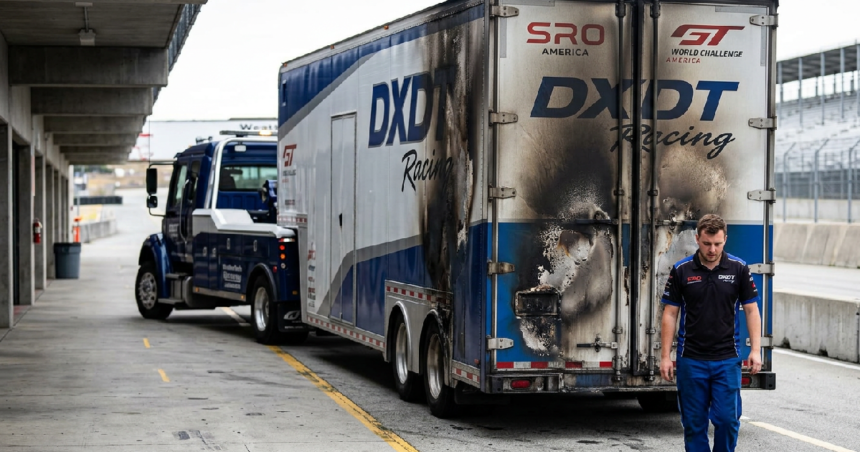
DXDT Racing is currently dealing with a massive logistical crisis after a fire reportedly broke out on the team’s transport hauler while the crew was traveling to WeatherTech Raceway Laguna Seca for the upcoming SRO America competition. The incident happened during the cross-country trek to the California circuit, and reports indicate the blaze has caused extensive damage to the team’s equipment and potentially the race cars housed inside the trailer. No injuries have been reported among the staff, but the timing places the team’s participation in the upcoming events in serious jeopardy as they assess the scale of the loss.
The fire ignited while the truck was in transit, which is a nightmare scenario for any motorsports program operating far from its home base. In the world of GT racing, these haulers serve as mobile headquarters, carrying everything from spare engines and specialized tools to the high-performance machinery scheduled to compete. This kind of setback is more than just a financial hurdle; it represents a major disruption to the competitive momentum DXDT Racing had been building. The unpredictability of racing logistics is a constant factor, much like how Piastri leads rain-hit second practice at Suzuka in Formula 1 despite the precision of that series.
While details regarding the specific cause of the fire remain sparse, the immediate focus for the team has shifted from race strategy to salvage operations. Initial reports suggest that the intensity of the flames may have compromised the structural integrity of the hauler, making it difficult for the crew to safely extract vehicles for inspection. The racing community is now waiting to see if the team can recover enough hardware to field an entry or if the damage to the primary chassis is too severe to rectify in time for the green flag.
Impact on the DXDT Racing GT3 Campaign
The loss of a primary hauler during a busy racing schedule creates a vacuum that is difficult to fill quickly. Modern GT3 cars require a specific ecosystem of support, including telemetry stations, tire warmers, and proprietary spare parts that are often custom-fitted to the individual chassis. If the cars suffered significant heat or smoke damage, the technical hurdles to get them back on track might prove insurmountable without urgent assistance from manufacturer partners or rival teams.
It is common in the tight-knit sports car racing paddock for competitors to offer aid when disaster strikes. However, the sheer volume of equipment often lost in a hauler fire means that even if a team can borrow a car, they may lack the specific technical components needed to survive a full race weekend. DXDT had been showing promising form in recent outings, and this interruption comes at a time when they were looking to solidify their standing in the championship rankings.
Logistical Hurdles and Equipment Recovery
Recovering from a transit fire involves working with insurance adjusters and local authorities to determine if the fire resulted from a mechanical failure or an external factor. Because these haulers carry large amounts of racing fuel and high-voltage battery systems for hybrid components, any fire is treated with extreme caution by first responders. The pressure on the team is immense, mirroring other high-stakes sports environments where Price overcomes Littler in high-stakes Berlin showdown under significant competitive tension.
The location of the fire adds another layer of difficulty. Even if the team has a backup car available at their workshop, the transport time across the country may be too long to make the opening practice sessions. The SRO America paddock might see a reduced field unless the team can pull off a complex logistics feat to replace their lost equipment. The technical requirements of the Laguna Seca circuit mean that showing up without a full complement of spares and tools would leave any team at a severe disadvantage.
Maintaining the SRO America Grid
Laguna Seca is a cornerstone of the North American sports car calendar, famous for the iconic Corkscrew turn and its demanding technical layout. Losing a high-profile entrant affects the depth of the field, particularly in the Pro-Am classes where DXDT Racing has historically been a strong contender. Management for the series is expected to be in contact with the team to see what accommodations can be made for their arrival.
Looking ahead, the long-term impact on the team’s operations could be extensive. Replacing a custom-built race hauler often involves months of waiting due to supply chain leads for specialized heavy-duty trailers. Similar to how a major Manchester United transfer agreement shifts the strategy for a football season, the loss of this hardware forces the team to rethink their entire operational structure for the coming months.
As competitors begin to set up their awnings at the track, the potential absence of the DXDT entry serves as a reminder of the risks inherent in the “circus” side of professional racing. The team currently remains in a holding pattern, evaluating what can be saved from the wreckage. The coming days will reveal whether they can mount an improbable comeback or if the fire has effectively ended their current West Coast campaign.