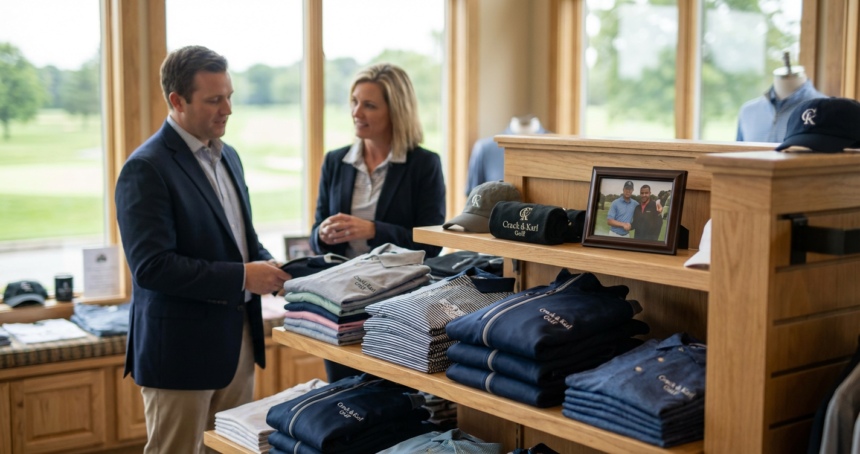
The landscape of the golf apparel market is beginning to shift as Crack & Karl Golf prepares for a significant internal restructuring. Despite navigating the complexities of corporate rehabilitation, the brand is reportedly moving toward a streamlined management structure that aims to stabilize operations and return to full normalcy by the second half of the year. This transition marks a pivotal moment for the label as it seeks to maintain its market footprint amid broader economic pressures in the golf industry.
Consolidation Under Single Leadership
In a move to simplify decision-making and sharpen the brand’s strategic vision, Crack & Karl Golf is transitioning to a single-leadership system. This shift follows a period of shared management and is expected to centralize authority, allowing for quicker responses to market trends and operational challenges. Sources familiar with the matter indicate that this reorganization is a key pillar of the company’s efforts to move past its recent rehabilitation phase.
The transition comes at a time when golf brands are facing a more cautious consumer base. By consolidating power, the brand hopes to eliminate administrative redundancies and focus purely on product development and distribution efficiency. The move is viewed by industry analysts as a necessary step to regain the trust of retail partners and investors alike.
Resilience During Corporate Rehabilitation
What makes the current trajectory of Crack & Karl Golf particularly noteworthy is its ability to find growth even while undergoing court-led restructuring. Typically, the rehabilitation process leads to a contraction in sales or a reduction in brand visibility. However, reports suggest that the label has managed to sustain its upward momentum, fueled by a distinct aesthetic that sets it apart from more traditional golf wear competitors.
The brand’s survival and subsequent growth during this period suggest a robust underlying demand for its specific style of golf apparel. Rather than pulling back, the company has reportedly focused on maintaining its core identity, which has allowed it to retain a loyal customer segment even as the corporate back-end was being overhauled. This resilience has paved the way for the expected “normalization” of the business in the coming months.
Strategic Outlook for the Second Half
The second half of the year is set to be a defining period for the brand. With the shift to a one-person leadership structure and the anticipated conclusion of major rehabilitation hurdles, Crack & Karl Golf is targeting a full operational recovery. This includes plans to stabilize its supply chain and potentially expand its retail presence, which had been tempered by recent financial constraints.
Industry observers are watching closely to see if the brand can translate its recent growth into long-term stability. The golf fashion sector is notoriously crowded, and the transition from a “rehabilitation brand” back to a standard market competitor requires a delicate balance of creative innovation and fiscal discipline. If the brand achieves its goal of normalization by the end of the year, it could serve as a case study for other distressed labels in the sports fashion space.
Market Context and the Golf Boom
The broader context for this restructuring is a golf market that is cooling off slightly after a historic surge in participation. While the “golf boom” brought many new players to the game, it also brought an influx of new apparel brands, leading to intense competition. Crack & Karl Golf’s ability to navigate these waters while dealing with internal corporate restructuring suggests that its brand equity remains a valuable asset.
As the company moves toward its new management era, the focus will likely remain on its unique design language—a blend of art and sport that has resonated with younger golfers. By cleaning up its corporate structure and focusing on a singular vision, the brand aims to secure its place in the next evolution of golf culture.