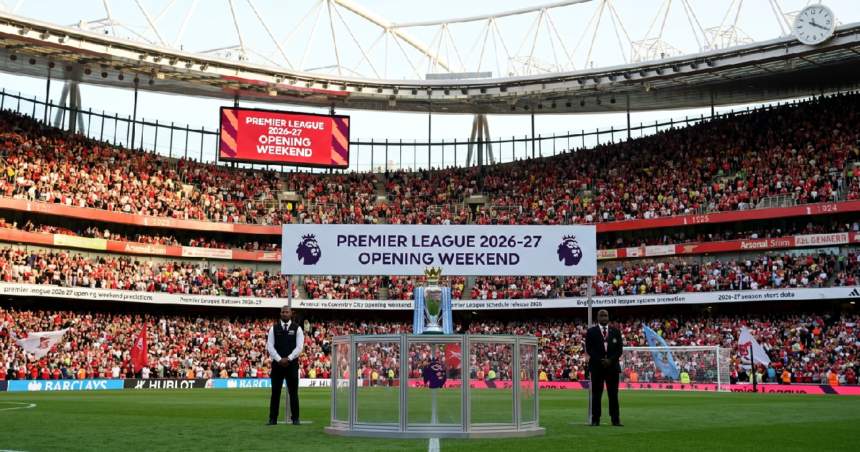
The 2026-27 Premier League season is set to begin on Friday, August 21, 2026, with defending champions Arsenal hosting newly-promoted Coventry City at the Emirates Stadium, and these are the opening weekend predictions.
This opening fixture follows the official release of the schedule by the Premier League on June 19, which confirmed a delayed start to the campaign due to the 2026 FIFA World Cup. While international tournaments often disrupt club preparations, the league has pushed the start date back by one week compared to traditional mid-August openers.
Analysis of the Premier League 2026-27 opening weekend fixtures
Following the Friday night curtain-raiser, the majority of the first match round will take place on Saturday, August 22. Notable clashes include Brentford hosting Tottenham Hotspur and Fulham welcoming Chelsea for a West London derby at Craven Cottage.
These confirmed fixtures provide immediate tests for established sides, while Newcastle United and Liverpool will conclude the high-profile opening slate when they meet on Sunday, August 23, at St. James’ Park.
The transition from a summer World Cup to a domestic league campaign presents unique physical and tactical challenges for all 20 competing clubs. Arsenal will look to utilize their home advantage against a Coventry City side making their return to the top flight after securing promotion from the EFL Championship.
For the champions, the emphasis will be on maintaining the momentum that secured them the title the previous year.
Strategic scheduling remains a cornerstone of the English top-flight experience. The Premier League uses a meticulous computer-generated process to ensure that local rivals do not clash at home simultaneously. This is why Fulham hosts Chelsea while Tottenham Hotspur travels across London to face Brentford. Such arrangements are vital for local police and transport authorities to manage the movement of supporters safely throughout the capital.
The complexity of the schedule is often influenced by external factors that reshaped the final calendar. Just as Manchester United secure £100m deal to reshape defense ahead of the new season, clubs must also navigate logistical constraints. Totaling 380 matches, the season requires a pairing grid that prevents teams from playing more than two consecutive home or away games in any sequence.
The fixture computer and regional constraints
Preparation for the fixture list begins early each calendar year, balancing dates from FIFA and European club competitions. The Premier League consults with clubs around March to identify specific dates they wish to avoid playing at home. This collaborative effort involves local police and transport agencies to ensure crowd management remains effective across the 2,036 matches played throughout the top four divisions of English football.
Key rules dictate that no team will start or finish the season with two consecutive home or away games. Furthermore, in any five-match block, clubs should see a three-two split between home and away fixtures. To further aid logistics, “partner teams” like Manchester United and Manchester City, or Liverpool and Everton, are typically scheduled on opposite home/away cycles to prevent local resource strain.
Broadcasting also plays a critical role in how fans experience the opening month. While the base schedule is set in June, specific kick-off times are frequently adjusted for live television selections. This is already evident with the Newcastle United vs Liverpool match, which has been moved to Sunday to accommodate broadcast needs.
These changes are part of a phased announcement process that continues throughout the 38-match season.
Promoted clubs and the battle for survival
For Coventry City and the other newly-promoted teams, the opening weekend is a trial by fire. The gap between the EFL Championship and the Premier League is significant, particularly regarding technical pace and squad depth.
Starting at the Emirates against the defending champions is perhaps the toughest assignment available, yet it offers an immediate opportunity for the newcomers to test their defensive structures against elite opposition.
Success in the Premier League is often measured by a team’s ability to survive the grueling winter period. Just as Final Orders targets Aintree National raid in the world of horse racing, football managers must plan their resources for long-term endurance.
The bottom three teams will face relegation to the Championship by May 30, 2027, making every point earned on the opening weekend vital for the eventual final standings.
Integrity is maintained through a transparent points system where three points are awarded for a win and one for a draw. The 20 clubs acting as shareholders of the Premier League corporation ensure that the competitive balance remains the league’s primary product.
As the players take to the pitch on August 21, the world’s most-watched league begins another nine-month marathon that will conclude with the final round of matches in May 2027.
Related coverage: Cole Palmer’s contract and market value in 2026 · Inside Manchester United’s new stadium plans