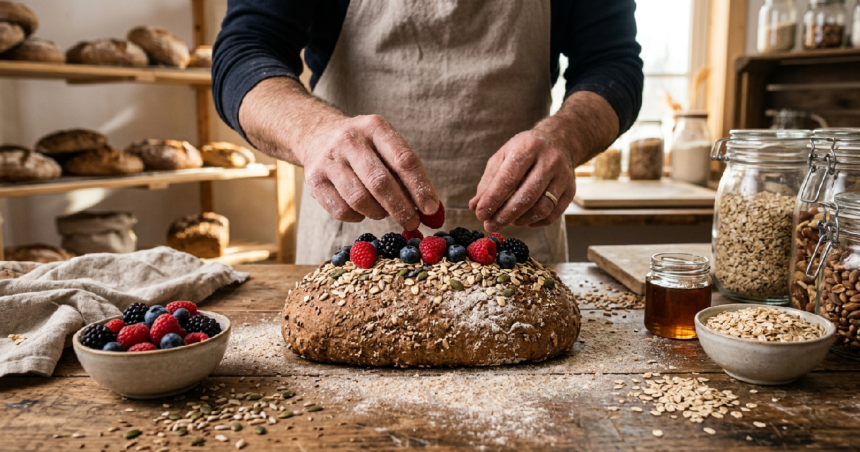
Whole food baking focuses on creating treats using minimally processed ingredients that retain their natural nutritional value, prioritizing nutrient-dense components over refined flours and sugars. This culinary approach uses foods as close to their original state as possible, avoiding artificial additives, preservatives, and the high-fructose corn syrup often found in commercial goods.
By utilizing strategic substitutions, home bakers can produce wholesome recipes that enhance fiber and vitamin content without sacrificing moisture or texture.
Replacing traditional staples like all-purpose flour and granulated sugar requires an understanding of how whole food alternatives behave under heat. Many professional kitchens now ban dozens of processed ingredients to ensure a higher standard of nutrition. This shift mirrors broader trends in health-conscious living where the focus is on performance and long-term wellness through high-quality fuel.
Strategic grain substitutions for optimal texture
For those interested in the crossover between high-performance nutrition and physical competition, latest sport news updates frequently highlight how dietary choices impact endurance. Understanding the mechanics of these ingredients allows anyone to transform their kitchen into a source of nutrient-dense energy. Whether you are prepping for a busy week or a specific physical challenge, whole food baking provides a sustainable way to indulge.
The foundation of whole food baking lies in the transition from refined white flour to whole grains. Unlike refined flours, which have the bran and germ removed, whole grains contain the entire kernel—the bran, germ, and endosperm. This composition makes them rich in fiber, B vitamins, iron, copper, zinc, and various antioxidants.
However, the presence of the bran means these flours absorb more water than their processed counterparts.
To avoid results that are too dense or dry, it is often recommended to substitute only 30% to 50% of the all-purpose flour in cakes and cookies with whole grain options. Whole wheat pastry flour, derived from soft wheat, is ideal for delicate items like muffins and scones.
In contrast, whole wheat bread flour from hard wheat is preferred for rustic breads and pizza crusts because of its structural integrity. For yeasted doughs, bakers should allow a rest time of approximately 20 minutes before kneading to allow for proper liquid absorption.
Essential whole grain variety and usage
Different grains offer unique flavor profiles and mechanical properties in the oven. Oat flour is particularly useful for maintaining moisture without making the finished product feel heavy.
White whole wheat flour provides a middle ground for those wary of the strong taste of traditional whole wheat, as it offers similar nutrition with a milder flavor and lighter color. Spelt, einkorn, buckwheat, and rye are also common in whole food pantries for their nutty notes.
Natural sweeteners and moisture management
Swapping refined sugar for natural sweeteners introduces beneficial vitamins and minerals into baked goods in small amounts. These alternatives, which include honey, maple syrup, dates, and coconut sugar, do more than just add sweetness; they also contribute significant moisture. Because these substances vary in consistency, adjustments to the recipe’s liquid content are often necessary to maintain the correct batter structure.
When replacing one cup of sugar with liquid options like honey or maple syrup, it is best to use three-fourths of a cup and reduce other liquids in the recipe by one-third. Stevia and monk fruit extract are also popular choices for those looking for calorie-free options that do not raise blood sugar levels.
Natural sweeteners tend to brown more quickly than refined sugar, which may require a reduction in baking temperature or time to prevent over-browning.
| Sweetener Type | Substitution Ratio | Notable Characteristics | Best Applications |
|---|---|---|---|
| Maple Syrup | 3/4 cup per 1 cup sugar | Adds moisture and rich flavor | Quick breads and muffins |
| Medjool Dates | 1:1 (as blended paste) | Provides caramel flavor and fiber | Brownies and energy bars |
| Coconut Sugar | 1:1 for white/brown sugar | Less sweet by volume; browns fast | Cookies and cakes |
| Monk Fruit | Varies by brand | Calorie-free; no blood sugar rise | Low-glycemic bakes |
Incorporating healthy fats and fruit purees
Fats are required for tenderness, but whole food baking replaces processed oils with nutrient-dense alternatives like avocados, nut butters, and coconut oil. Fruit purees, such as unsweetened applesauce, mashed bananas, or pureed pears, are exceptional substitutes that can replace half of the fat in many recipes. These purees add fiber and vitamins while keeping the crumb moist and tender.
Avocado is a specialized substitute that works particularly well in chocolate batters, providing a fudgy texture without imparting a vegetable flavor. Nut butters—specifically almond, peanut, and cashew—add healthy fats, protein, and fiber, though they tend to produce a more dense and chewy texture.
When using fruit purees as a replacement, a general rule is to use about half the amount of puree as the fat called for in the original recipe.
For those monitoring their performance levels, much like how Makhachev targets two-division glory through rigorous discipline, choosing high-quality fats can improve nutritional outcomes. Beyond fats, the inclusion of shredded vegetables like zucchini, carrots, or pumpkin adds natural sweetness and minerals. These additions help promote feelings of fullness due to their high fiber content, which can aid in weight management.
Plant-based dairy and egg alternatives
Standard dairy and eggs can be replaced with whole food alternatives to accommodate vegan diets or allergies. Plant-based milks made from almond, oat, coconut, or cashew offer lighter alternatives that are sometimes fortified with vitamins. These milks behave similarly to dairy in batters, though they may alter the final flavor profile slightly depending on the base nut or grain used.
Egg substitutes are vital for providing structure and leavening. Flaxseed \”eggs\” (ground flaxseed mixed with water) and chia seeds mixed with water are common binding agents that provide fiber. Another option is aquafaba, the brine from chickpeas, which mimics egg whites in its ability to foam and provide lift.
For those looking to reduce calorie density, fat-free dairy products like yogurt or buttermilk can effectively replace heavier fats while maintaining the necessary moisture levels for a successful bake.