Journalist Stephen Russo, a 2026 graduate of the University of Rhode Island, has published a detailed account of his five-year transformation through martial arts. Writing on June 7, 2026, Russo described how combat sports evolved from a distraction during a difficult life chapter into a foundational career path.
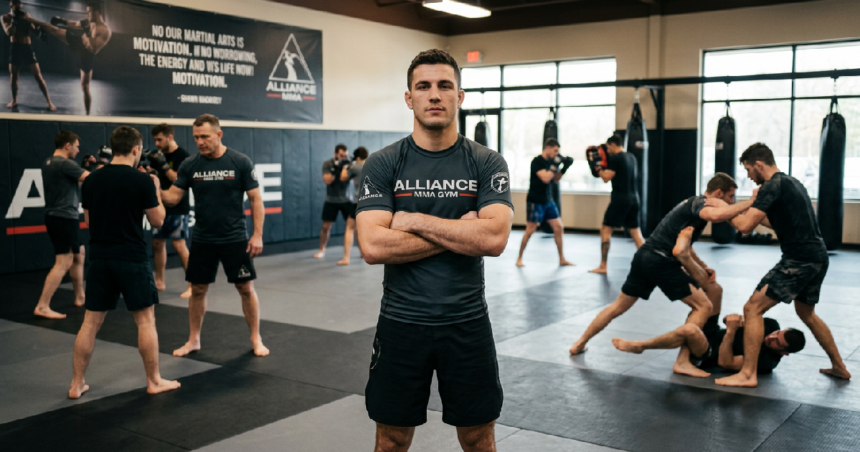
His journey began in his late teens as he transitioned from high school to college, eventually leading him to training sessions at Alliance MMA Gym.
The transformation was sparked by a newfound interest in the UFC during the 2020 pandemic. Russo noted that he began “loosely following” the organization when it became one of the first major sports to return to action. Following the events of UFC 261, which featured Kamaru Usman vs.
Jorge Masvidal 2, he became “hooked” on the technical aspects and history of the sport. This interest eventually shifted from passive observation to active participation in September 2021.
Russo’s first physical exposure to the discipline occurred on a day he was “feeling pretty low,” when a friend unexpectedly took him to a full-contact kickboxing class. Despite a background in baseball, cross country, and tennis, he found the experience “brutal” and physically overwhelming. He struggled with the mechanics of kicks, clinches, and takedowns.
Nevertheless, he fell in love with what he described as a “war with my own body.”
Building mental fortitude through Alliance MMA gym training
To accelerate his development, Russo supplemented group classes with personal sessions under coach Shawn Mackisey at Alliance MMA Gym. He sought to improve as quickly as possible, adopting a rigorous schedule that soon included weight training and running.
Within the first few months of his journey, he incorporated jiu-jitsu into his regimen to become as “complete” as possible. By the six-month mark, he began to fully grasp the extreme difficulty of the lifestyle.
A significant turning point in his development came during a private session where Russo says he “got absolutely wrecked” by his coach. He left the gym feeling dejected and frustrated by his performance. However, returning to the mats after that failure marked a permanent shift in his mentality. He began viewing setbacks as opportunities to identify necessary improvements rather than reflections of personal inadequacy.
This psychological resilience is a cornerstone of professional combat sports. While Russo focused on personal growth, elite fighters often apply similar discipline when Makhachev targets two-division glory with July title defense opportunities. The ability to endure hard training cycles is what separates casual practitioners from those competing at the highest levels of the sport.
Personal growth and the technical challenges of grappling
The physical toll of the sport was constant, leaving Russo winded, exhausted, and “sometimes close to throwing up” after classes. His normal rotation eventually settled into a demanding mix of grappling and striking. He noted that “growth is not always comfortable,” but emphasized that tenacity is built through the willingness to make mistakes and adjust.
This discipline has since influenced his approach to his professional journalism career.
Many followers of the sport find that the lessons learned inside the gym provide context for the technical battles seen in major headlines. For example, when Israel Adesanya faces Joe Pyfer in UFC headliner bouts, the complexity of the striking and clinching Russo struggled with is displayed at its peak. Understanding the “burn” of a session gives fans a deeper appreciation for these elite match-ups.
Russo’s professional background as a staff writer for The Good Five Cent Cigar helped him document the mental side of combat sports. He successfully bridged the gap between his personal training in wrestling and his reporting on fighter culture. By the time he graduated in 2026, martial arts had become the lens through which he approached life’s broader challenges.
Long term impact of the martial arts lifestyle
Reflecting on the last half-decade, Russo noted that what felt like a “small decision” ended up changing his life’s direction. He transitioned from a fan who only knew legends like Conor McGregor through high school chatter to a practitioner with five years of mat time. The lessons in discipline and confidence have stayed with him well beyond the walls of the Alliance MMA Gym.
His story highlights the “fan-to-practitioner” pipeline that has grown since the pandemic. As fans analyze how legends like Rousey vs Carano shaped the modern UFC era, many are discovering that the sport offers more than just entertainment. For Russo, the journey provided a new direction during a difficult chapter, proving that the most valuable fight is often with oneself.
Russo plans to continue his career in journalism with an emphasis on the people behind the competition. He remains a mixed martial artist, continuing to train in kickboxing, wrestling, and jiu-jitsu. His evolution from a student looking for a distraction to a focused journalist-athlete serves as a testament to the transformative potential of consistent martial arts practice.