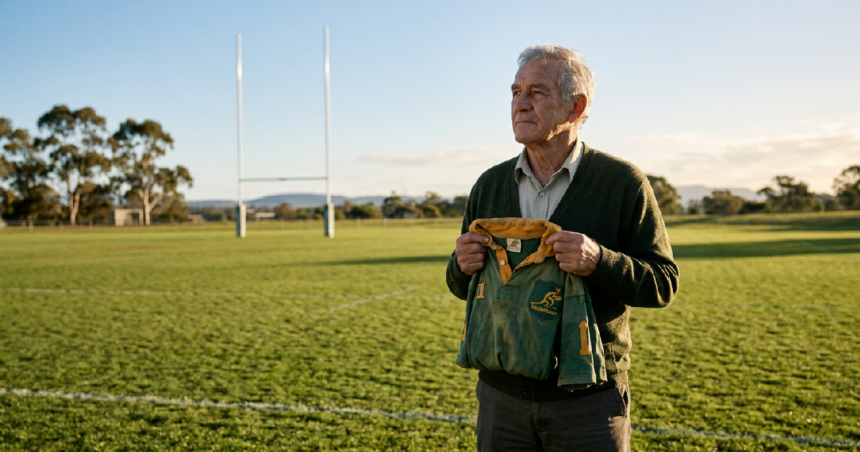
The intersection of sport and political conscience has rarely been more personal than in the story of Anthony Abrahams. In a recent episode of the podcast The Dropped Kick-Off, the former Wallaby sat down to discuss the weight of moral responsibility and the grueling legacy of the historic boycott against apartheid South Africa during the late 1960s. It is a conversation that feels particularly timely as modern athletes increasingly grapple with how to use their platforms in a fractured global climate.
Abrahams wasn’t just a spectator to history; he was part of a small, committed group of Australian rugby players who reportedly refused to play against the Springboks to protest the South African government’s system of institutionalized racial segregation. Decades later, the nuances of that decision and the backlash that followed serve as a study in the cost of conviction within the professional sporting world. This willingness to take a stand, even at the risk of isolation, draws parallels to modern administrative decisions that shift the landscape of competition, such as when Olympic officials bar transgender athletes from certain events, sparking widespread debate about the core values of sport.
The internal struggle of the historical boycott
For a rugby player in that era, the Wallabies jersey represented the pinnacle of achievement. Walking away from it was seen by many at the time as an act of betrayal. Abrahams reflects on the immense pressure from rugby unions, teammates, and a public that largely believed sport should remain entirely separate from politics. Yet, the choice to opt out of his international duties was a deliberate one, rooted in the realization that playing a sanctioned match against a segregated team was itself a political statement.
The discussion highlights how the boycott wasn’t merely about a game of rugby, but about challenging the legitimacy of a regime. For Abrahams and his peers, the moral responsibility reportedly outweighed the personal glory of the pitch. At the time, their stance was divisive, leading to significant social friction and professional consequences that lasted long after the tour concluded. This struggle between personal career goals and broader social impact is a constant in professional sports. For instance, as Salah faces career defining choice regarding his future, athletes are often reminded that their decisions carry weight far beyond the final whistle.
The cost of taking a stand in Australian rugby
Abrahams recalls the atmosphere of the era, noting that the decision to boycott wasn’t made in a vacuum. It required a specific type of courage to look at the fundamental elements of the sport — the scrums, the tackles, and the camaraderie — and decide that some things were more important than the win-loss column. The backlash from the establishment was reportedly swift, yet the long-term impact of their protest is now seen by many as a factor that helped shift the trajectory of international sporting relations with South Africa.
And while the focus remains on the historical weight of the 1960s and early 70s, the parallels to the modern era are unavoidable. Whether it is a rugby player deciding which causes to champion or a fighter considering their place in history, the fundamental question remains: where does the athlete end and the citizen begin? In the high-stakes world of combat sports, internal debates often rage about the impact of legendary figures on a sport’s culture, much like the discussion surrounding Rousey vs Carano and how they helped define the modern era of their industry.
Modern echoes and the evolution of athlete activism
The podcast episode dives deep into how the concept of “moral responsibility” has shifted over several decades. In the era of the boycott, there was no social media to amplify a message; there were only headlines and the physical absence of players from the field. Today, the tools have changed, but the risk of alienation remains a constant. Abrahams suggests that the burden of responsibility hasn’t lightened; if anything, the visibility of modern sport makes the stakes even higher.
For Abrahams, the specific cause matters, but the willingness to stand firm in the face of institutional opposition is the universal thread that connects generations of athletes. The story of those who chose to boycott serves as a reminder of the sport’s deeper roots. It isn’t always about the scorecards or the highlights; sometimes, the most significant moments happen when the players decide that participation is no longer an option.
History often views those who prioritize human rights over trophies with a different lens as time passes, though the path to that recognition is rarely smooth. For Abrahams, the boycott remains a defining chapter of his life — a moment where a refusal to play started a much larger conversation that the sporting world is still having today. It’s a testament to the idea that athletes are often looked upon as the conscience of the games they play, regardless of the era.