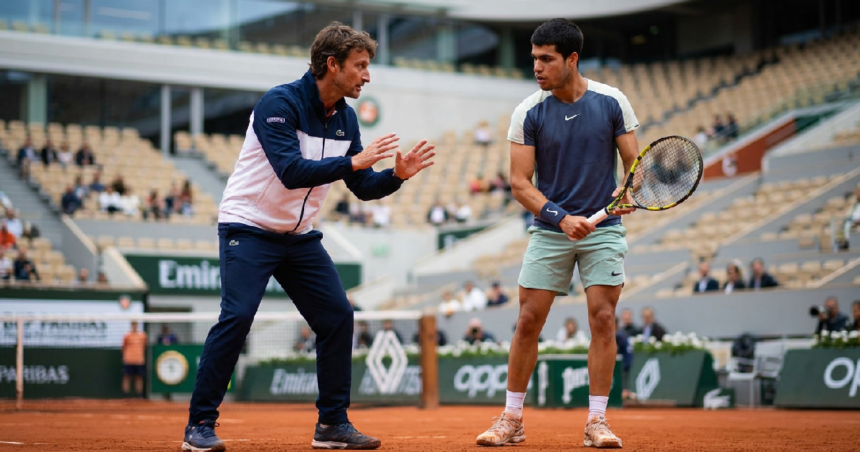
Juan Carlos Ferrero has long held the belief that Carlos Alcaraz possesses the raw tools to redefine the sport of tennis. However, as the current season progresses, the coach has offered a sobering reminder that talent alone is not enough to secure a seat at the table of the Greatest of All Time (GOAT).
The campaign has already seen Alcaraz reach significant milestones that many expected would trigger a period of undisputed dominance. Yet, the reality of the ATP Tour has proved more complicated. Following recent successes, reports indicate that Alcaraz is navigating the challenges of maintaining his early-season momentum, with observers noting a shift in his recent trophy-winning pace.
In discussions regarding his pupil’s development, Ferrero reportedly identified the psychological transition Alcaraz must make to bridge the gap between being a champion and a legend. The coach’s perspective suggests that while the Spaniard has hit early career goals with startling speed, the challenge now lies in maintaining motivation when the novelty of success begins to fade. Ferrero has suggested that when motivation naturally fluctuates, professional discipline must become the primary driver for a top-tier athlete.
The Battle for the Top Spot
The timing of Ferrero’s assessment comes as Alcaraz faces intense competition for the top positions in the world rankings. Rivals like Jannik Sinner have been increasingly consistent, putting Alcaraz’s status at the summit under pressure. While Jim Courier identifies tactical flaw in Fils and other young prospects, the rivalry at the very top of the rankings remains the narrative currently defining the men’s game.
Recent high-profile tournaments in the United States reportedly served as a reality check for the Alcaraz camp. Momentum appeared to stall during the North American hardcourt swing, with the Spaniard suffering setbacks against experienced contenders. These results suggested a rare vulnerability in a player who has often appeared invincible on the big stage over the last couple of years.
Ferrero, however, remains optimistic about the long-term trajectory. He is said to believe that Alcaraz is acutely aware of the historical figures who preceded him—the titans who dominated for two decades—and that this awareness is expected to prevent any sustained drop in intensity. The goal is no longer just to win individual matches, but to build a career that matches the longevity of the game’s greatest icons.
The Transition to Clay
The focus has now shifted to the European clay-court swing, a surface where Alcaraz is widely considered to be at his most comfortable. He enters local events looking to regain the rhythm that reportedly eluded him during the recent hardcourt season. Much like how Rousey vs Carano helped define the path for a new generation in their sport, Alcaraz is being asked to carry the torch for tennis during a period of transition.
A significant test in his current schedule involves a meeting with Tomas Martin Etcheverry. While Alcaraz has previously found success against the Argentine in lower-level competitions years ago, their current encounter takes place under much higher stakes. Etcheverry represents a specific kind of danger on clay, known for his specialist skills on the red dirt which will test whether Alcaraz has the discipline Ferrero has alluded to.
The future of the sport seems increasingly tied to how Alcaraz responds to these inevitable fluctuations in form. If he can heed the advice of his coaching team and find consistency throughout the year, the conversation regarding his place among the all-time greats may soon move from theory to reality. For now, the task involves holding off a surging field of rivals and proving that the motivation Ferrero spoke of remains as sharp as ever. Recent and upcoming performances in Europe will likely provide the first real answer to whether Alcaraz is ready for that next evolutionary step.