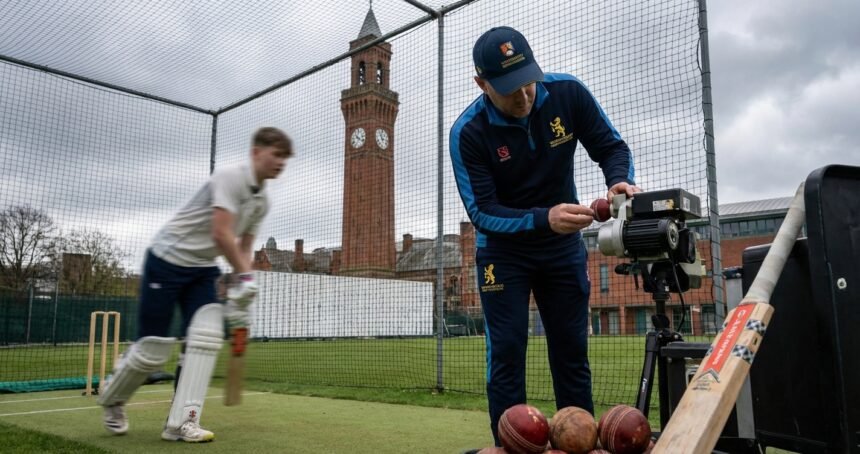
Birmingham University and Warwickshire County Cricket Club have formally announced a wide-ranging partnership, a move expected to significantly bolster cricket development and sports science integration within the region. This collaboration links a leading academic institution with one of English cricket’s most storied county clubs, promising a future where cutting-edge research and practical sporting excellence converge.
It’s a strategic alliance that makes considerable sense. Warwickshire, based at Edgbaston, has long been a powerhouse in county cricket, consistently producing talent and competing at the highest level. Birmingham University, meanwhile, boasts formidable credentials in areas like sports science, physiology, and medicine, alongside a commitment to fostering athletic talent through its own high-performance programmes. The proximity of the two institutions undoubtedly played a part, but the real driver here is a shared vision for innovation and growth within the sport.
For any modern sporting organisation, the quest for marginal gains and sustained competitive advantage increasingly involves looking beyond traditional training methods. Academic partnerships are becoming a vital component in this pursuit, offering clubs access to expertise that might otherwise be out of reach. We’ve seen this trend accelerate across various sports, and cricket is certainly no exception. The move by Birmingham and Warwickshire underscores a proactive approach to evolving the game.
A Fusion of Academia and Sporting Practice
Details emerging from the initial announcement suggest the partnership will encompass several key areas. Expect a strong focus on sports science research, with the university’s experts likely delving into player performance analysis, injury prevention, and rehabilitation strategies tailored specifically for cricketers. This could translate into more sophisticated training programmes for Warwickshire’s senior squad, but also crucially, for their burgeoning academy talent. Imagine young prospects benefiting from bespoke conditioning regimes informed by the very latest scientific understanding.
Beyond the elite level, the collaboration is also expected to enhance talent identification and development pathways. Birmingham University’s extensive network and reach within the student community could provide a fertile ground for spotting future cricketing stars who might otherwise slip through the net. Students studying relevant disciplines could also gain invaluable practical experience through placements and internships with the club, working alongside professional coaches and support staff. It’s a win-win, creating a pipeline for both athletic and professional development.
Such initiatives aren’t just about the professional game; they often have a ripple effect. Strengthening the grassroots and fostering a love for cricket at all levels is an enduring challenge for the sport, and these partnerships can provide resources and expertise that benefit a much wider demographic. Creating more opportunities for young people to engage with cricket, whether through university programmes or club initiatives, is crucial for its long-term health.
Broadening Cricket’s Talent Pool
One of the more interesting aspects of this kind of academic link-up is the potential to broaden cricket’s talent pool. Traditionally, pathways into professional cricket have been relatively narrow. By integrating with a university, a club like Warwickshire can tap into a diverse student body, potentially uncovering athletes with strong physical attributes or innate cricketing ability who might have focused on academics or other sports. This multi-faceted approach to talent sourcing is essential for keeping the game competitive and representative.
Clubs across the country are constantly seeking ways to secure their future. Securing key talent is paramount for county clubs, a point underscored by reports of Middlesex star Ryan Higgins committing his future to Lord’s. But equally important is the strategic development of new talent, and that’s where an alliance with a university can provide a significant edge. It’s not just about finding the next big hitter or quick bowler; it’s about creating an environment where every aspect of a player’s development, from physical conditioning to mental resilience, is underpinned by expert knowledge.
The academic rigour brought by Birmingham University could also drive innovation in coaching methodologies. New research into biomechanics, for example, could inform how coaches teach batting techniques or bowling actions, aiming for both efficiency and injury reduction. For Warwickshire, having access to these insights on their doorstep could prove a considerable advantage in the highly competitive world of county cricket. It provides a unique opportunity to embed scientific principles directly into day-to-day operations.
The Outlook: A Model for the Future?
Looking ahead, this partnership between Birmingham University and Warwickshire County Cricket Club could well serve as a blueprint for others. As professional sport becomes increasingly sophisticated, the lines between academic research and practical application continue to blur. Clubs are recognising the deep value in formal links with universities, not just for facility sharing, but for genuine intellectual collaboration.
The impact of such a partnership isn’t likely to be felt overnight, but over the coming seasons, we could see Warwickshire benefit from enhanced player welfare, improved performance outcomes, and a more robust talent development system. For Birmingham University, it’s an opportunity to apply theoretical knowledge in a high-stakes, real-world environment, providing unparalleled experience for its students and researchers. It wouldn’t be surprising if this model encourages other county clubs to seek out similar arrangements, understanding that the future of cricket development lies in a holistic approach, integrating the best of both the sporting and academic realms.
Indeed, just as Welsh counties seek international talent boosts, they too might eventually look to local academic institutions to bolster their foundational development work. This partnership represents a tangible step forward for cricket in the Midlands, potentially creating a legacy of excellence for years to come.