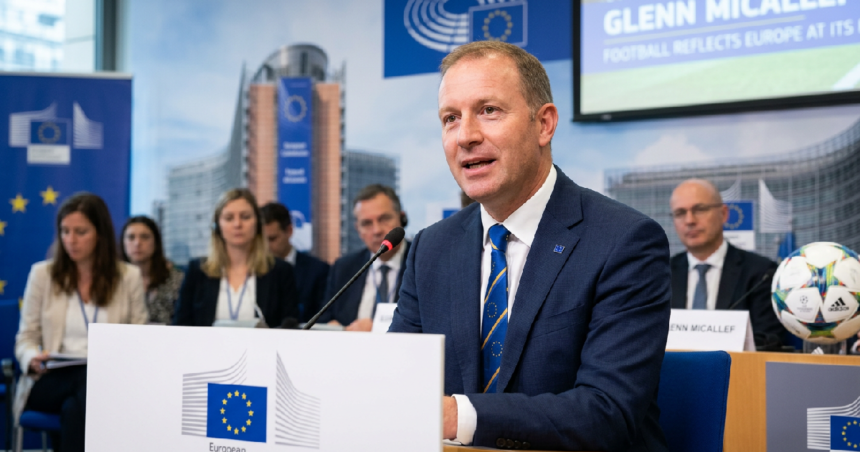
Glenn Micallef, the European Commissioner for Intergenerational Fairness, Youth, Culture and Sport, has praised the unique cultural weight of football, describing the sport as a reflection of “Europe at its best” during a series of high-level discussions in Brussels. The Commissioner’s remarks underline a strengthening relationship between the European Commission and the continent’s footballing authorities as they face evolving challenges regarding governance and social impact.
Speaking on the role of the game within the European Union, Micallef highlighted how football serves as a primary driver of social inclusion and collective identity across member states. The comments arrive at a pivotal time for the sport, as authorities grapple with the balance between commercial expansion and the preservation of the traditional European sports model that prioritizes meritocracy over closed-shop leagues.
The European Sports Model Under Scrutiny
The Commissioner’s endorsement of football’s cultural value is seen by many in the industry as a subtle but firm nod toward the existing pyramid structure of the game. For years, the European Commission has been a key player in the tug-of-war between traditionalists and those seeking more American-style franchise models. By framing the sport as a reflection of European values, Micallef is signaling a commitment to the “open” system where promotion, relegation, and grassroots funding remain central tenets.
But the road ahead isn’t without friction. The European Court of Justice has recently forced a rethink on how governing bodies like UEFA and FIFA manage competition. While Micallef’s rhetoric is positive, the legal reality requires a delicate balancing act. The Commission is increasingly tasked with ensuring that the business of football doesn’t steamroll the community aspects that the Commissioner so publicly admires.
Beyond the Pitch: Social Policy and Sustainability
Micallef didn’t just focus on the elite level. His perspective on “Europe at its best” includes the massive infrastructure of amateur clubs that act as community hubs from Lisbon to Helsinki. The Commission is reportedly looking at ways to further use football as a vehicle for environmental initiatives and youth employment programs.
The “Intergenerational Fairness” portion of Micallef’s portfolio is particularly relevant here. There is a growing concern that rising ticket prices and the fragmentation of broadcasting rights are alienating younger fans. If football is to remain the continent’s premier cultural export, the Commissioner suggested, it must remain accessible to the next generation, regardless of their economic background.
And then there is the matter of integrity. Issues such as financial fair play and the influence of state-backed ownership projects continue to dominate the headlines. While Micallef’s tone was celebratory, the subtext remains clear: if football is to represent the best of Europe, its governance must adhere to the transparency and accountability standards expected of any other major European institution.
What This Means for Future Regulation
The shift in European leadership often brings a change in how the “Sports Article” (Article 165 of the Treaty on the Functioning of the European Union) is interpreted. Micallef’s proactive stance suggests a more hands-on approach to sports diplomacy. We are likely to see more collaborative projects between the EU and football’s governing bodies aimed at tackling racism, promoting gender equality in the women’s game, and protecting the integrity of the transfer market.
Clubs are already beginning to adjust their long-term outlooks based on this political climate. As noted in recent reports on how clubs shift strategy as summer transfer windows loom, the intersection of legislative pressure and financial reality is fundamentally changing how the business of football operates.
Frequently Asked Questions
Why is the European Commission involved in football?
The EU views sport as a significant part of the European economy and a vital social tool. While they don’t run the matches, they help regulate the “European Sports Model,” ensuring competition remains fair and that the sport continues to provide social benefits to citizens across the member states.
What does Commissioner Micallef mean by ‘Intergenerational Fairness’ in sport?
It refers to ensuring that the decisions made in football today—like TV deals or league restructuring—don’t harm the long-term health of the game for future fans and players. It’s about keeping the sport sustainable and affordable for the youth of today.
Will this lead to new laws for European football clubs?
While the Commissioner can’t unilaterally pass laws, his office sets the tone for EU-wide policy. This might influence future directives on workplace safety for athletes, financial transparency, or environmental standards for new stadium constructions.