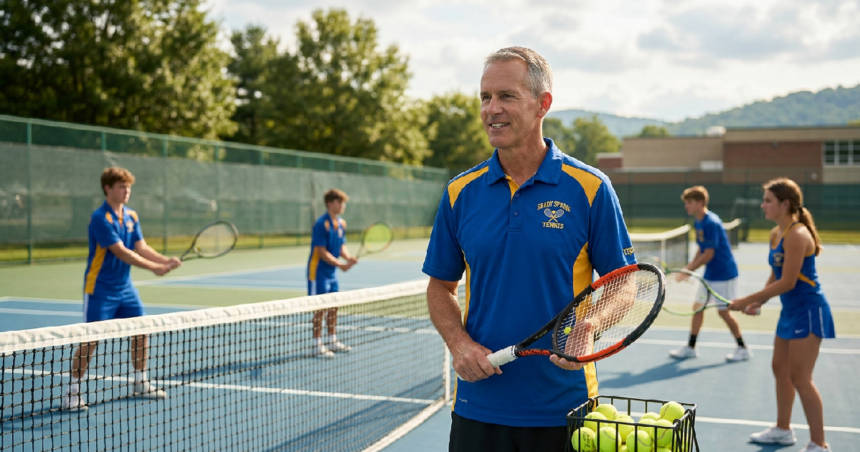
Building a successful athletic program in the high school ranks often hinges on a single, elusive factor: consistency. For Shady Spring High School, the tennis courts have historically been a place of transition, but under the guidance of head coach Willson, the program is finally finding its footing through a deliberate focus on stability and long-term development.
The challenge of high school tennis is unique. Unlike football or basketball, which often benefit from expansive feeder systems and established middle school rosters, tennis programs frequently rely on athletes who pick up a racket for the first time in their freshman year. Willson’s approach at Shady Spring has been to counter this steep learning curve by creating an environment where players feel invested in the multi-year trajectory of the team.
The Impact of Coaching Continuity at Shady Spring
Before Willson took the reins, the Shady Spring tennis program faced the revolving door of leadership that many prep sports teams endure. When coaches change every two seasons, the tactical identity and culture of the team are constantly reset. By staying the course, Willson has been able to implement a system that prizes incremental growth over immediate, unsustainable results.
The results of this stability are visible in the way the current roster approaches matches. There is a clear understanding of the technical fundamentals Willson preaches—footwork, court positioning, and high-percentage shot selection. These aren’t skills learned in a single afternoon session; they are the products of a coach who has been there long enough to see a freshman’s awkward swing evolve into a senior’s reliable weapon.
And it isn’t just about the physical game. Willson has fostered a culture where upperclassmen take on a mentorship role, effectively acting as an extension of the coaching staff. This peer-to-peer instruction ensures that even as the senior classes graduate, the program’s DNA remains intact.
Building Beyond the Court
The success of the Shady Spring program under Willson isn’t measured solely by the win-loss column in the conference standings. While the team has become more competitive within the region, the broader goal has been to establish tennis as a primary sport of interest within the local community. By providing a stable platform, Willson has encouraged higher participation rates, drawing in athletes who might have otherwise overlooked the tennis program for more traditional seasonal sports.
This stability also allows for better scheduling and more robust preparation. When a coach knows their personnel year-over-year, they can tailor practice drills to specific weaknesses that were identified months prior. For Shady Spring, this has meant moving away from “just playing” and toward intentional, data-driven improvement.
The Road Ahead for Shady Spring Tennis
As the current season progresses, the focus remains on the developmental pipeline. High school sports are inherently cyclical, but the “Willson era” at Shady Spring is designed to flatten out those peaks and valleys. By emphasizing the process over the outcome, the program is positioning itself as a consistent contender in the regional landscape.
The coming months will test the depth of the roster, but with a firm foundation now in place, Shady Spring appears better equipped to handle the rigors of high-level prep competition than ever before. Success in high school athletics is often a marathon, not a sprint, and Willson’s commitment to staying the course is starting to pay dividends on the scoreboard.
Frequently Asked Questions
How has Willson changed the culture of Shady Spring tennis?
The primary shift has been toward long-term player development and stability. By remaining in the head coaching role, Willson has provided a consistent voice and technical philosophy that allows players to grow over their four-year high school careers without having to relearn new systems under different coaches.
What are the main challenges for building a prep tennis program?
The most significant hurdle is often the lack of a formal feeder system. Many players start the sport late, meaning coaches have to balance teaching basic mechanics with preparing for competitive matches. Willson’s focus on stability helps bridge this gap by creating a more structured learning environment.
Is Shady Spring seeing an increase in player participation?
Yes, the presence of a steady program often leads to higher interest levels. As the team becomes more established and organized under Willson, it attracts athletes who are looking for a competitive but supportive team atmosphere, helping to grow the roster size and local interest in the sport.