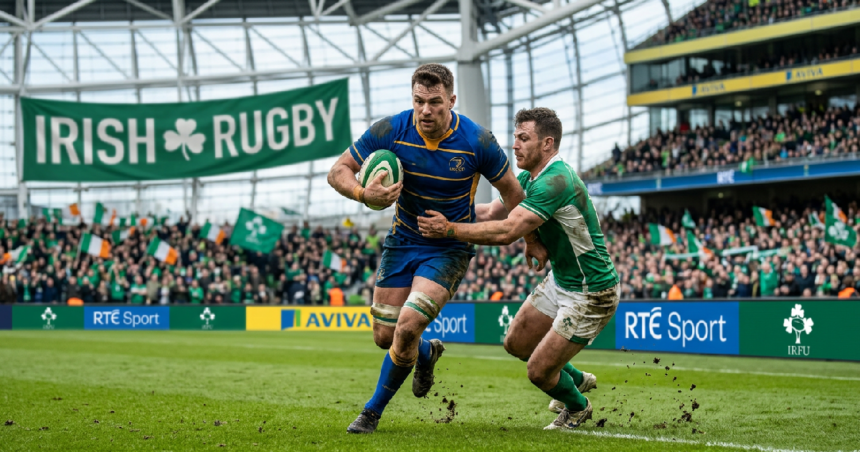
Irish rugby stands at a precarious crossroads as the domestic provinces prepare for a defining stretch of the season. With the European knockout stages looming and the United Rugby Championship (URC) table tightening, the depth of the central contracting system and the tactical evolution under national coaches are facing their sternest tests since the Six Nations concluded.
The mood across the four provinces is one of focused anxiety. While Leinster continues to set the pace, questions regarding the aging profile of certain key units and the integration of emerging talent have dominated the conversation in Dublin and Limerick alike. It isn’t just about winning games anymore; it’s about the manner in which Irish rugby sustains its top-tier status amidst an increasingly physical and high-spending European circuit.
Leinster Tactical Shift and Selection Dilemmas
Leinster’s dominance in the URC has often felt like an inevitability, but the recent integration of new defensive philosophies has sparked debate among the RDS faithful. The transition to a more aggressive, line-speed-focused system—influenced by high-level coaching additions over the last year—has led to some uncharacteristic gaps in the wide channels. For a team that prides itself on being an impenetrable blue wall, these slight fractures are being viewed with scrutiny.
And then there is the out-half situation. With the post-Sexton era well underway, the competition for the number 10 jersey remains the most talked-about subplot in the capital. The rotation between established operators and the younger brigade has kept everyone on their toes, but many former players turned analysts are calling for a settled starter ahead of the biggest European fixtures. Stability, they argue, is more valuable than versatility when the pressure of a Champions League quarter-final hits.
Munster Resilience Amidst Injury Clouds
Down in Limerick, Graham Rowntree is once again digging deep into his squad depth. Munster has developed a reputation for peaking at the right time, often finding their best form when their backs are against the wall. However, the physical toll of the current campaign is starting to show. Reports from the medical room suggest several front-line starters are racing against time for the next round of cross-border fixtures.
The “Munster way” has always been rooted in a relentless breakdown presence and a kick-chase game that suffocates opponents. But we’ve seen a shift toward a more expansive attacking brand this season. Whether they can maintain this flair while missing key ball-carriers in the pack remains to be seen. The Thomond Park crowd will undoubtedly play their part, but the tactical execution will need to be flawless to overcome the looming French and South African challenges.
The Northern Front and Western Ambition
Ulster and Connacht find themselves in different but equally challenging positions. For Ulster, the quest for silverware has become a marathon of consistency. They’ve shown they can beat anyone on their day, yet the occasional lapse in defensive concentration continues to haunt them in high-stakes matches. The pressure on the leadership group in Belfast is mounting to turn “potential” into “trophies.”
Connacht, meanwhile, continues to punch above their weight, utilizing a partisan home atmosphere and a gritty identity. Their ability to disrupt the rhythm of the league’s heavyweights has kept them in the conversation for playoff spots. The challenge for the Westerners is the grueling travel schedule that the modern URC demands, which tests a smaller squad to its absolute limit.
Development Pathways and the National Picture
Beyond the immediate results, the health of the Irish rugby ecosystem is measured by the quality of the players coming through the academy systems. The recent U20 performances have provided plenty of optimism, but the bridge between age-grade success and senior provincial consistency is a steep one. There is a growing consensus that the next 12 months will require a bolder approach to blooding young talent, even if it comes at the cost of short-term results.
National coach Andy Farrell will be watching these provincial developments with a keen eye. The synergy between the Irish camp and the four provinces has been the bedrock of recent success, but that relationship requires constant maintenance. As rivals across the English Channel and the Southern Hemisphere evolve, the Irish game cannot afford to stand still.
Frequently Asked Questions
Is the current central contracting system still working for the provinces?
It remains the envy of many other nations because it protects player welfare and ensures the best talent stays in Ireland. However, it does create friction when players are “managed” out of key provincial games, leading to debates about whether the national team’s needs are being prioritized too heavily over the clubs.
Who is the current favorite to take over the Ireland fly-half role permanently?
There isn’t a single answer right now. While Jack Crowley has the inside track based on recent starts, the competition from the likes of the Byrne brothers and emerging talent at other provinces means the jersey is far from settled. It’s likely to be a “hot hand” selection for the foreseeable future.
How is the URC format affecting the Irish teams this year?
The inclusion of the South African sides and the high-stakes nature of the meritocratic qualification for Europe means there are no “easy” weekends. This has forced Irish coaches to rotate more heavily, which is great for depth but sometimes results in a lack of cohesion during mid-season blocks.