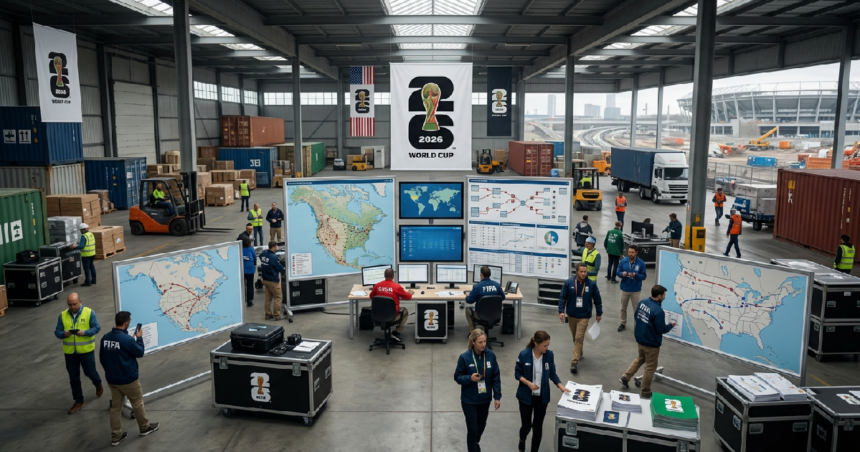
Preparations for the 2026 World Cup have hit a significant crossroad as organizers grapple with the staggering logistical demands of a tournament spread across three nations. With the tournament expanded to 48 teams, the burden on infrastructure in the United States, Mexico, and Canada is becoming the primary talking point for FIFA officials and local organizing committees alike.
The scale is unlike anything the sporting world has ever seen. Unlike previous editions held in compact geographic regions like Qatar or Germany, the 2026 iteration requires teams and fans to navigate distances that span thousands of miles. This isn’t just a matter of booking more flights; it’s a total reimagining of how a global event of this magnitude can function without collapsing under its own weight.
Travel Fatigue and the Player Welfare Dilemma
One of the most pressing concerns involves the physical toll on the athletes. While FIFA has promised to group group-stage matches within regional clusters—West, Central, and East—the knockout rounds will inevitably force cross-continental travel. Sources close to several European national teams have already expressed private concerns regarding recovery times between matches when flights could exceed six hours across multiple time zones.
And it’s not just about the players. The carbon footprint of such an expansive tournament is under intense scrutiny. Supporters are facing a nightmare scenario regarding ticket prices combined with astronomical internal travel costs. In recent weeks, fans have begun to voice frustrations over the lack of concrete information regarding “fan corridors” or subsidized travel options that were once rumored to be in development.
The Visa and Border Control Hurdle
Beyond the physical movement of people, the political reality of a three-host tournament is setting in. Moving tens of thousands of international supporters across the borders of the U.S., Mexico, and Canada requires a level of diplomatic and administrative coordination that is currently being tested. Recent changes in immigration policies and the potential for heightened border security around the event dates have added a layer of complexity to the planning phase.
Organizers are reportedly working on a “World Cup ID” system, similar to the Hayya card used in Qatar, to streamline entry. However, the legal frameworks of the three host nations are significantly more complex to align. While the United States remains the primary hub for the later stages of the tournament, the logistical pressure on Mexico City and Toronto to act as seamless entry points cannot be overstated.
Infrastructure Gaps in Key Host Cities
While venues like the MetLife Stadium in New Jersey and the SoFi Stadium in Los Angeles are ready for the bright lights, other host cities are racing against time. Public transport remains a particular weak point in several U.S. markets where the “car-first” culture clashes with the needs of a massive influx of international visitors who won’t have access to personal vehicles.
Cities like Kansas City and Dallas are investing heavily in transit improvements, but whether these projects will be fully operational by the time the opening whistle blows remains a gamble. You can read more about the specific logistical hurdles facing the North American World Cup which details the immense pressure on local municipalities.
A Season of Strategic Adjustment
While the World Cup looms large, the domestic football calendar is already feeling the ripple effects. Major leagues are beginning to look at how the 2025-26 season will need to be truncated or shifted to accommodate an earlier start for the tournament. This pressure is also changing how teams approach the market. We are seeing clubs shift their recruitment strategy as they prepare for a summer window that will be disrupted by the most expansive international tournament in history.
The 2026 World Cup is no longer a distant thought; it is a looming reality that is forcing football’s governing bodies to answer difficult questions about growth versus sustainability. Whether the “bigger is better” philosophy holds up under the strain of 104 matches remains to be seen.
World Cup 2026 Logistics FAQ
Will fans need separate visas for each host country?
FIFA and the host nations are currently negotiating a unified permit system to allow ticket holders to move more freely between the U.S., Canada, and Mexico, though final details on the “World Cup Visa” are still being finalized by respective government agencies.
How will the heat affect matches in Southern stadiums?
Many of the venues, particularly in the U.S. and Mexico, feature climate control or are designed with significant shading. FIFA is also expected to schedule matches in high-heat zones for later evening kick-offs to protect player safety.
Are there enough flights to handle the 48-team expansion?
Airlines in North America are already planning for increased capacity, but experts warn that flight costs will likely spike during the tournament due to the unprecedented demand for internal travel between host cities.