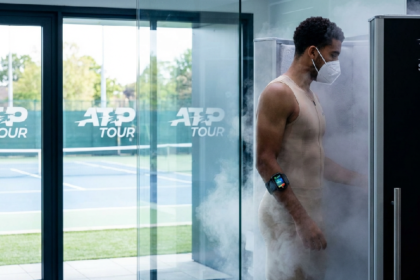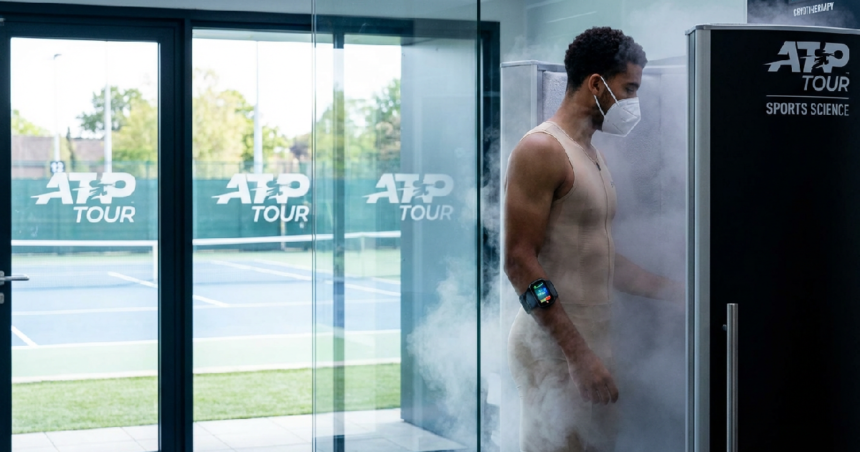
Professional tennis has long been a war of attrition, but the battlefield is changing. As the ATP and WTA tours grow increasingly demanding, the difference between a title run and an early exit often comes down to what happens in the three hours after a match rather than the three hours during it. We are seeing a fundamental shift in how players like Arthur Fils and the game’s elite approach physical restoration, moving away from simple ice baths toward a data-driven, high-tech ecosystem.
The modern circuit is relentless. Players travel across time zones, surfaces, and altitudes with barely a day to calibrate. To combat this, the “support team” has expanded beyond a lone coach and a part-time physio. Today, a top-tier player’s entourage includes recovery specialists armed with wearable tech and biometric sensors that monitor everything from deep-sleep cycles to blood glucose levels.
The rise of biometric monitoring and wearable data
Gone are the days when a player simply “felt” tired. Now, they know exactly why. Wearable devices have become ubiquitous on the practice courts, tracking heart rate variability (HRV) to determine if a player’s nervous system has recovered from the previous night’s five-setter. If the HRV is low, the intensity of the morning session is dialed back immediately. It’s a proactive approach to injury prevention that was impossible a decade ago.
This data doesn’t just stay on the player’s wrist. It is synced to cloud-based platforms where sports scientists analyze the load. For a rising star like Arthur Fils, managing this physical output is critical. Analysts have already noted that maintaining tactical discipline becomes harder when physical fatigue sets in, a point Jim Courier recently highlighted regarding Fils’ tactical approach. When the body fails, the mind follows, and tech is the early warning system that prevents that collapse.
Hyperbaric chambers and cryotherapy pods
The physical tools of the trade have evolved into something resembling a science fiction film. While the standard ice bath remains a staple, it is being supplemented by whole-body cryotherapy and portable hyperbaric chambers. These chambers, once reserved for specialized medical clinics, are now often found in the hotel suites of the world’s top ten players.
By breathing oxygen in a pressurized environment, players can accelerate the repair of micro-tears in muscle tissue. It’s about compressing the recovery window. If a player finishes a semi-final at 11:00 PM and has to play a final the following afternoon, they don’t have twelve hours to rest; they have about four hours of “quality” recovery time. Tech allows them to maximize every minute of that window.
And then there is the “smart” compression gear. Pneumatic compression boots, which use a sequence of inflation and deflation to mimic the body’s natural muscle pump, are now a common sight in player lounges. They flush out metabolic waste and reduce swelling, allowing athletes to keep their legs “fresh” despite a grueling schedule of back-to-back tournaments.
Data-driven nutrition and the sleep revolution
Recovery isn’t just about muscles; it’s about the internal engine. We are seeing more players utilize continuous glucose monitors (CGMs) to see how their bodies react to specific foods in real-time. This isn’t just about “eating clean”—it’s about “eating right” for a specific metabolic profile. If a player’s blood sugar spikes and crashes at the wrong time, their performance on court is compromised regardless of how many miles they’ve run in training.
Sleep has also been weaponized. Top players now travel with their own bedding or use cooling mattress pads that regulate body temperature throughout the night. Research shows that even a one-degree deviation in core temperature can disrupt REM sleep, the phase most critical for hormonal regulation and physical repair. In a sport where matches can end at 3:00 AM, the ability to force the body into high-quality sleep is a competitive advantage.
The future of the digital locker room
Where does this go next? The integration of Artificial Intelligence is the likely frontier. We are moving toward predictive modeling where an algorithm could tell a coach, with high degrees of certainty, that a player is at an 80% risk of a hamstring strain based on their last three days of biometric data.
But there is a human element that technology cannot replace. The psychological toll of being “always on”—always monitored and always measured—is a concern some veterans have voiced. However, as the game gets faster and the balls get heavier, the players who refuse to embrace the “recharge mode” provided by modern tech will simply find themselves left behind in the training room.
Frequently Asked Questions
Is recovery tech only for the top-ranked players?
While hyperbaric chambers and private recovery teams are expensive, much of the technology is trickling down. Many junior players now use HRV-tracking wearables and affordable compression boots. The “data-first” mindset is becoming the standard at all levels of professional development.
Does this technology actually prevent injuries?
It significantly reduces the risk. By identifying “red flags” in biometric data—such as a lack of sleep or suppressed heart rate variability—coaches can adjust training loads before an acute injury occurs. It doesn’t eliminate freak accidents, but it manages the cumulative wear and tear that ends careers.
How do players manage recovery during late-night finishes?
This is the biggest challenge on tour. Technology helps by providing “forced” recovery—using tools like binaural beats for sleep induction, specific light-filtering glasses to reset circadian rhythms, and immediate post-match nutritional protocols that are pre-calculated based on the match duration and intensity.