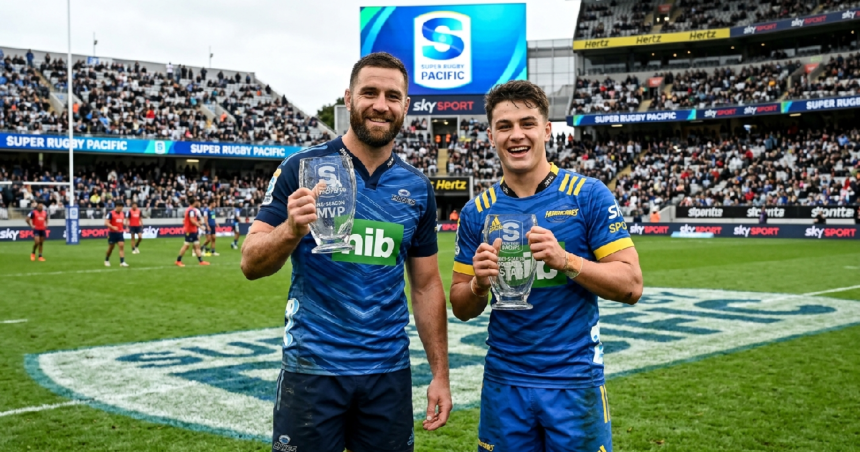
As Super Rugby Pacific crosses the midway point of the 2026 campaign, the hierarchy of the southern hemisphere’s premier club competition has begun to harden. While the usual suspects from the Blues and Crusaders remain in the postseason conversation, the narrative of the season has been dictated by individual brilliance that has transformed mid-table outsiders into genuine title threats.
The race for the Player of the Tournament is traditionally a battle of the playmakers, but this year the focus has shifted toward the breakdown and the back-three. Selecting a mid-season MVP in this competition requires looking beyond the highlight reels to the players who are consistently influencing the scoreboard and the contact area during the decisive final quarters of matches.
The Mid-Season MVP: A Tight Race at the Top
While several names have been floated for the leading individual honor, the consensus among observers suggests that the influence of the Blues’ backline general has been the defining factor of the season so far. To lead the MVP race, a player doesn’t just need impressive statistics; they need to be the person the opposition coaches spend their entire week planning for.
The standout performer has consistently demonstrated an ability to manipulate defensive lines that are becoming increasingly sophisticated. It isn’t just about the line-breaks or the offloads anymore. It is about the tactical kicking, the game management under the new fatigue-inducing rules, and the leadership shown when the set-piece falters. The frontrunner for the award has managed to balance individual flair with the pragmatic requirements of winning tight New Zealand derbies.
But the MVP conversation isn’t a one-horse race. Competition has come fiercely from the Australian conferences, where a rejuvenated Brumbies contingent has pushed their core leaders into the spotlight. The gap between the top Kiwi sides and the chasing pack in Australia has narrowed, largely due to the elite performances of individual specialists who have mastered the art of the “jackal” and the transition from defense to attack.
Breakout Player: The New Star of the Pacific
Every Super Rugby season unearths a diamond in the rough, and 2026 has been no different. The breakout player of the year so far is a talent who was effectively an unknown quantity twelve months ago but is now a certainty for international honors later this year.
This player’s rise hasn’t been a slow burn; it’s been an explosion. Whether it’s a winger with blistering pace from the Fijian Drua or a bruising loose forward coming through the ranks at the Hurricanes, the breakout star has brought a physical presence that has caught veteran defenders off-guard. Coaches have noted that this individual possesses the “X-factor”—that intangible quality that allows a player to create something out of a broken play or a static scrum.
What makes this breakout performance particularly impressive is the consistency. Many young players have a flashy debut and then fade as defensive coordinators figure them out. This year’s standout has adjusted their game week-to-week, finding new ways to impact the match even when they are being double-teamed by defenders.
Navigating the Second Half of the Season
As the competition moves toward the playoffs, the pressure on these award frontrunners will shift. The MVP candidates will no longer be judged on how many defenders they beat in March, but on how they handle the high-stakes environment of knockout rugby. History shows that mid-season form can be a fickle thing; injuries and international call-ups often disrupt the rhythm of those leading the statistical charts.
For the breakout stars, the challenge is maintaining that level of intensity. The “sophomore slump” can often happen within a single season once the scouting reports are circulated. However, the sheer athletic profile of this year’s top rookie suggests that they have the raw tools to remain a threat regardless of how much footage the opposition watches.
The standard of play in Super Rugby Pacific this year has benefited from a lack of major international disruptions in the early months, allowing teams to build genuine chemistry. As we look toward the final rounds, the battle for these individual accolades will likely mirror the battle for a home semi-final.
Super Rugby Mid-Season FAQ
How are the MVP and Breakout Player winners officially decided?
While media outlets and fans have their own versions, the official Super Rugby Pacific awards are typically determined by a combination of a points-based system from matches (such as 3-2-1 votes from officiating panels) and a final vote by a panel of former players and coaches at the end of the regular season.
Does a player have to play for a winning team to be the MVP?
Not strictly, but it certainly helps. It is rare for a player from a team that misses the playoffs to win the top award. Total impact on the standings is a major metric, meaning the MVP is usually the person who carries their team into a top-four position.
What qualifies a player for the ‘Breakout’ category?
Generally, this is reserved for players in their first or second full season of Super Rugby who have not yet established themselves as regular international starters. It’s about the leap from being a squad player to being a marquee name in the competition.