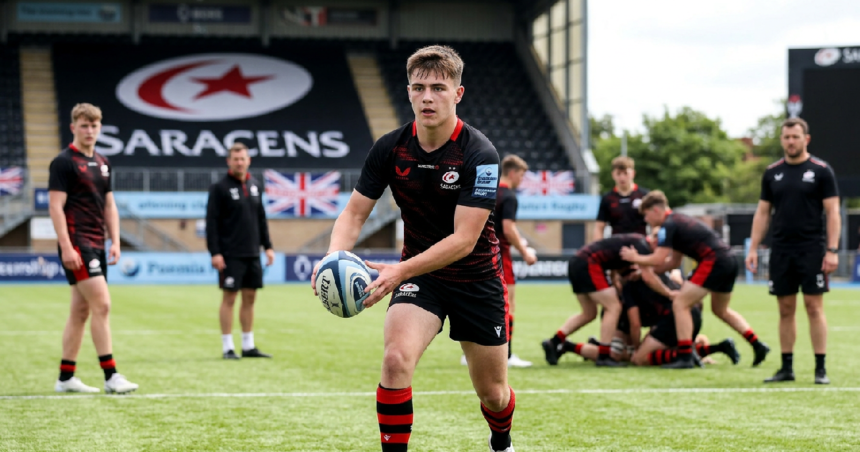
The debate over who produces the best talent in English rugby has often focused on subjective claims, but a new study by ReadRugbyUnion has provided concrete data to support the argument for one specific heavyweight. Saracens have emerged at the top of a comprehensive analysis into Premiership academies, outperforming their rivals in the transition of youth players into the professional game.
For years, the North London club has been synonymous with a “golden generation” that underpinned both domestic and international success. This latest research suggests that the conveyer belt at St Albans is far from slowing down. By examining the volume of academy graduates reaching high-level senior minutes, the study highlights how Saracens have successfully embedded a developmental culture that few others can match.
Data confirms North London dominance
The study looked at several metrics, including the number of professional contracts awarded to academy products and their subsequent impact on both club and international rugby. Saracens’ pole position isn’t just about volume; it’s about the quality of the athletes being produced. The club has effectively built a system where young players are not just squad fillers but become the structural pillars of the first team.
While other clubs like Leicester Tigers and Exeter Chiefs have historically prided themselves on homegrown talent, the study indicates that Saracens have been more consistent in bridging the gap between age-grade rugby and the elite senior level. It’s a point of pride for a club that has often faced criticism regarding its financial management in the past, shifting the narrative toward their genuine investment in the grassroots game.
And it isn’t just about the household names like Maro Itoje or Owen Farrell. The research points toward a steady stream of “secondary” graduates who may not all become England regulars but provide the high-quality depth required to compete across the Premiership and Champions Cup simultaneously.
The struggle for consistency elsewhere
While Saracens lead the way, the study reveals some uncomfortable truths for other Gallagher Premiership sides. Several clubs have seen a high turnover of academy prospects who fail to make it past their early twenties in a professional environment. The data suggests that geographical advantages—such as having a large catchment area—don’t always translate into a successful senior pipeline.
Clubs that have struggled financially in recent seasons have often been forced to lean on their academies by necessity rather than design. However, Saracens’ success appears more intentional. They’ve managed to maintain a high-performance environment where youngsters are integrated alongside international stars, a method that seems to accelerate their development compared to those thrown into struggling teams.
Questions remain for some of the mid-table clubs who have invested heavily in coaching staff but have yet to see a comparable ROI in terms of senior starts for their homegrown players. The gap between the top performers and the basement of this study is reportedly wider than many in the RFU would like to see.
What this means for the England setup
For Steve Borthwick and the England coaching staff, the health of these academies is the lifeblood of the national side. Saracens’ continued dominance in talent production ensures a level of continuity for the national team, especially in key positions like the back row and second row, where the club has been particularly prolific.
But there is a broader implication for the league’s sustainability. As the Premiership continues to navigate a difficult financial period, the ability to produce “cheap” elite talent from within is no longer just a sporting advantage—it is a financial necessity. This study serves as a blueprint for what a successful model looks like in the modern era.
The focus will now shift to whether other clubs can replicate the Saracens framework. With changes to the Gallagher Premiership structure and ongoing discussions regarding central contracts, the importance of the academy system has never been higher. If others cannot close the gap, we may see the competitive balance of the league tilt even further in favor of the North London side.
Frequently Asked Questions
Which other clubs performed well in the study?
While Saracens took the top spot, clubs like Leicester Tigers and Harlequins also showed strong results. These clubs have historically maintained a solid connection between their local scouting networks and their senior matchday squads.
Does a top-rated academy guarantee league success?
Not necessarily, but it provides a massive head start. Having a core of homegrown players usually leads to better squad cohesion and allows a club to spend more of its salary cap on high-profile “difference makers” from overseas.
How does this impact the England national team?
The RFU relies on these academies to prepare players for the rigors of international rugby. When an academy like Saracens produces high-caliber players consistently, it gives the England manager a reliable pool of talent that is already used to a winning culture.