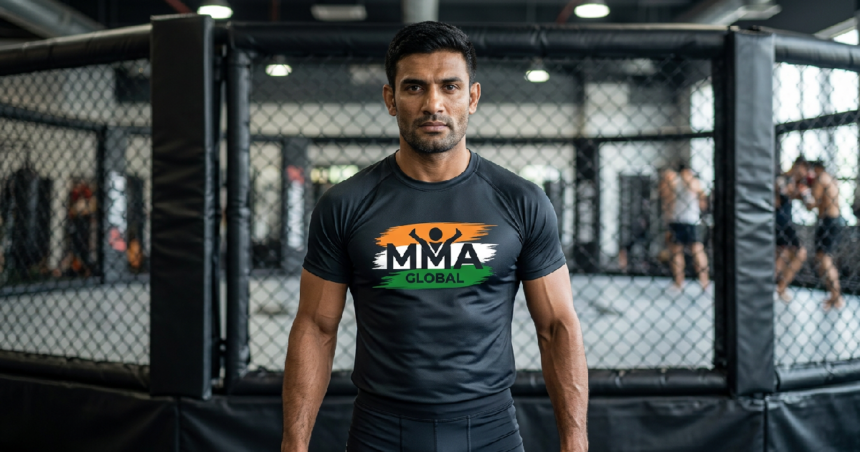
The transition from traditional wrestling to the cage of mixed martial arts is a path well-trodden by some of the sport’s greatest champions. But rarely does that journey begin in earnest at an age when most professional athletes are settling into commentary roles or coaching positions. Sangram Singh, the veteran Indian wrestler and media personality, is attempting to defy that conventional timeline as he pivots toward a global MMA career at 40.
Singh’s move isn’t just a personal challenge; it represents a calculated effort to bridge the gap between India’s deep-rooted wrestling culture and the rapidly expanding professional MMA market. For a sport that has struggled to find a consistent foothold in the subcontinent, having a recognizable face like Singh lead the charge provides a bridge to a massive domestic audience that already understands the fundamentals of grappling.
The Evolution from Mat to Cage
Singh is no stranger to the physical demands of elite competition. A Commonwealth Heavyweight wrestling champion, his career has been defined by a grappling style that emphasizes physical strength and technical control. Transitioning to MMA requires a total overhaul of muscle memory. While his wrestling base is world-class, the addition of striking, submissions, and the unique cardiovascular demands of five-minute rounds presents a steep learning curve.
Reports from his training camp suggest a focus on high-altitude conditioning and a simplified striking game designed to facilitate his takedowns. At 40, the margin for error is slim. He doesn’t have the luxury of a ten-fight developmental period. Instead, he is looking to make an immediate impact on international promotions, leveraging his name recognition to secure high-profile bouts that can elevate the profile of Indian fighters globally.
The timing is strategic. Organizations like the UFC and ONE Championship have expressed growing interest in the Indian market, yet the country has lacked a singular figurehead to galvanize the fanbase. Singh aims to be that catalyst, proving that the technical foundations of Indian pehlwani can translate directly to the modern octagon.
Challenges of a Late-Career Debut
Critics often point to the biological clock as the primary antagonist in this narrative. The featherweight and lightweight divisions are usually dominated by speed, but as a heavier athlete, Singh may find more longevity. In the heavier weight classes, power and grappling often age better than the twitch-reflexes required in the lighter categories.
And then there is the pressure of expectation. Unlike a twenty-year-old prospect starting on the regional circuit, Singh’s every move is under a microscope. He is balancing a career in the public eye with the grueling, often solitary grind of an MMA camp. It’s a gamble that puts his athletic legacy on the line, but for Singh, the risk seems secondary to the goal of establishing a pathway for future Indian martial artists.
He isn’t just fighting for himself; he’s fighting to prove that India can produce world-class MMA talent. By taking on international opponents on well-regarded cards, he hopes to show that Indian athletes possess the grit and technical acumen to compete at the highest levels of the sport.
What This Means for Indian MMA
The Indian MMA scene has seen flashes of promise over the last decade, with various domestic promotions attempting to capture the public’s imagination. However, the lack of a major crossover star has stalled progress. Singh’s “second act” could provide the necessary spark. If he can demonstrate a high level of competency and secure a few decisive wins, it opens the door for sponsors, broadcasters, and younger athletes to take the sport more seriously.
Looking ahead, Singh’s schedule appears designed to test his mettle against seasoned veterans rather than “gimme” fights. This approach may be risky, but it earns the respect of the hardcore MMA community—a demographic that is notoriously skeptical of celebrities entering the cage. Whether he finds championship gold or simply serves as a pioneer, his venture into the sport at 40 is a testament to his durability and ambition.
Indian MMA Development FAQ
Why is Sangram Singh moving to MMA now?
Singh sees a massive opportunity to elevate the sport’s profile in India. He believes his wrestling background provides a strong foundation and wants to use his platform to create a global pathway for younger Indian fighters who haven’t had a major figurehead to follow.
Can a wrestler be successful in MMA at 40?
While difficult, it is not unprecedented, especially in heavier weight classes where strength and grappling technique can offset a slight loss in speed. Success will depend on his ability to adapt his wrestling to include cage control and defensive striking.
What impact will this have on the Indian sports market?
If Singh is successful, it could lead to increased investment from international MMA promotions and domestic sponsors. It helps move MMA from a niche interest in India toward a mainstream sport by connecting it to the country’s long-standing love for wrestling.