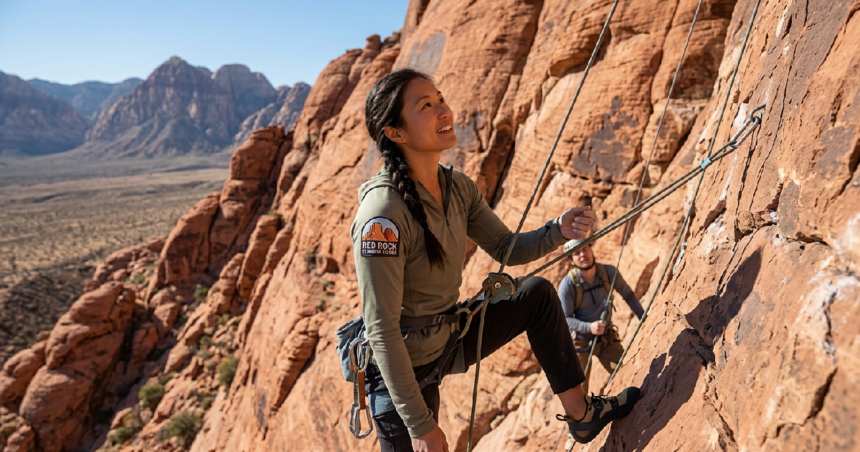
Red Rock Canyon has long been a cathedral for climbers, its sandstone walls towering over the Mojave Desert and attracting athletes from across the globe. But the face of who leads these climbs is shifting. In a sport historically dominated by a narrow demographic, an Asian woman working as a professional guide is breaking through established barriers, offering a new perspective on what it means to lead in the outdoors.
Guide work in Nevada’s premier climbing destination requires more than just technical proficiency; it demands an intimate understanding of the rock and the ability to manage risk in high-pressure environments. For this Red Rock climbing guide, the journey reported by KLAS 8 News Now highlights a broader movement within the climbing community to diversify the ranks of those responsible for safety and instruction on the mountain.
The Evolution of the Red Rock Climbing Guide
For decades, the standard image of a mountain guide was relatively fixed. However, the climbing population is becoming increasingly diverse, and the demand for guides who reflect that change is growing. The presence of an Asian female guide at Red Rock is not just a personal achievement; it represents a functional change in how the sport is presented to newcomers. When clients see themselves represented in the person holding the rope, it fundamentally alters their comfort levels and aspirations.
Red Rock presents unique challenges. The “Aztec” sandstone is fragile after rain, and the multi-pitch routes require complex rope management. Navigating these technical requirements while simultaneously acting as a mentor and safety officer is a role few master. The success of this local guide underscores that the requisite grit and expertise are not confined to the sport’s traditional demographic archetypes.
Lowering Barriers to Entry in the Mojave
Climbing has often been criticized for its high barrier to entry, both financially and socially. Professional guides act as the gatekeepers to the high peaks and technical faces. By having a woman of Asian descent in this professional capacity, the “gate” feels a little more open. It challenges the unconscious biases and stereotypes that can often make minority groups feel like outsiders in the wilderness.
And it’s not just about diversity for the sake of a headcount. Different backgrounds bring different teaching styles and communication methods. In a high-stakes environment like a 500-foot vertical wall, effective communication can be the difference between a successful summit and a dangerous retreat. The visibility of this guide’s work serves as a living proof of concept for the next generation of climbers who might have previously felt the sport wasn’t for them.
A Professional Shift in Outdoor Industry Standards
The outdoor industry has faced increasing pressure to address its lack of diversity. Major brands and guide services are now recognizing that their staff must reflect their customer base. The work being done at Red Rock is a localized example of a global shift. For this guide, every trip up the canyon is an opportunity to prove that the “Red Rock way” is evolving.
As more people flock to the desert to escape urban life, the role of the guide becomes even more critical. They are the stewards of the land, teaching “Leave No Trace” ethics alongside knot-tying and lead climbing. Having voices that can speak to various communities ensures that the message of conservation reaches a wider, more inclusive audience.
What the Future Holds for Diverse Climbing Leads
The trajectory for minority guides in the American West is pointing upward, but hurdles remain. Certification through organizations like the American Mountain Guides Association (AMGA) involves rigorous testing and significant expense. Support networks for female and minority climbers are becoming more robust, providing the mentorship necessary to navigate these professional hurdles.
The story of the Red Rock guide isn’t just a feel-good local narrative; it is a preview of the climbing world’s future. As the sport prepares for continued growth and its second appearance in the Olympic Games, the people on the ground—those actually teaching the basics in the canyons—will remain the most influential figures in shaping the industry’s culture.
Frequently Asked Questions
How do I start climbing at Red Rock Canyon?
The best way to start is by hiring a certified guide through a local service. They provide all the necessary safety equipment and can tailor the experience to your fitness level. If you are a beginner, look for “top-ropeing” sessions before attempting the famous multi-pitch routes like “Crimson Chrysalis.”
Why is diversity important in mountain guiding?
Diversity ensures that the sport remains accessible and welcoming to everyone. Guides from different backgrounds can offer unique perspectives on risk management and instruction, helping to break down the social barriers that have historically kept certain groups away from technical outdoor sports.
Is climbing at Red Rock dangerous?
Like any extreme sport, climbing carries inherent risks. However, climbing with a professional guide significantly reduces those risks. These experts are trained in vertical rescue, first aid, and technical rope work to ensure that the primary focus of your day remains on the experience and the scenery.