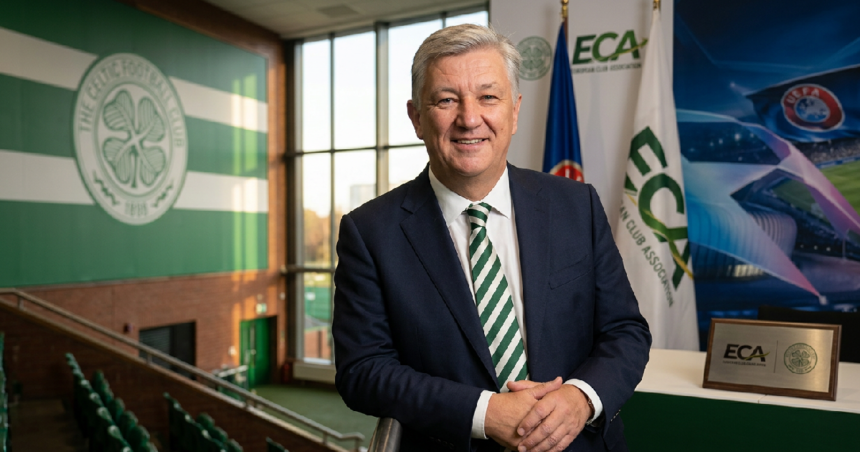
Peter Lawwell’s enduring presence at the top table of European football has been reaffirmed this week as the Celtic chairman secures a fresh mandate within the game’s continental hierarchy. The move serves as a reminder that despite the financial chasm growing between the Premier League and the rest of Europe, Parkhead’s influence remains firmly embedded in the structures that govern the Champions League and beyond.
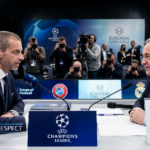
The veteran administrator has long been a polarizing figure among the Celtic support, yet his ability to navigate the corridors of power in Nyon and Zurich is undisputed. His latest appointment to a key role within the European Club Association (ECA) ensures that the Scottish champions maintain a direct line to the decision-makers shaping the future of international club competitions.
Maintaining a Seat at the Top Table
Lawwell’s career has been defined by his longevity. While managers and players have cycled through the East End of Glasgow, he has remained a constant, first as Chief Executive and now as Chairman. His influence has often been cited as a primary reason why Celtic—and by extension, Scottish football—have managed to retain a voice in discussions regarding coefficient changes and revenue distribution models.
The timing is significant. European football is currently grappling with the rollout of the new “Swiss Model” format for UEFA competitions, a change that has met with a mixed reception from fans but carries enormous financial implications for clubs outside the traditional “Big Five” leagues. Lawwell’s position ensures Celtic isn’t just an observer but a participant in these high-stakes negotiations.
It’s a role that requires a delicate balancing act. On one hand, Lawwell represents a club with a massive global following and a rich history; on the other, he operates within a league that lacks the television revenue of its neighbors. By positioning himself as a leader within the ECA, he has effectively bridged that gap for decades.
The ECA Hierarchy and Celtic’s Strategic Interests
The ECA serves as the sole body recognized by UEFA to represent the interests of clubs at the European level. For Celtic, having their chairman in a position of authority within this organization is about survival as much as it is about prestige. As the threat of breakaway leagues and elite-level ring-fencing continues to loom, the “middle class” of European football requires experienced lobbyists.
Critics of the current system often argue that the ECA has become too focused on the desires of the continent’s wealthiest sides. However, Lawwell has frequently presented himself as a champion for the clubs in mid-tier nations. His reappointment suggests that his peers still view him as an essential negotiator who understands the intricate mechanics of UEFA’s commercial arm.
But the domestic perception remains an entirely different beast. While Lawwell is praised in Nyon for his administrative acumen, back in Glasgow, his return to the boardroom in 2023 was met with frustration by sections of the fans who advocated for a complete break from the past. This latest European nod will likely reinforce the divide between those who value his political reach and those who blame his era for a perceived lack of modern sporting infrastructure.
Navigating the Changing Landscape of European Transfers
The strategic value of Lawwell’s role also extends to the market. As clubs shift strategy as the summer transfer window looms, Celtic’s ability to remain attractive to high-end talent depends heavily on their guaranteed participation in revamped European formats. Lawwell’s work behind the scenes directly impacts the club’s financial forecasting and, consequently, its recruitment budget.
And it isn’t just about the Champions League. The expansion of the Club World Cup and changes to solidarity payments are all on the agenda for the ECA in the coming months. If Celtic want to ensure they aren’t squeezed out by the growing power of state-backed entities, they need someone who knows where the bodies are buried in European football politics.
So, what does this mean for the immediate future? Lawwell’s role will likely involve heavy involvement in the post-2026 commercial cycle. With the Champions League seeking new ways to compete with the sheer scale of American sports leagues, the pressure is on to increase broadcast valuations without alienating traditional match-going supporters.
The Road Ahead for Parkhead Diplomacy
As we look toward the next set of UEFA milestones, the “Lawwell factor” remains one of Celtic’s most potent, if invisible, assets. Success on the pitch under Brendan Rodgers is the primary goal for fans, but the fiscal security that allows such success is built in committee rooms.
The upcoming season will test the resilience of this influence. With the competitive gap widening, the voices of clubs like Celtic, Porto, and Ajax are more important than ever. Lawwell’s continuation in these roles proves that, for now, the path to European relevance for a Scottish club still runs through his office.
Frequently Asked Questions
What is Peter Lawwell’s specific role in European football?
Peter Lawwell serves on the Board of the European Club Association (ECA) and has held various positions within UEFA committees. His roles involve representing the interests of clubs in negotiations regarding tournament formats, revenue sharing, and the international match calendar.
Why is his influence important for Celtic?
Having a representative in these organizations allows Celtic to have a say in how European competitions are run. This is crucial for securing favorable coefficient rankings, ensuring fair access to the Champions League, and maximizing the financial payouts that the club relies on to remain competitive.
How does the ECA affect regular football fans?
The ECA is responsible for negotiating with UEFA on things like ticket price caps for away fans, the number of matches played in a season, and the distribution of prize money. While much of their work happens in private, the results ultimately dictate which teams fans get to see in continental competition and how much those matches cost to attend.