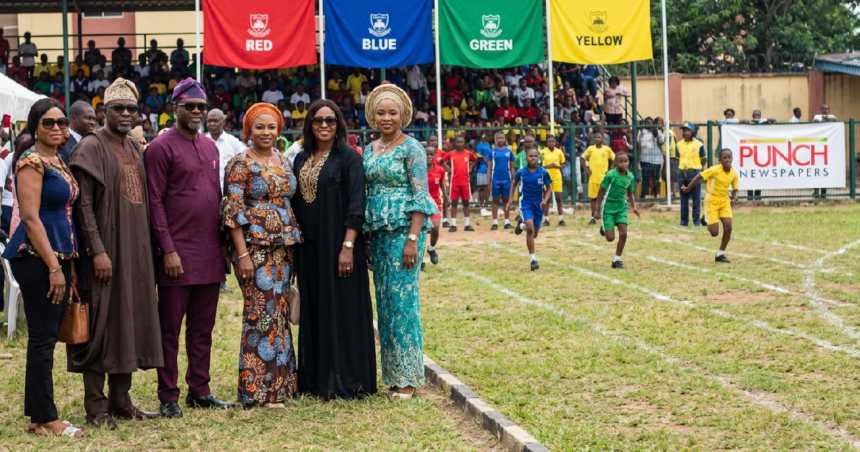
The traditional Nigerian inter-house sports season has undergone a seismic shift, moving away from purely athletic competition toward a landscape of high-fashion and social display. What used to be a day for track-and-field excellence is increasingly being defined by the “Aso Ebi” culture and designer labels, sparking a debate among parents and school administrators about the true purpose of these events.
The evolution of the inter-house sports field
In recent weeks across major urban centers, the sight of parents in matching, high-end ensembles has become as common as the starting pistol. The Punch Newspapers reports that the competitive spirit typically reserved for the children on the track has migrated to the sidelines. Parents are now reportedly spending as much, if not more, on their own attire for these events as they do on their children’s sporting kits.
This “fashion show” atmosphere has drawn mixed reactions. While some argue it adds color and prestige to the school calendar, others worry that the original goal—fostering grassroots athletic talent—is being overshadowed. For many families, the day has become an extension of Nigerian party culture, where the prestige of the “house” is measured by the quality of the lace or velvet worn by its adult supporters.
Shifting focus from athletics to aesthetics
The transformation of school sports days into social galas raises questions about the message being sent to young athletes. Historically, inter-house sports served as a primary scouting ground for regional and national track talents. When the focus shifts to the stands rather than the lanes, the pressure on schools to provide top-tier coaching and facilities may inadvertently decrease.
And it isn’t just about the clothing. The cost of participation is rising. Schools are increasingly under pressure to match the “luxury” expectations of their parent bodies, leading to more elaborate setups, catering, and VIP marquees. This trend risks alienating families who cannot keep up with the escalating social costs associated with what should be a simple day of school-based physical education.
Finding a balance for future competitions
Despite the influx of fashion, many schools are attempting to reclaim the narrative. Educators are stressing that the primary objective remains the discovery of speed, agility, and sportsmanship. There is a growing call among some parent associations to return to a more modest approach, ensuring that the child’s achievement remains the focal point of the day.
The challenge lies in managing the natural enthusiasm of the community. In a culture where celebration is deeply rooted in visual expression, telling parents to tone down their attire is no small task. However, as the 2026 school season progresses, the conversation around “fashion versus fitness” is likely to become a permanent fixture of Nigerian school board meetings.
How school sports affect the wider sporting landscape
The long-term impact on Nigerian sports could be significant. If inter-house competitions lose their rigor in favor of being social events, the pipeline to professional athletics might suffer. Consistent investment in the actual sporting aspect—the hurdles, the batons, and the timers—is what ultimately produces the next generation of international medalists.
As we look toward upcoming regional meets, the hope is that the flair in the stands can coexist with a renewed intensity on the grass. After all, a gold medal for a student remains the most important accessory any parent can take home from an inter-house sports day.
Frequently Asked Questions
Why have inter-house sports become so focused on fashion?
It is largely a reflection of broader cultural trends where social gatherings serve as opportunities for community display and networking. The competitive nature of school “houses” has naturally extended to the parents who support them.
Does the fashion focus affect the children’s performance?
While it doesn’t physically hinder them, some argue it creates a distraction. However, others believe that the high energy and large crowds created by this “spectacle” can actually motivate young athletes to perform better in front of a big audience.
Are schools likely to ban expensive attire at events?
It is unlikely that formal bans will be put in place, but many schools are beginning to issue “modesty guidelines” to ensure the focus stays on the students and to prevent less wealthy families from feeling excluded from the festivities.