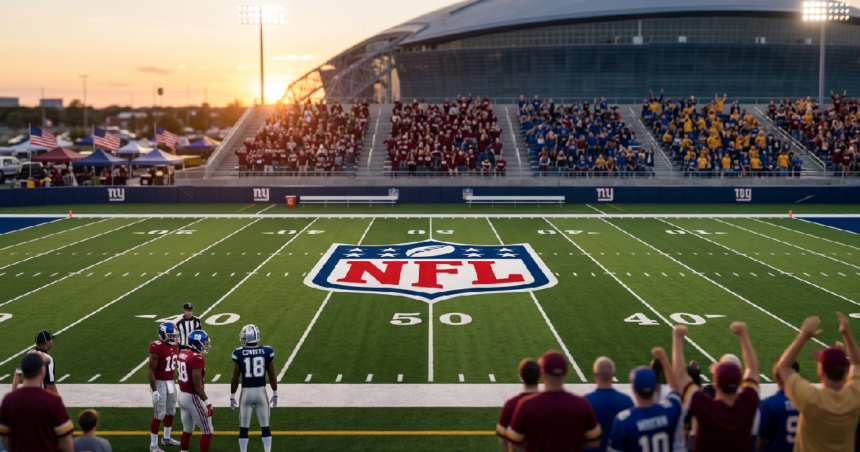
The NFL is reportedly considering a move that would fundamentally alter the traditional American sports calendar: a return to Labor Day weekend. For decades, the holiday weekend has served as the exclusive, high-voltage launchpad for college football, while the NFL waited patiently for the following Thursday to kick off its season. That informal truce now looks increasingly fragile.
League officials and team owners have begun discussing the feasibility of playing a regular-season game on the Sunday of Labor Day weekend. While the NFL hasn’t regularly scheduled games on this weekend since the early 1970s, the expansion to an 18-game schedule—which feels more like a “when” than an “if” at this point—is forcing the league to find new real estate on the calendar. By sliding the season opener forward, the league could accommodate the extra game without pushing the Super Bowl deep into late February.
But while the move makes sense for Commissioner Roger Goodell’s balance sheet, it represents a direct shot across the bow of the NCAA. College football has long owned Labor Day weekend, using the Sunday and Monday night slots to showcase “neutral site” kick-off classics and major conference rivalries. If the NFL decides to plant its flag on Sunday night, the television ratings for the college game would almost certainly take a massive hit.
The 18-game squeeze and the holiday hurdle
The driving force behind this potential shift is the relentless march toward an 18-game regular season. Players and the NFL Players Association (NFLPA) have historically resisted the expansion due to physical toll and safety concerns, but the revenue sharing and potential for an extra bye week make it a compelling financial proposition. However, fitting 18 games and two bye weeks into the current window is a logistical puzzle.
Starting on Labor Day weekend solves several problems at once. It keeps the Super Bowl on Presidents’ Day weekend—a long-standing goal for the league that would create a de facto national holiday for the championship game—and prevents the season from bleeding into March. But the hurdles aren’t just logistical; they’re cultural. High school football and college programs have built a multi-generation tradition around this weekend, and the NFL’s intrusion would disrupt an entire ecosystem of recruitment and regional broadcasting.
And it’s not just the fans who might feel the squeeze. Local municipalities that host major college openers might find themselves competing with NFL markets for travel, security, and hospitality resources. It’s a zero-sum game for attention, and the NFL usually wins those battles.
Evaluating the impact on college football’s “Week Zero” and beyond
If the NFL moves in, college football will have to move out—or at least move over. We are already seeing the sport lean more heavily into “Week Zero” to capture an early audience. If the NFL claims Labor Day Sunday, expect the SEC, Big Ten, and Big 12 to shift their marquee matchups even earlier into August or pivot strictly to Saturday and Monday night windows.
Broadcasters like ESPN and Fox, who hold massive stakes in both professional and collegiate play, face a delicate balancing act. They don’t want to cannibalize their own audiences. However, the NFL remains the ultimate “tentpole” content. If the league offers a Sunday night opener, no network executive will turn it down, even if it means moving a high-profile Florida State or LSU game to a less desirable time slot.
The tension here mirrors the recent shift in the logistical hurdles facing major tournaments, where scheduling and infrastructure are being pushed to their absolute limits to maximize viewership and revenue. Much like the upcoming World Cup, the expansion of the NFL calendar is less about the sport itself and more about the gravity of the commercial engine behind it.
Television rights and the fight for Labor Day
The league’s media partners are reportedly watching these developments with significant interest. The Sunday night slot on Labor Day weekend is one of the most-watched windows of the year because most Americans are off work the following Monday. For the NFL, capturing that audience would likely result in record-breaking viewership for an opening weekend.
But the move would also require a shift in the Sports Broadcasting Act of 1961, which historically protected high school and college football from NFL competition on Fridays and Saturdays. While the Act doesn’t technically bar the NFL from Sundays in September, the league has traditionally avoided the holiday weekend out of a sense of “best for business” decorum. That decorum is evaporating as the league seeks its next $100 billion media deal.
What the future holds for the September calendar
There is no official timeline for the 18-game rollout, but the smoke is thickening. Any change would likely be phased in over several years, giving college programs time to adjust their non-conference schedules, which are often booked a decade in advance. Still, the message from Park Avenue is clear: no weekend is sacred.
Fans should expect to see a trial balloon soon—perhaps a single international game or a special Sunday night “Kickoff” event—before the league commits to a full-scale takeover of the holiday weekend. One thing is certain: the Saturday tradition of college football is safe for now, but the rest of the weekend is officially up for grabs.
Frequently Asked Questions
Would an NFL game on Labor Day weekend cancel college games?
No, it wouldn’t cancel them, but it would likely force them to change their start times. Major college programs avoid playing at the same time as the NFL because they don’t want to lose out on television ratings and national exposure.
Why does the NFL want to start a week earlier?
The main reason is to fit an 18-game schedule into the calendar. By starting on Labor Day weekend, they can add an extra game and an extra bye week while still holding the Super Bowl in mid-February.
Does the NFL have a legal right to play on Labor Day weekend?
Yes. While federal law protects high school and college football on Friday nights and Saturdays, the NFL is free to play on Sundays throughout the season, including the Sunday before Labor Day.