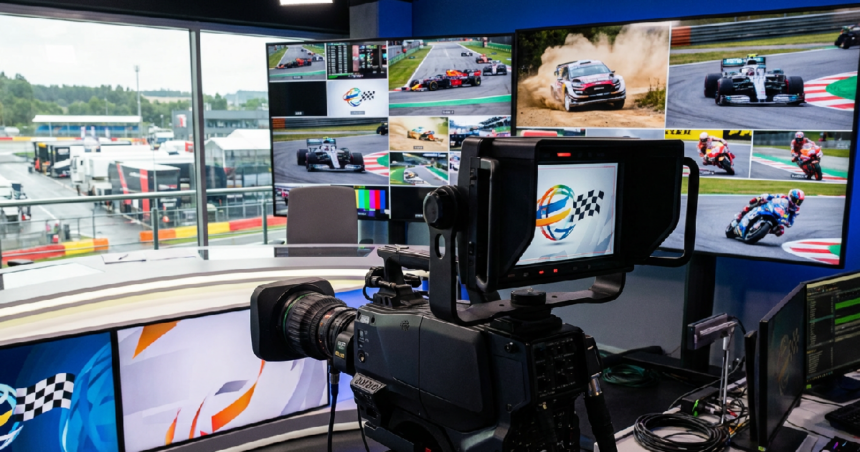
The landscape of motorsport broadcasting is undergoing a subtle but significant shift as seasoned viewers move away from standard highlight packages in favor of deeper, more technical insights. At the center of this shift is the enduring presence of Motorsport Mundial, a program that has managed to maintain its relevance in an era dominated by high-speed social media clips and instant digital gratification.
According to the latest television listings from TVGuide.co.uk, the program continues to secure premium slots across global networks, serving as the connective tissue between the elite world of Formula 1 and the often-overlooked regional championships that act as the sport's feeder series. While much of the modern media focus remains fixed on the celebrity-driven drama of the Grand Prix paddock, there is a growing appetite for the grit of endurance racing and the raw mechanics of rallycross—areas where this production has historically excelled.
Beyond the Formula 1 Bubble
The primary appeal of centralized motorsport programming in 2026 lies in its ability to synthesize a chaotic global calendar. On any given weekend, dozens of sanctioned events take place across different time zones, from the high deserts of Saudi Arabia to the traditional circuits of Europe. Digital guides like TVGuide.co.uk indicate that fans are increasingly looking for a “single source of truth” to catch up on the technical developments they might have missed.
It isn’t just about who crossed the finish line first. Modern fans are more technically literate than ever. They want to know why a specific aerodynamic package failed in the rain or how a privateer team managed to outpace a factory-backed giant. By providing a wider lens than the standard 60-second social media recap, Motorsport Mundial offers a level of context that helps sustain interest in the sport between the marquee races.
The Evolution of the Viewing Experience
The way we consume racing is changing. For years, the industry relied on live broadcasts as its primary revenue driver. But as scheduling conflicts grow—partly due to the expansion of the F1 calendar and the rise of electric racing series—the role of the magazine-style show has become more vital. It acts as a permanent record of the season's secondary and tertiary narratives.
Industry insiders have noted that these programs serve a dual purpose. For the hardcore enthusiast, they are a way to track rising stars in Formula 2 or the World Rally Championship. For the casual viewer, they provide a digestible gateway into the complexities of fuel management, tire degradation, and team orders. This educational aspect is what keeps the show on the air despite the competition from “Drive to Survive” style docuseries that prioritize personality over performance.
A Pivot toward Emerging Technologies
As we move further into 2026, the focus of global motorsport coverage is inevitably shifting toward sustainability. The latest reports suggest that programs like Motorsport Mundial are dedicating increasing airtime to the development of synthetic fuels and the refinement of E-GT racing. It is a necessary pivot; if the sport is to thrive in a Net Zero world, the media must explain how racing remains the R&D lab for the cars we eventually drive on the road.
And while the glitz of the Miami or Las Vegas Grands Prix attracts the headlines, the core of the sport remains in its technical excellence. The ability to translate that excellence for a television audience is what determines the longevity of any sports broadcast. As long as there are fans who care as much about the engine as the driver, there will be a place for this type of deep-dive reporting on our screens.
Frequently Asked Questions
Where can I find the most accurate airtimes for Motorsport Mundial?
The most reliable source for scheduling remains local listings such as TVGuide.co.uk. Because the show is syndicated globally, times can vary significantly depending on your region and whether the broadcaster is showing the premier or a repeat airing.
Does the show cover more than just car racing?
Yes, the format typically includes a broad spectrum of the racing world, often touching on motorcycle racing, powerboats, and even air racing on occasion. Its goal is to provide a comprehensive look at anything with an engine and a competitive edge.
Why is magazine-style reporting still relevant given live streaming?
Live streaming is excellent for the “now,” but it often lacks editorial perspective. A dedicated program can curate the best moments from twenty different races, providing a narrative arc that a live, unedited stream simply cannot offer.