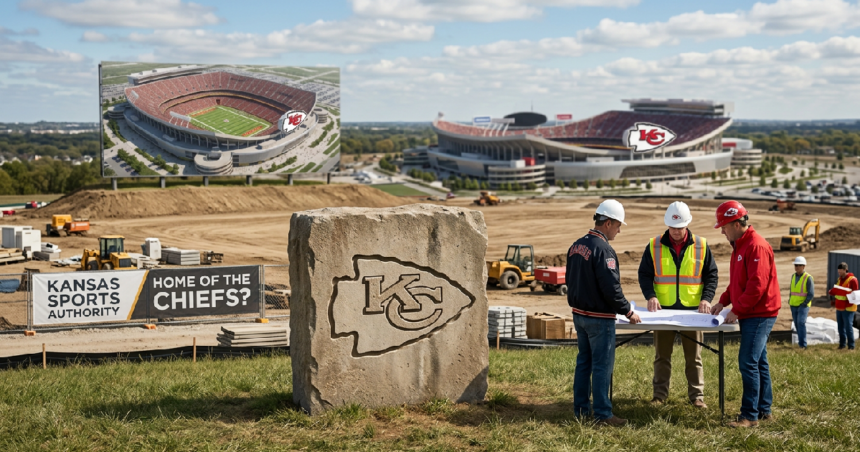
The state of Kansas has taken a definitive step toward securing its professional sporting future, establishing a new sports authority to manage the complex logistics of a multibillion-dollar stadium project aimed at housing the Kansas City Chiefs. The move represents a significant escalation in the regional battle to host the reigning Super Bowl champions, who are currently weighing their long-term options between two states.
State lawmakers and officials finalized the creation of this specialized body to act as the primary intermediary for financing and development. It’s a calculated response to the suburban stadium trend and a direct attempt to capitalize on the team’s current era of dominance. While the Chiefs have a deep historical connection to Missouri, the lack of a clear financing path in Jackson County has left a door wide open for Kansas to make its move.
The new authority will oversee the implementation of Sales Tax Anticipation Revenue (STAR) bonds, a mechanism designed to fund large-scale developments that attract tourism and interstate commerce. By formalizing this governing structure, Kansas is signaling to the Chiefs’ ownership that the state is ready to break ground as soon as a deal is finalized.
Establishing the framework for a Chiefs relocation
Proponents of the plan argue that the creation of the authority provides the necessary legal and financial infrastructure to handle a project of this magnitude. This isn’t just about a football field; the vision includes a sprawling entertainment district, practice facilities, and retail hubs that would cost billions to realize. And the state wants to ensure that if public money is involved, there is a dedicated board focused solely on the project’s success.
The political maneuvering comes after Missouri voters rejected a stadium sales tax extension earlier in the year. That setback for the Chiefs at Arrowhead Stadium created an opening that Kansas governor Laura Kelly and state legislators have been eager to exploit. But the transition isn’t without its critics. Opponents have frequently questioned the long-term economic benefits of high-cost stadium subsidies, suggesting that the “promise of growth” rarely matches the reality of the tax burden.
For the Chiefs, the leverage is clear. The team’s lease at the Truman Sports Complex expires in early 2031. Without a definitive plan for a renovation or a new build in Missouri, the prospect of a state-of-the-art dome or open-air stadium across the border becomes more enticing every day.
Navigating the fiscal and competitive hurdles
The role of the new sports authority will extend beyond just writing checks. It will be tasked with land acquisition, environmental reviews, and coordinating with local municipalities. Because the proposed site is anticipated to be in Wyandotte County, the intersection of state and local interests will be a primary focus for the new board.
Kansas officials are betting that the Chiefs’ brand is powerful enough to justify the heavy bonding. With Patrick Mahomes under center and a trophy cabinet that continues to grow, the team is at its peak marketability. But the billions required for a modern NFL stadium mean the authority must be precise in its financial forecasting. There is also the matter of the Kansas City Royals; while the Chiefs are the primary focus of this specific legislative push, the authority’s scope could theoretically influence the future of both major franchises.
And yet, Missouri isn’t likely to let the team walk without a fight. Local leaders in Kansas City, Missouri, are reportedly working on counter-proposals to keep the team at a renovated Arrowhead. This creates a high-stakes “Border War” where the Chiefs’ leadership sits in the catbird seat, waiting for the most lucrative offer.
What the new authority means for fans
For the average fan, the creation of a sports authority sounds like dry bureaucracy, but it is the first real physical milestone in a potential move. It moves the conversation from hypothetical “what ifs” to a concrete legal entity with the power to sign contracts and issue debt. If you’re a season ticket holder, this is the point where you start looking at maps of the Sunflower State.
The authority will likely begin meetings in the coming weeks to finalize the specific criteria for the STAR bonds and to vet potential site locations. The goal is to present a “turnkey” solution to Clark Hunt and the Chiefs’ executive team that removes the uncertainty they currently face in Jackson County.
Frequently Asked Questions
Does this mean the Chiefs are definitely moving to Kansas?
Not yet. It means Kansas has built the “vessel” to receive them. The team is still negotiating and exploring all options, but Kansas is now legally and financially prepared to host them in a way they weren’t six months ago.
What exactly is a sports authority?
It is a quasi-governmental organization created to oversee the construction and management of sports facilities. By having a dedicated authority, the state can bypass some of the slower traditional legislative processes for stadium-related decisions.
Who pays for the multi-billion dollar project?
The plan relies heavily on STAR bonds, which are paid back using sales tax revenue generated within the new development. While it isn’t a direct “new tax” on residents, it uses future tax earnings from the project itself to pay off the construction debt.