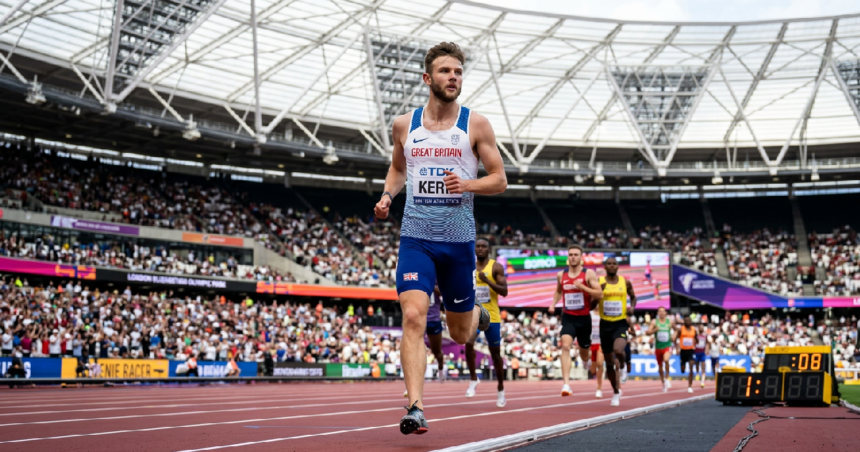
Josh Kerr has never been one to shy away from the spotlight or the weight of history. As the middle-distance star prepares for his upcoming appearance in London, the objective has shifted from mere victory to a full-scale assault on a 27-year-old record that has stood as a benchmark of excellence since the late 1990s.
The Scottish runner, whose stock has risen exponentially since his world-title exploits, isn’t just looking to add more silverware to his cabinet. He’s looking to create the kind of visceral, historical moments that he believes the sport of track and field desperately requires to maintain its relevance in a crowded global sporting market.
The hunt for a legacy in London
Success in athletics is often measured in medals, but for Kerr, the stopwatch is becoming just as important as the podium. He has been vocal about his desire to push the boundaries of what is possible over the classic distances. In London, a city that has hosted some of his most significant career milestones, the atmosphere is expected to be electric as he targets a time that has eluded generations of British and international runners.
The record in question has survived various eras of shoe technology and training methodologies. By setting his sights on such a long-standing mark, Kerr is positioning himself not just as a contemporary champion, but as an all-time great. It is a risky strategy—publicly declaring interest in a record adds a layer of pressure that many athletes prefer to avoid—but Kerr has built his reputation on honesty and high-stakes performance.
He argues that transparency about his goals is better for the fans. “This sport needs moments,” he noted during a recent briefing, suggesting that the public wants to see athletes chasing history rather than just tactical wins. It’s a philosophy that aligns with the modern demand for “eventized” sport, where every race carries the potential for a “where were you” moment.
Chasing the ghosts of 1999
To understand the scale of what Kerr is attempting, one must look at the longevity of the current standings. The late 90s represented a golden era for middle-distance running, producing times that many believed would be untouchable for decades. Kerr’s progression over the last eighteen months suggests he is finally within striking distance of those legendary figures.
His training camp reports indicate that his aerobic capacity and finishing kick are at an all-time high. However, records are rarely broken in a vacuum. They require the perfect confluence of pacing, weather conditions, and competitive tension. In London, the field is being assembled specifically to ensure the pace remains honest from the gun, avoiding the tactical “sit and kick” style of racing that often ruins record attempts.
But it’s not just about the physical preparation. Kerr’s mental approach sets him apart. He possesses a specific brand of confidence—some might call it an edge—that allows him to dominate the psychological battle before the athletes even step onto the track.
Why this race matters for British athletics
The timing of this attempt couldn’t be better for a sport looking to capitalize on a recent surge in interest. With major championships on the horizon, having a marquee name like Kerr attempting to shatter a nearly three-decade-old barrier provides a narrative hook that transcends the hardcore athletics bubble.
And while the focus is firmly on the 27-year-old record, the implications for Kerr’s rivals are significant. A successful record attempt would send a definitive message to the rest of the world’s elite: Kerr is no longer just a contender; he is the standard-setter. It forces everyone else to decide whether they can match his aggressive pace or simply watch from behind as history is made.
The London crowd has a history of lifting home athletes to extraordinary heights. If the conditions hold and the pacemakers do their jobs, the 1999 mark may finally be retired this weekend.
Frequently Asked Questions
What makes this specific record so difficult to break?
The record has stood since 1997-1999, an era where middle-distance running saw a massive leap in performance. Breaking it requires maintaining a blistering pace that leaves no room for tactical errors or a slow middle lap. It demands a perfect physiological performance from start to finish.
How has Josh Kerr’s form looked leading up to this event?
Kerr has been in the form of his life, consistently performing at the top of the Diamond League and major championship standings. His ability to maintain high speeds while still possessing a world-class sprint finish makes him the ideal candidate to challenge long-standing time barriers.
Will the weather in London affect the record attempt?
Absolutely. Middle-distance records are highly sensitive to wind and temperature. While Kerr is famously tough, any significant headwind on the backstraight or high humidity can add the fraction of a second that makes the difference between a new record and a standard victory.