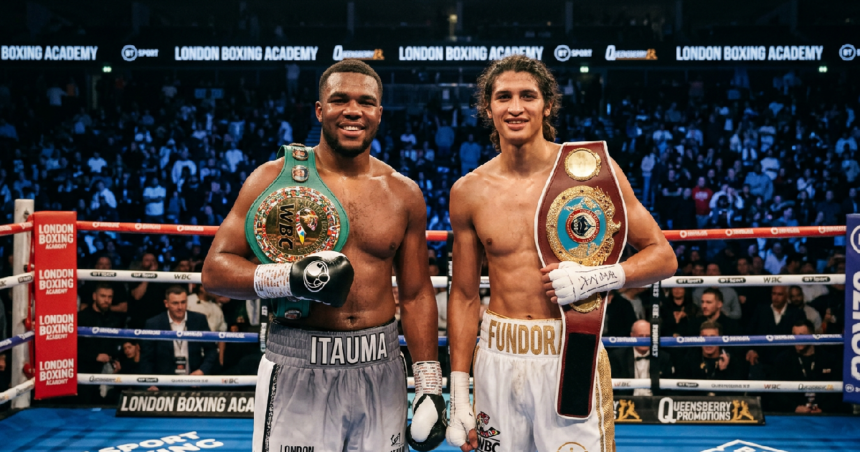
The heavyweight landscape has a habit of chewing up and spitting out hyped prospects before they ever reach the championship conversation. But on a night where the veteran guard looked to hold its ground, Moses Itauma provided the most compelling evidence yet that the transition of power in the blue-riband division might happen sooner than expected. Combined with a gritty, tactical masterclass from Sebastian Fundora, the evening served as a reminder that boxing is shifting toward a new generation of unique physical talents.
Moses Itauma and the Weight of Expectation
Itauma didn’t just win; he dismantled his opposition with the kind of calculated ferocity that usually takes a decade to cultivate. At just 21 years old, the Kent-based southpaw is operating with a level of composure that belies his limited professional rounds. The speed of his hands remains his most startling attribute, but it was the shot selection—specifically the digging hooks to the body followed by a sharp, vertical lead hand—that left observers in the arena reaching for comparisons to a young Mike Tyson.
It’s a dangerous game to compare any prospect to “Iron Mike,” yet the parallels in explosive delivery are becoming harder to ignore. Itauma’s victory wasn’t merely about physical dominance. He showed a sophisticated understanding of distance, refusing to let his opponent reset or find a rhythm behind the jab. Every time the veteran tried to establish a foothold, Itauma was already mid-combination, exiting at angles that left his feet perfectly set for the next assault.
The question for his promotional team now is how quickly to remove the stabilizers. Heavyweight boxing is littered with the remains of “next big things” who were moved too fast, yet Itauma looks bored with the domestic level. With the division currently bottlenecked at the top, he is positioning himself as the inevitable mandatory challenger that none of the aging champions will want to face in eighteen months’ time.
Sebastian Fundora and the Art of the Towering Southpaw
If Itauma provided the fireworks, Sebastian Fundora offered a masterclass in psychological and physical endurance. Often criticized for not “fighting tall,” the 6ft 6in super-welterweight displayed a much-improved tactical awareness tonight. He utilized his freakish reach not just as a weapon, but as a defensive barrier, keeping the fight exactly where he wanted it.
Fundora has often been lured into phone-booth wars where his height becomes a liability rather than an asset. Tonight, however, the “Towering Inferno” showed he has learned the value of the step-back counter. He allowed the pressure to come to him, picking his shots with a precision that eventually broke his opponent’s spirit. It was a “fire” performance in every sense—relentless, consuming, and ultimately inevitable.
By effectively blending his natural physical advantages with a more disciplined defensive shell, Fundora has silenced critics who suggested he was too easy to hit. He remains one of the most difficult puzzles to solve in the 154lb division, and this latest showing suggests he is finally peaking as a complete elite operator.
The Evolution of Modern Boxing Archetypes
What we witnessed tonight across these two performances was the evolution of the modern fighter. We are seeing heavyweights like Itauma who possess the agility of middleweights, and super-welterweights like Fundora who possess the frame of heavyweights. The traditional “lessons” of boxing are being rewritten by athletes who refuse to be pigeonholed by their size.
Success in the current era isn’t just about being the biggest or the strongest; it’s about how these physical outliers can adapt their games to minimize risk. Itauma could have relied on his power alone, but he chose finesse. Fundora could have relied on his height, but he chose to refine his inside game. These are the markers of fighters who aren’t just looking for a world title, but for a legacy of dominance.
Looking Ahead to the Title Picture
The implications for the remainder of 2026 are significant. For Itauma, a step up into the fringes of the top ten seems certain. The boxing world is clamoring to see how his speed translates against a durable, top-tier gatekeeper who can survive the initial onslaught. For Fundora, the victory cements his status as a man who cannot be ignored by the division’s other belt-holders.
As the dust settles, the takeaway is clear: the new guard isn’t just coming; they’ve arrived with a technical proficiency that matches their physical gifts. Whether the established stars are ready for this level of “instruction” remains to be seen.
Frequently Asked Questions
Is Moses Itauma ready for a world title shot?
While his talent is undeniable, the heavyweight division is currently top-heavy with experienced champions. Most experts believe he needs another 3-4 fights against top-15 ranked opponents to build the “championship engine” required for 12-round battles. However, on current form, he would be a betting favorite against almost any domestic rival.
How does Sebastian Fundora’s height impact his strategy?
Fundora’s height is a double-edged sword. It gives him a massive reach advantage, but it also makes his midsection a large target when he stands tall. His recent improvement involves using his long arms to “frame” opponents, keeping them at a distance where they can’t land effectively while he can peck away with long uppercuts and jabs.
What makes Itauma different from other heavyweight prospects?
Most young heavyweights rely on size and heavy-handedness. Itauma is distinct because of his hand speed and his ability to fight as a southpaw. His footwork allows him to create angles that are rarely seen in the heavyweight class, making him incredibly difficult to prepare for in a traditional training camp.