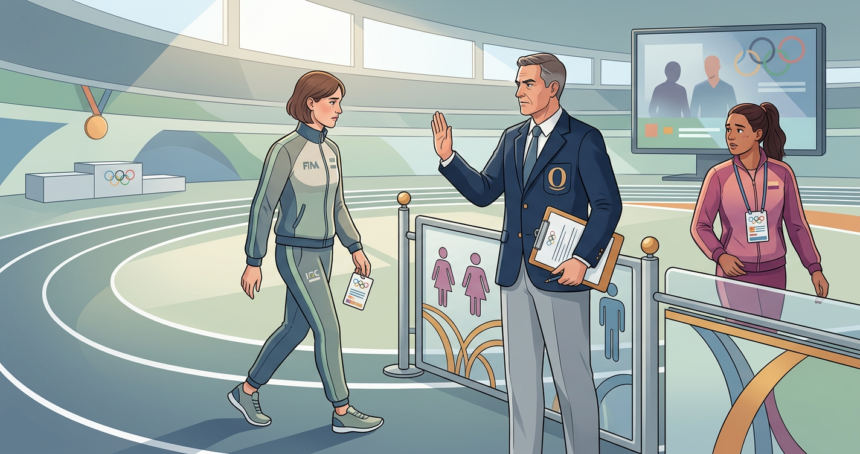
The International Olympic Committee has fundamentally shifted its stance on gender eligibility, introducing new regulations that effectively prohibit transgender athletes from competing in women’s categories across all Olympic disciplines. The decision marks a definitive end to the policy of inclusion based on testosterone suppression, moving instead toward a framework rooted in biological sex assigned at birth.
This overhaul arrives after years of intensifying debate that pitted the concepts of inclusivity against competitive fairness. For many governing bodies, the pendulum has swung toward the latter. The new rules mean that athletes who have undergone male puberty will no longer be eligible for the female category, regardless of their current hormone levels or legal gender status.
The Impact on High-Profile Competitors
The immediate fallout of this ruling clarifies the status of several athletes who became lightning rods for the debate in recent years. Laurel Hubbard, the New Zealand weightlifter who made history as the first openly transgender woman to compete at the Olympics in Tokyo, would be barred from future games under these criteria. Hubbard’s participation sparked a global conversation about the physiological advantages retained after transition, a point the IOC now appears to have conceded.
But the policy goes beyond gender identity. It also tightens the net around athletes with Differences of Sexual Development (DSD). Reports indicate that Algerian boxer Imane Khelif, who was at the center of a firestorm regarding eligibility during recent championships, may now face mandatory sex testing to prove her eligibility for the women’s division. While Khelif has never identified as transgender, the new protocols require athletes in certain high-impact sports to meet specific biological markers that align with the female sex.
The move brings the IOC in line with World Athletics and World Aquatics, both of which had already implemented similar bans. It signals a “harmonization” of rules across the sporting world, ending the patchwork of eligibility requirements that varied wildly from one federation to another.
Scientific Debate vs. Human Rights
Science remains the primary battleground for this policy shift. Proponents of the ban point to studies suggesting that male puberty confers permanent advantages in bone density, muscle mass, and lung capacity—advantages that cannot be fully reversed by estrogen therapy. These physical traits, they argue, create an unbridgeable gap in sports where power and speed are paramount.
Critics, however, argue that the ruling is discriminatory and contradicts the Olympic Charter’s promise of inclusion. Human rights advocates have voiced concerns that the return to “sex testing” is a regressive step that humiliates female athletes, particularly those from the Global South who may have naturally higher testosterone levels or DSD conditions.
And then there is the logistical nightmare of enforcement. National Olympic Committees will now be responsible for certifying the biological status of their athletes, a process that remains opaque. It remains to be seen how the IOC will handle legal challenges, which are almost certain to arise from athletes who feel their careers have been arbitrarily ended.
A Changing Landscape for 2026 and Beyond
This decision doesn’t just affect the podium; it changes the entire pipeline of elite sports. National federations are likely to follow suit, meaning transgender girls and women may find themselves without a competitive pathway long before they ever reach Olympic qualifying standards. The focus may now shift toward creating “Open” categories, a concept trialed by World Aquatics, though those have yet to see significant participation or commercial backing.
As the sports world digests this news, the focus turns to the upcoming Summer and Winter Games. The era of case-by-case testosterone monitoring is over. In its place is a rigid boundary that prioritizes the preservation of the female category as a biological protected class. Whether this brings peace to the “gender row” or simply ignites a new decade of litigation remains the central question for the Olympic movement.
Frequently Asked Questions
Does this ban apply to all Olympic sports or just contact sports?
The new directive is comprehensive, covering all women’s categories across the Olympic program. While the debate often focuses on power sports like weightlifting or contact sports like boxing, the IOC has opted for a blanket policy to ensure consistency across all disciplines.
What happens to athletes like Imane Khelif who are not transgender?
Athletes with DSD or those whose biological sex is questioned may be required to undergo medical evaluations or sex testing. These tests are designed to ensure they meet the specific biological criteria now required for the women’s category, which can be a complex and controversial process.
Will there be a separate category for transgender athletes?
While the IOC hasn’t mandated an “Open” category yet, several individual federations are exploring this option. The goal would be to provide a space for all athletes to compete without compromising the protected status of the women’s division, though logistical hurdles remain high.