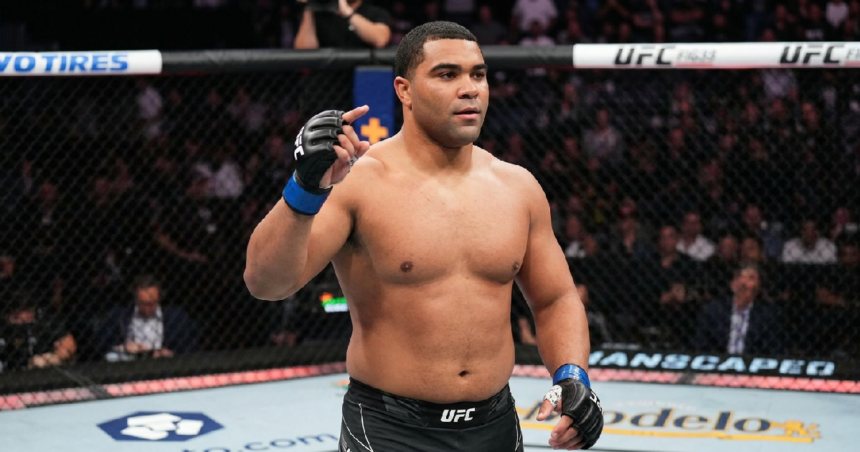
The transition from the wrestling mat to the octagon has a storied history, and Gable Steveson just added a significant chapter to that legacy. The Olympic gold medalist successfully navigated his latest test in professional mixed martial arts, securing a victory that has the industry buzzing about his inevitable trajectory toward the UFC.
Steveson, whose footwork and explosive athleticism helped him dominate the heavyweight wrestling scene in Tokyo, showed a developing comfort level with the nuances of MMA. While his wrestling remains his primary weapon, his ability to control the pace of the match and mitigate the risks posed by a more experienced opponent suggests his developmental phase is accelerating rapidly.
Dominance on the Mat Translates to the Cage
It was never a question of whether Steveson could take people down; the question was what he would do once the fight hit the floor. In this latest outing, he demonstrated a more polished ground-and-pound game and a patient approach to submissions that wasn’t as evident in his earlier training sessions. He didn’t just rely on raw power; he used the leverage and positioning that made him a standout at the University of Minnesota.
The victory comes at a time when the heavyweight division in the UFC is looking for fresh blood. With aging veterans occupying many of the top-ten spots, a young, decorated athlete like Steveson represents a massive marketing opportunity and a genuine competitive threat. This recent win wasn’t just about the result; it was about the composure he showed under the lights.
But the transition is rarely seamless. We’ve seen high-level wrestlers struggle when they can’t force the takedown or when they’re forced to trade strikes with a specialist. Steveson’s striking remains the biggest variable in his game. While he wasn’t forced to show much of his stand-up during this bout, the scouts in attendance noted his improved head movement and his willingness to engage in the pocket before closing the distance.
The Road to a UFC Contract
Dana White and the UFC brass have never been shy about their interest in Steveson. He has the “it” factor that usually commands a main-card slot right out of the gate. However, the patient approach his management team is taking seems to be paying off. Rather than being thrown to the wolves as a raw prospect, he is building the necessary scar tissue in smaller promotions to ensure that once he hits the big stage, he’s ready to stay there.
Reports from inside his camp suggest that his grappling is already at a level that would trouble most of the UFC’s bottom half of the heavyweight rankings. The focus now is conditioning for the unique demands of five-round fights and sharpening his defensive striking. This latest win serves as a proof of concept: the Olympic pedigree is a foundation, but Steveson is actually learning the trade of a fighter.
Heavyweight Divisions Evolution
The landscape of the heavyweight division is changing. The days of “big guys who can punch” are being replaced by “big guys who can move.” Steveson fits the latter mold perfectly. His agility is comparable to a light-heavyweight, and his gas tank is a product of years of elite-level wrestling matches where fatigue is the ultimate enemy.
And it’s not just about the wrestling. Steveson’s win this evening showed a growing understanding of cage craft—using the fence to pin opponents and knowing when to let go of a position to avoid a scramble. These are the “invisible” skills that separate top-tier MMA fighters from transitions athletes who flame out early.
The next few months will likely involve negotiations between Steveson’s representatives and major promotions. While the UFC is the most logical destination, this performance has undoubtedly increased his market value across the board. If he continues to finish opponents in this fashion, a debut on a significant UFC pay-per-view card by the end of the year isn’t just possible—it’s expected.
Frequently Asked Questions
What makes Gable Steveson’s wrestling different from other MMA wrestlers?
Unlike many traditional heavyweights who rely on brute force, Steveson possesses “light-weight” speed. His ability to hit low-singles and double-legs at his size is extremely rare in MMA, making him nearly impossible to prepare for in a standard training camp.
Is he officially signed to the UFC yet?
While interest is mutual and he has been seen at several UFC events, he has been competing in developmental matches to round out his skill set. This latest win is widely seen as the final hurdle before a formal signing announcement is made.
How does his striking look compared to other crossovers?
It’s still a work in progress, which is common for Olympic wrestlers. However, his movement and spatial awareness are excellent. He isn’t a “static” target, which helps him avoid the big shots that usually plague wrestlers who are new to the sport.